Festival updates & random musings.

Hello, my darklings. Hope you’re enjoying the warmer-than-usual weather in February (at least in Toronto). Just wanted to post an update on the various film festivals that are screening my work over the next few weeks.

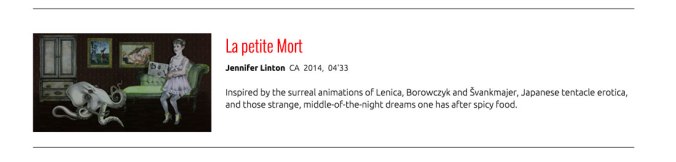
Firstly, I’m truly honoured to have my short animated film La Petite Mort included in the “Independent (Canadian) Scene” program at Tricky Women 2016 in Vienna. Many heartfelt thanks to Madi Piller, executive director of Toronto Animated Image Society (TAIS), who curated this program. She is a tireless supporter of independent animators.

Screen-Shot-2016-02-21-at-3.27.55-PM


lapetitemort_TRICKY

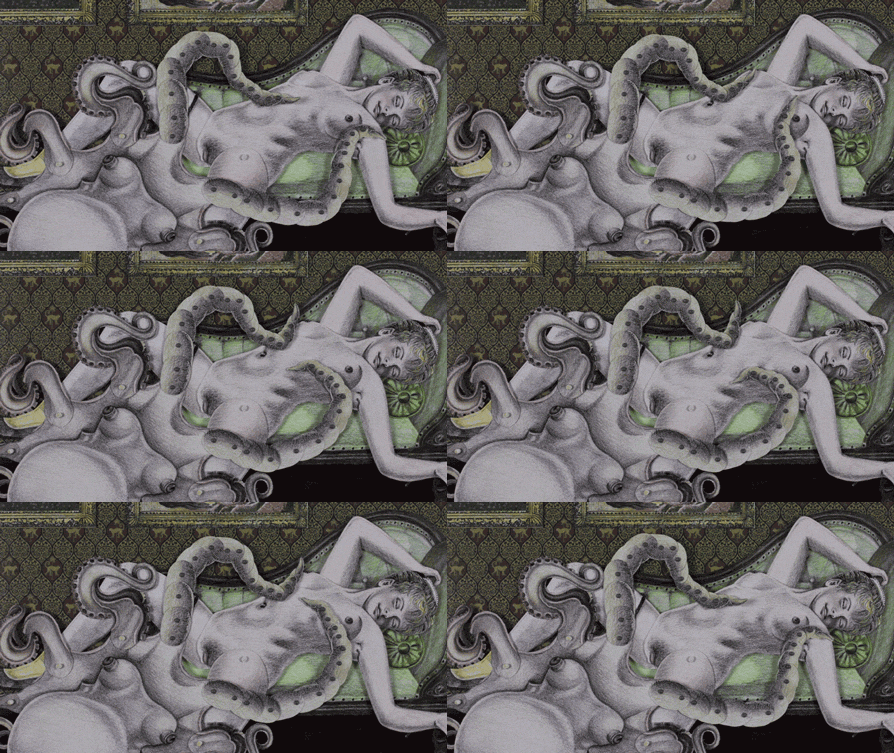
Then, this tentacled darling of an animated short slithers her way to Lausanne, Switzerland for La Fête du Slip, an international porn festival. Needless to say, the preceding link is very NFSW unless you happen to work in a porn shop, or perhaps VICE Magazine. Oddly enough, I don’t consider this film as porn per se, but as a self-professed “sex-positive feminist”, I’m fine with that categorization, too. Evidently, the porn world has been craving more scenes of sexual exchange between a woman and an octopus. This could be a very niche market.

Screen-Shot-2016-02-21-at-3.46.00-PM

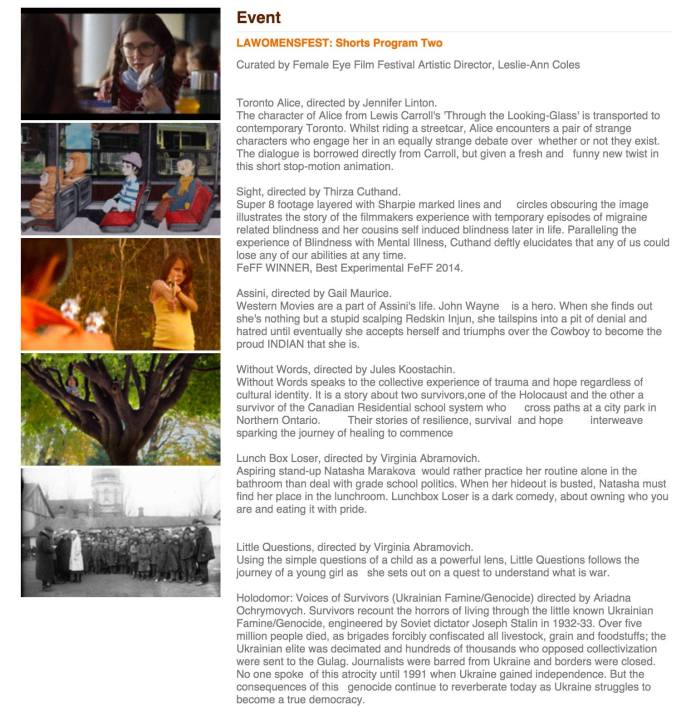
My other cinematic child, Toronto Alice, travels to Los Angeles for the L.A. International Women’s Film Festival in March. Many thanks to Leslie -Ann Coles for curating the Canadian Shorts program that includes this film.

12747228_1665076787092171_753150849818177614_o

I’m also excited to share that I’m currently developing a new script for another of my independent animations. This new project will be closer to La Petite Mort in look and feel, and has the working title of Wunderkammer. Stay tuned.

The Astounding Thaumatrope

Photo of my thaumatropes in the Magic Gumball Machine of Fate located at Artscape Youngplace in Toronto.

Photo of my thaumatropes in the Magic Gumball Machine of Fate located at Artscape Youngplace in Toronto.

The thaumatrope was an 18th-century toy constructed from a simple disk or card featuring a different picture on each side and attached to two pieces of string. When the strings are twirled rapidly the card rotates on its axis and the two images appear to combine.

The embedded video below demonstrates one of the four different thaumatropes I created as an artist’s multiple for Nuit Blanche 2015 in Toronto**. You can purchase your very own for the princely sum of $2 from the The Magic Gumball Machine of Fate, which will be located at 522 Queen Street West. Bring your twoonies!

**an annual, all-night visual arts event that takes place in the downtown core of Toronto.

Deviant Desires: Erotic Grotesque Nonsense, Part IV: “Midori — The Girl in the Freak Show”

This is Part IV of my series of posts relating to the Japanese cultural phenomenon called “ero-guro-nansensu”, or erotic-grotesque-nonsense. Part III, which discussed Teruo Ishii’s “pinky violent” contribution to the ero-guro landscape entitled Horrors of Malformed Men, is found here.

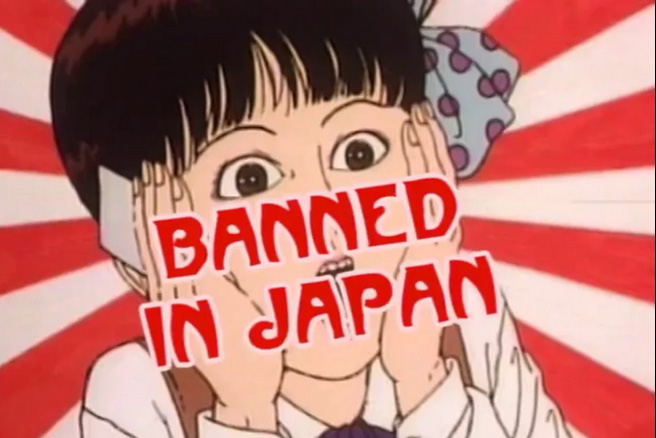
midori_banned 2

Midori — The Girl in the Freak Show
(a.k.a. Shôjo tsubaki: Chika gentô gekiga).
1992, directed and animated by Hiroshi Harada

Much like Teruo Ishii’s Horrors of Malformed Men, a great deal has been made about the banned status of Hiroshi Harada’s 1992 anime Midori — The Girl in the Freak Show, and similarly, the details concerning its banned notoriety are rather murky. This film has screened at a small number of festivals, but is unavailable on DVD in both the 
Japanese and North American markets. It is only available through a small DVD distributor in France called CinéMalta. To a large extent, the film has been buried due to ongoing issues with the Japanese censors, and Harada has simply chosen not to screen it in his native country. In a videotaped interview that was included as an extra on the Midori DVD, Harada stated candidly:

“The situation in Japan makes it very difficult for films like mine to enter the mainstream. Hayao Miyazaki is well-known in Japan, and his films are seen abroad. If his stories represent the official story of Japan, then “Midori” is a counter-story of Japan, one the Japanese State and powers that be have suppressed and tried to hide away.”

Due to the controversial nature of the content, Harada was unable to secure investors for the project. Thus, he financed and worked on the 52-minute film alone, creating all of the artwork over a 5-year period using the technique of cel animation. This explains, in part, the somewhat limited nature of the animation – i.e. some scenes being just a succession of still images with camera holds, pans and zooms.

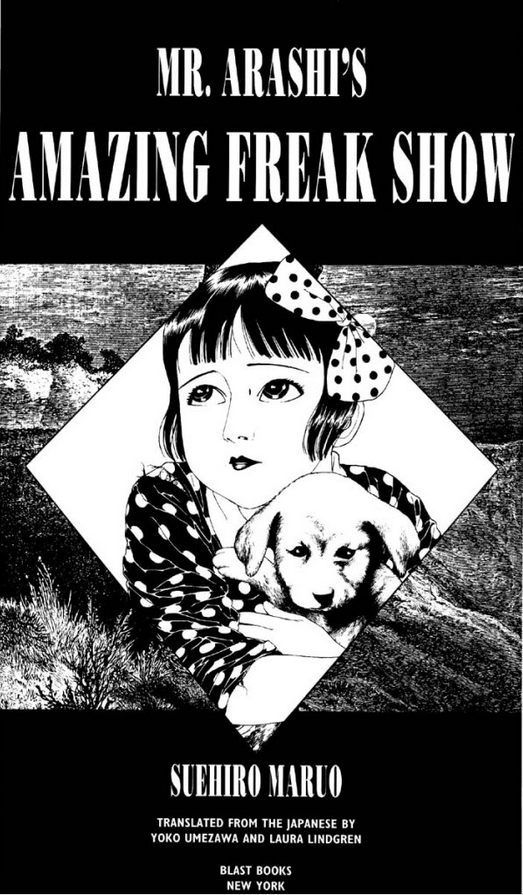
Suehiro Maruo's 1984 manga

Suehiro Maruo’s 1984 manga “Mr. Arashi’s Amazing Freak Show” (now out of print).

Midori is a very faithful adaption of artist Suehiro Maruo’s underground manga entitled Mr. Arashi’s Amazing Freak Show (published in 1984, now out-of-print) that tells the story of an abused flower girl in 1920’s Japan. When Midori, a poor girl about the age of 12, is suddenly and tragically orphaned, she seeks the help of one of her former customers, the mysterious Bowler Hat Man, who had previously extended an offer of assistance. Unfortunately, it is soon revealed that the The Bowler Hat Man has tricked the naïve Midori into becoming a virtual slave for a travelling circus show, where he inhabits the role of impresario. Thus begins the bleak tale of Midori’s cruel mistreatment and repeated rape by the grotesque monsters that work the carny sideshow.

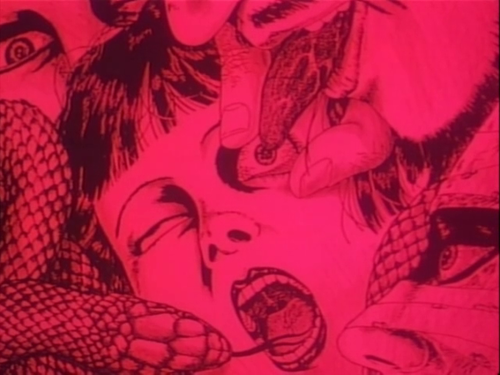
Both Maruo’s manga and Harada’s film adaptation are populated by a now familiar set of erotic-grotesque stock characters —  the carny sideshow impresario and his collection of “freaks” including the magician dwarf, the hermaphrodite, and a limbless performer similar to the “human caterpillar” (which reminds us of Rampo’s short story). Several forms of sexual fetishism are on display, and in particular the fetish of eyeball-licking (called oculolinctus, by the way), which is a favourite motif for Maruo.

tumblr_msd88kUsyn1qcw5r6o1_500

Midori opens with a succession of images that flash quickly across the screen, accompanied by different voices that seem to call out a disconnected, nonsensical stream of words. According to Harada, these strangely poetic phrases are the sort you’d hear from carnival barkers back in the 1920’s.

If you’re a fan of Anime, and particularly the more underground and darker examples of the genre, then Midori is definitely worth tracking down. It’s not an easy viewing – and it does have a relentlessly bleak ending—but it is a very faithful adaptation of Maruo’s “ero guro” classic and effectively conveys the very limited options available to a young girl without the benefit (or protection) of a family or husband in 1920’s Japan. WARNING: Lots of sexual violence, and some animated puppies are squashed.

You can view the entire film here, at least for now.

My next post in this ongoing series on ero-guro-nansensu discusses one of the most notorious Japanese films ever made,  In the Realm of the Senses (1976), directed by Nagisa Oshima.

Tentacled Darling of the Underground.

528205440_640

Hello, gentle readers. This summer — though not quite over yet — has whizzed by at an alarming rate and those crisp mornings so characteristic of autumn are beginning to cool the air, causing us to reach for that added layer of clothing. As many of you may know, I was preoccupied this summer with producing, and then promoting, my latest short animated film Toronto Alice. With this task now complete, I thought I should mention the activities of that other child of mine, La Petite Mort, which has lately become the tentacled darling of the ‘underground’ film festival circuit.

Last night (August 26), La Petite Mort screened at the UnderGround Short Film Festival in Cork, Ireland. (Wish I could’ve been there, but the finances just didn’t allow for a trip to Ireland). Earlier in the summer, this film was also featured in the Montreal Underground Film Festival — which touts the delightful acronym of MUFF — where it was nominated for the 2015 Jury Prize/Nomination pour un prix du jury MUFF 2015. It was also featured in the Planet X program at the Winnipeg Underground Film Festival, a program that promised “some of the weirdest movies you will ever see” (a notion of which I most heartily approve) .
planetX

Beyond the underground film fest circuit, La Petite Mort has enjoyed some loving from the, ahem, ‘alternative’ porn film festivals like the PopPorn5 Film Festival in São Paulo, Brazil, and the granddaddy of them all, the Berlin Porn Film Festival. Both festivals categorized La Petite Mort under “fetish”, which is a fact I find endlessly funny. These festivals are not dedicated to (what I would characterize as) the mainstream “bleached blonde, breast implants and long, acrylic nails” brand of American-produced pornography, but rather the “pierced, tattooed and hairy armpits” type of alternative, frequently feminist or LGBT, produced porn — which is something I philosophically support. Below is a write-up on La Petite Mort from Lucie Blush, a filmmaker who produces pornography directed at women.

berlinporn

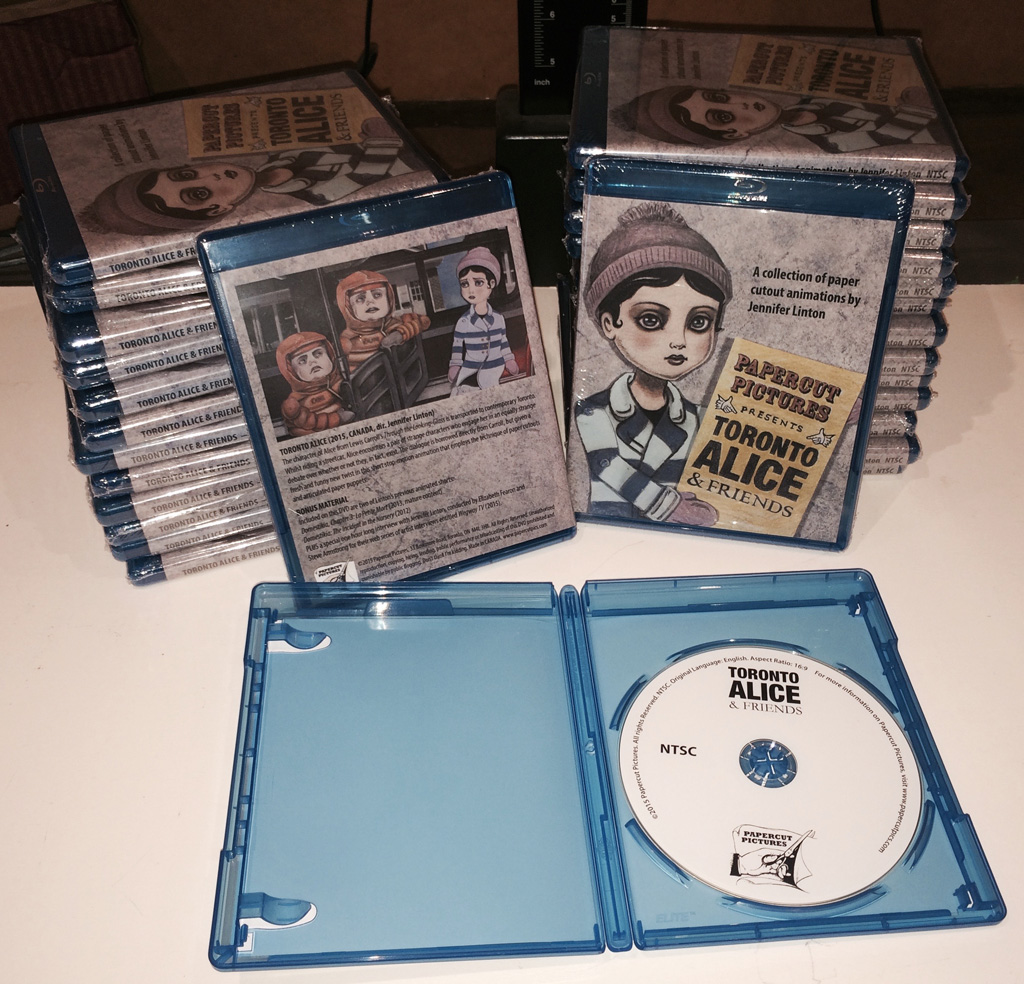
BluRay disc of “Toronto Alice”

BR-TorontoAlice

A big stack of BluRay discs of Toronto Alice ready to ship out to my Indiegogo contributors. Made a few extra for those who didn’t manage to pick up this “perk” during my campaign, but would like to now. BR includes Toronto Alice, my two previous animated shorts “La Petite Mort” and “The Incident in the Nursery”, PLUS a one-hour interview conducted by Elizabeth Fearon and Steve Armstrong. Ships right to your door. WOWZA!

You can purchase the BluRays here.

Toronto Alice

After much thought, I’ve decided to post the entire short film of Toronto Alice online for all to see. Even though I’ve submitted to a bunch of festivals, I decided that wider exposure online was worth the risk of disqualifying the film from a handful of festivals.

If you enjoy, then please share widely. Thanks.

Trailer for “Toronto Alice”.

The entire film of “Toronto Alice” will not be available online to the general public for a little while longer — it’s an eligibility for film festivals and/or “premiere status” sorta thing. In the meantime, please enjoy this sneak peek in the form of a short trailer. Incidentally, the music that plays in the trailer is not featured in the film.

SYNOPSIS

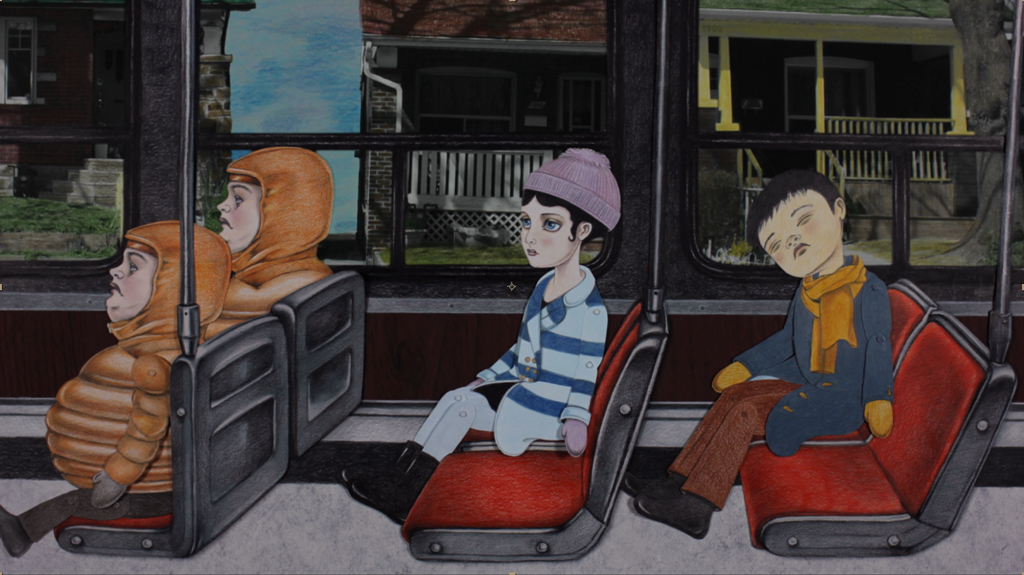
The character of Alice from Lewis Carroll’s ‘Through the Looking-Glass’ is transported to contemporary Toronto. Whilst riding a streetcar, Alice encounters a pair of strange characters who engage her in an equally strange debate over whether or not they, in fact, exist. The dialogue is borrowed directly from Carroll, but given a fresh and funny new twist in this short stop-motion animation.

CAST

Voice of Alice by Nicole Bauman
Voices of Tweedledee & Tweedledum by Matt Speirs
Sound recording and design by Karl Mohr
Paper puppets, stop-motion animation, post-production, editing, and direction by Jennifer Linton
Adapted from “Through the Looking-Glass, and What Alice Found There”, by Lewis Carroll (published in 1871).

This animation was made possible by the financial support of the Ontario Arts Council, and by the generosity of my Indiegogo contributors. Thank you!

Copyright ©2015 Papercut Pictures. All rights reserved.

Toronto Alice update, January 2015.

torontoalice_jan2015

Baby, it’s cold outside. Good time of the year to hide out in one’s basement studio, making things move a little bit at a time. After a very busy Fall term at my teaching jobs, I’ve settled down a bit with a lighter course load for the Winter. This is very good news for my Toronto Alice animation project, which is now back in progress. Only 01:27 done thus far, but we’re getting there.

VAEFF 2014 in New York, recap.

At the beginning of October, I travelled to New York City to participate in the 2014 instalment of the Video Art & Experimental Film Festival.  My short animated film Domestikia, Chapter 3: La Petite Mort screened both Thursday and Friday nights, with a filmmaker Q&A following the Friday screening. Above are a few photos from the event, and below a snippet from the festival review at the Videoart.net blog:

Over three nights in early October, as the New York fall seemed to be taking its grip on the city, filmmakers, artists and film enthusiasts huddled outside Tribeca Cinemas and engaged in animated exchanges and heated discussions – excitedly picking apart the films of this year’s Video Art and Experimental Film Festival. Now in its fourth year, the festival once again presented a challenging and arresting program of short films, showcasing the diversity of moving image work being created today.

[clip]

This process of breaking down unproductive delineations and creating a vocabulary with which to grapple with the question of what can be understood as video art was present throughout the festival, offering the entire program a palpable vigour, though it was perhaps Thursday night’s screening, playfully dubbed ‘Beauty, Sex, Shame’ which most captured the exciting landscape of video art today. Beginning with Rino Stefano Tagliafierro’s BEAUTY – an elegiac reimagining of classic paintings which delights in the effervescence of beauty, luring us in with its promises before revealing its inherent ephemerality and inevitable decay – the program examined the seductive nature of images, throwing light on the perpetually fraught relationship between sex and death. In its masterful re-appropriation of classic painting, Tagliafierro’s film set the tone for much of the program, as a common thread throughout the program was a kind of filmmaking which utilizes cinematic and art historical references with unabashed candor, repurposing familiar footage and well worn tropes to create refreshingly current work. With its knowing nods to the cinema of the French New Wave, Canada’s wonderfully tongue-in-cheek film, Crème Caramel, creates a highly stylized visual language allowing it to reference classic cinema, while simultaneously reconfiguring the often narrow view of sexuality and femininity which exists in these films. Similarly, Jennifer Linton’s Domestikia, Chapter 3: La Petite Mort – a surreal exploration of female sexuality – draws on a tradition of illustrated Japanese pornography often referred to as tentacle erotica, imbuing the film with an awareness of the inescapable darkness and perversion hiding beneath the glossy kind of beauty we are conditioned to consume.

[clip]

You can find the full review here, and more photographs from the festival here. Oh, and in case you don’t know already, I’m the dark princess dressed all in black.