The Juniper Tree

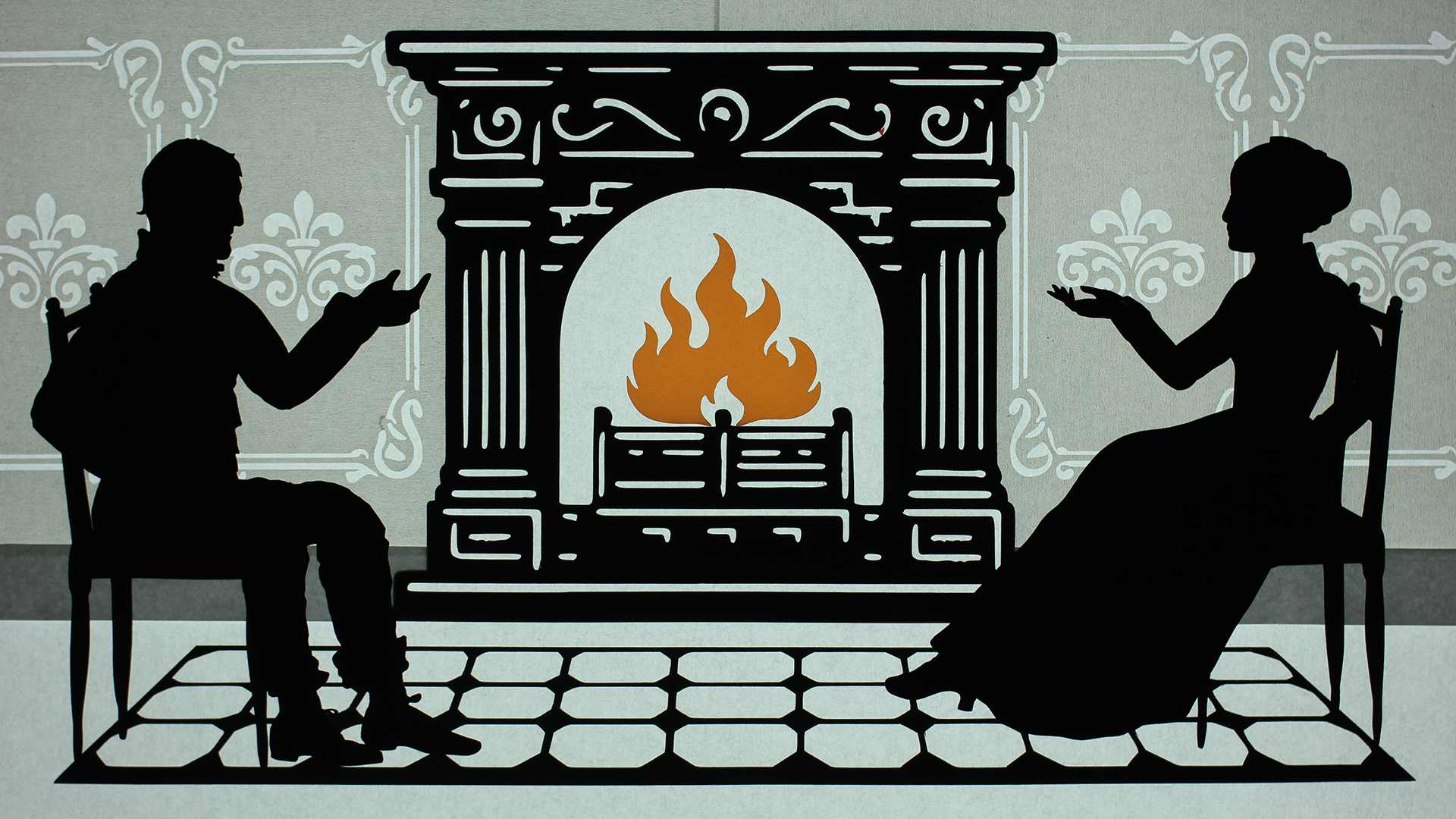
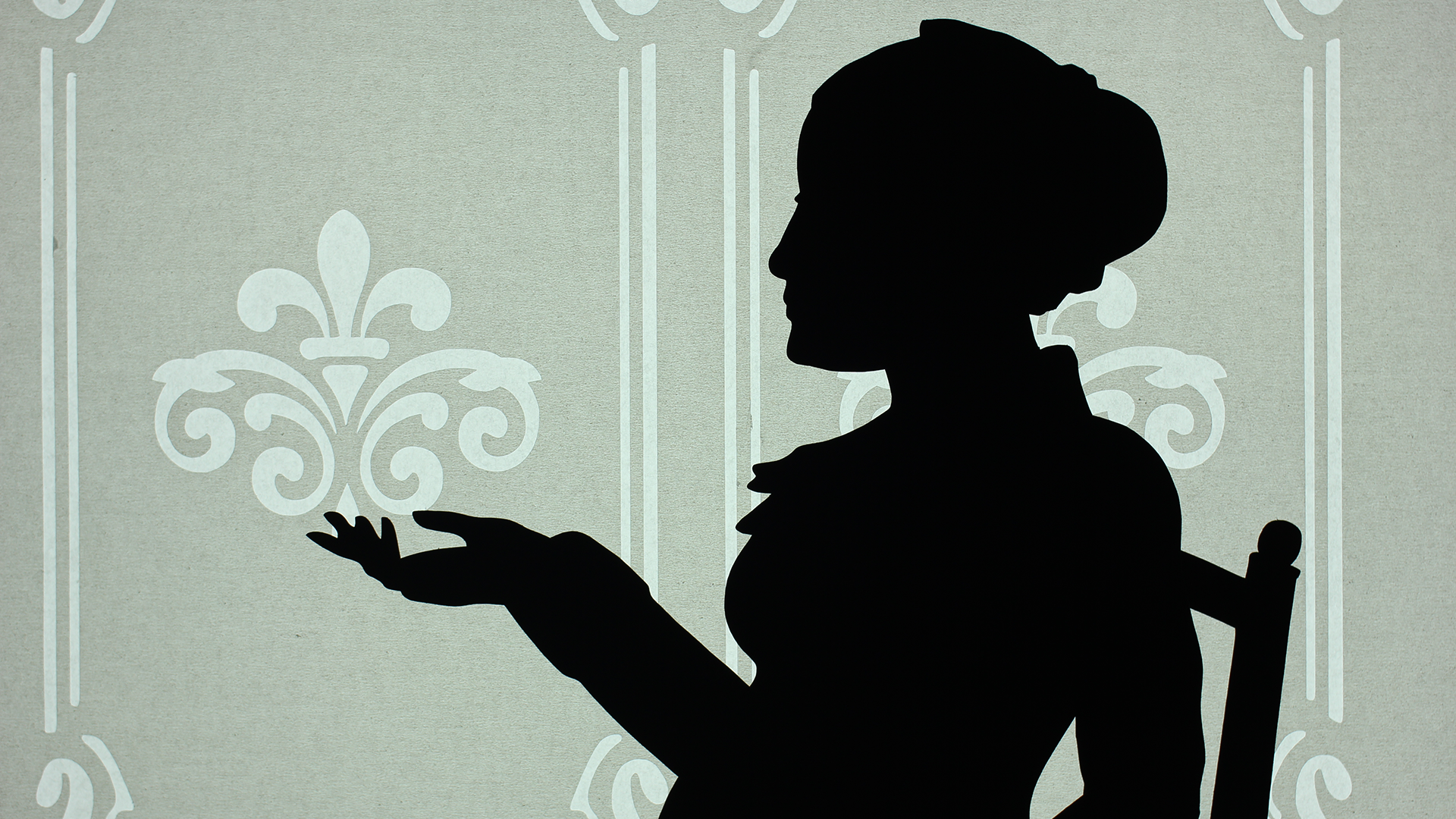
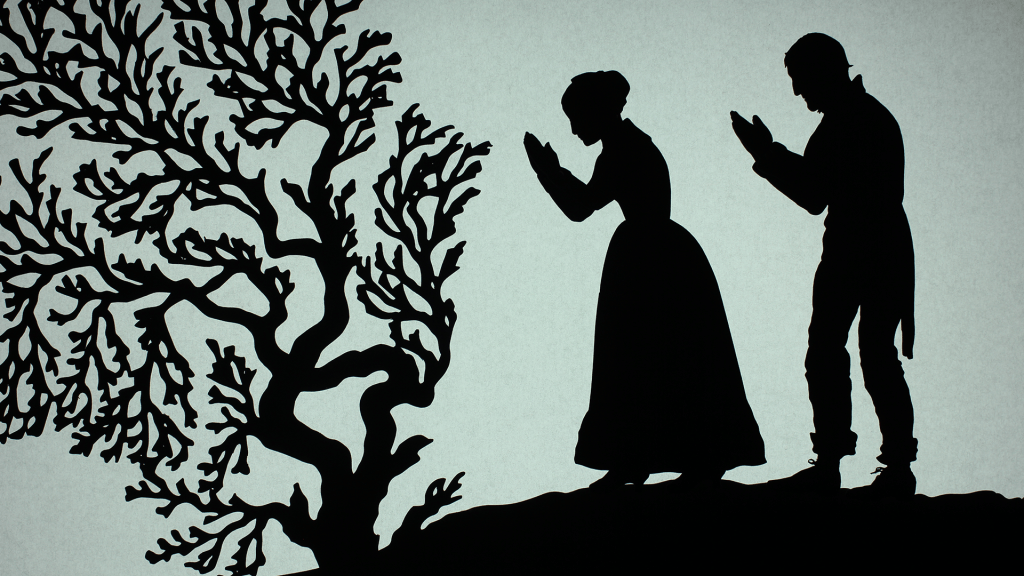
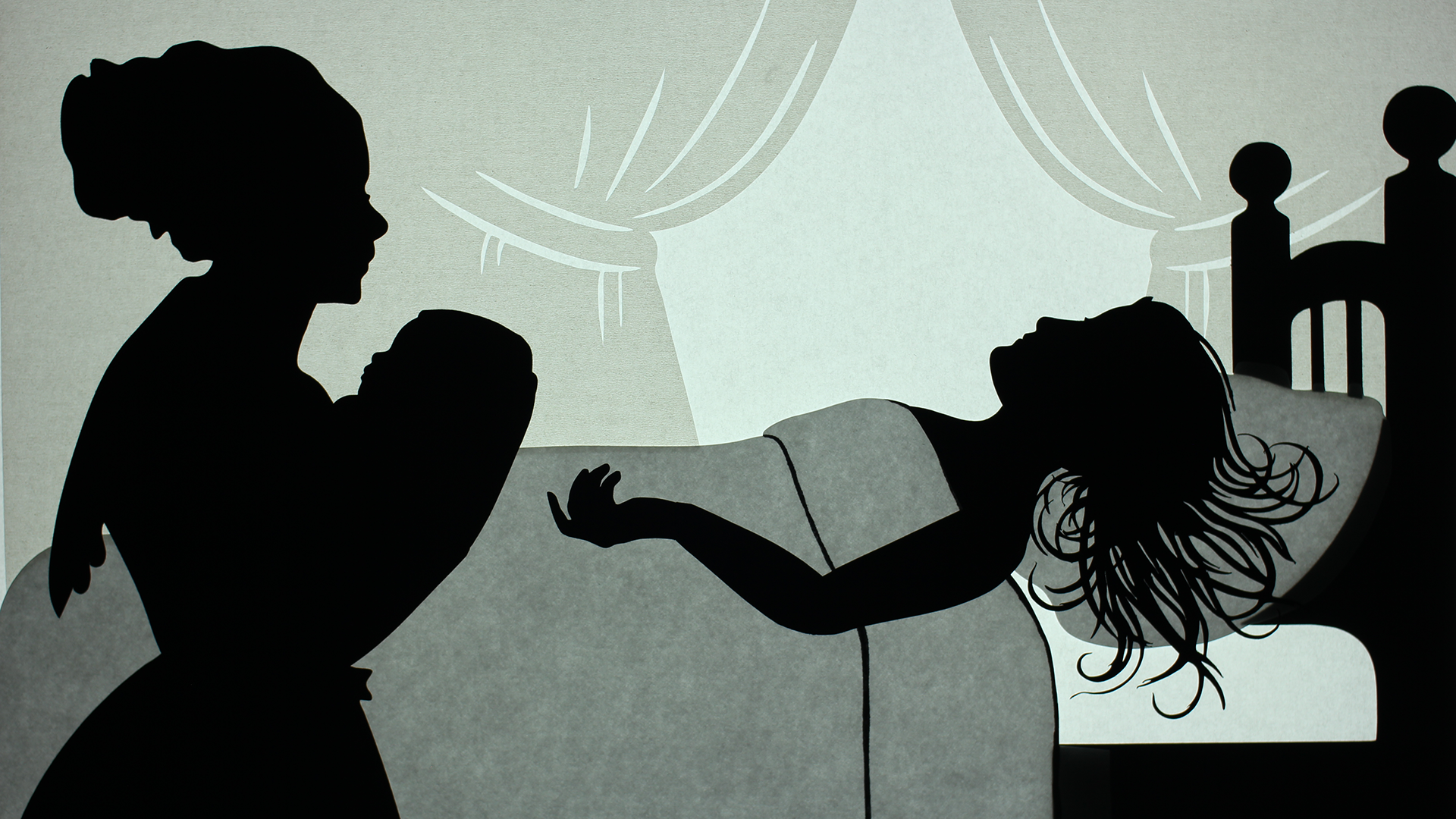
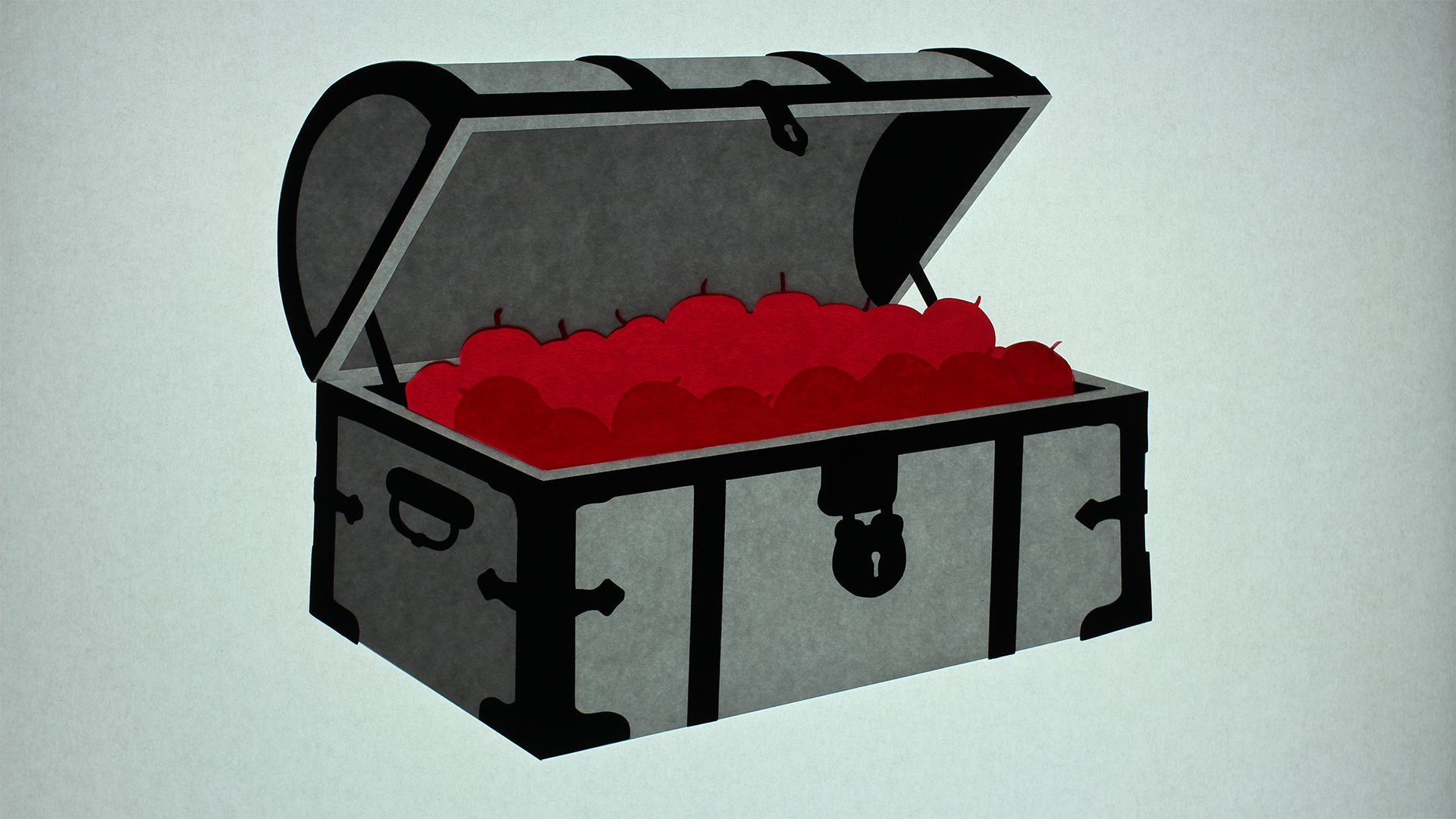
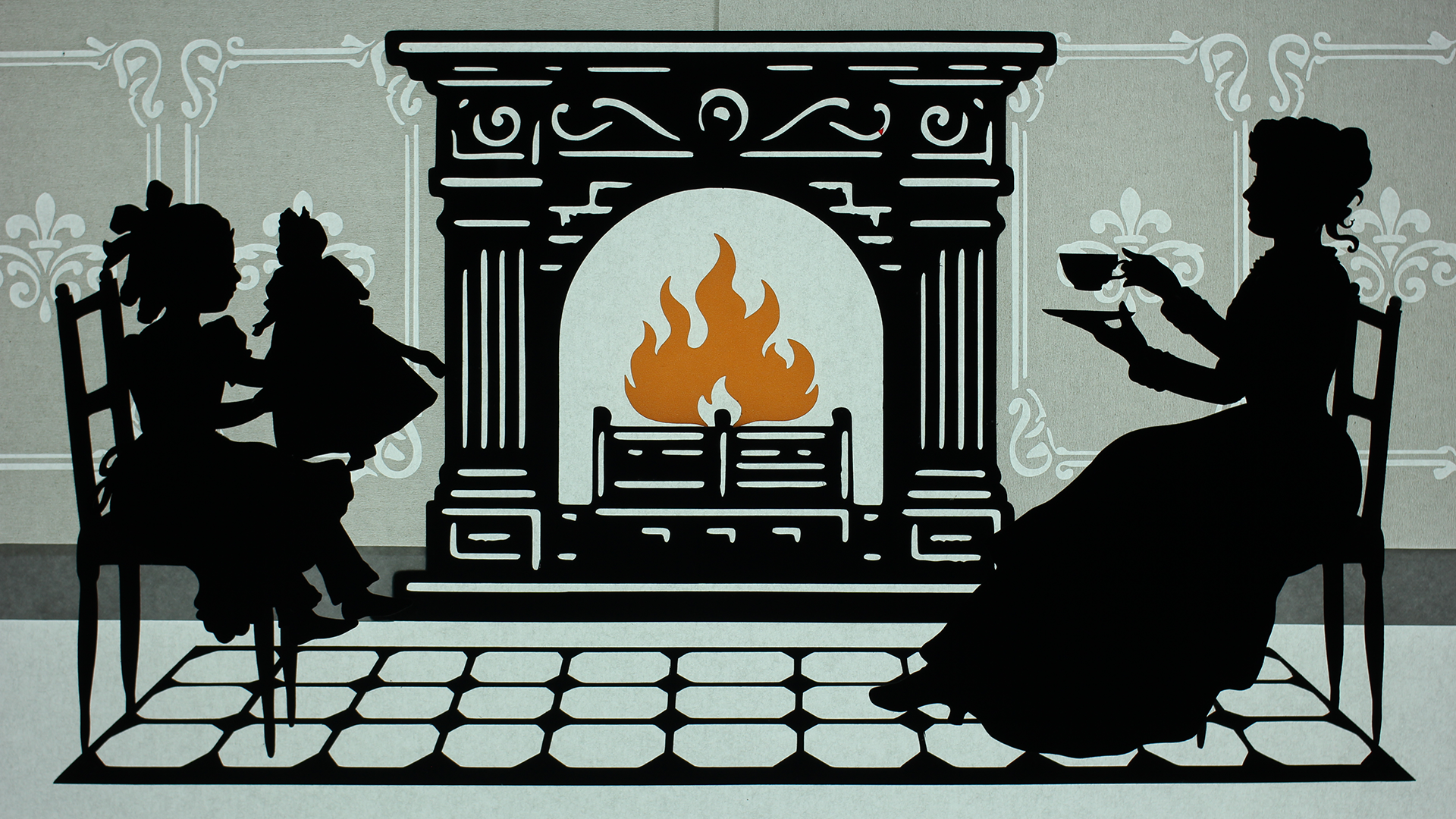
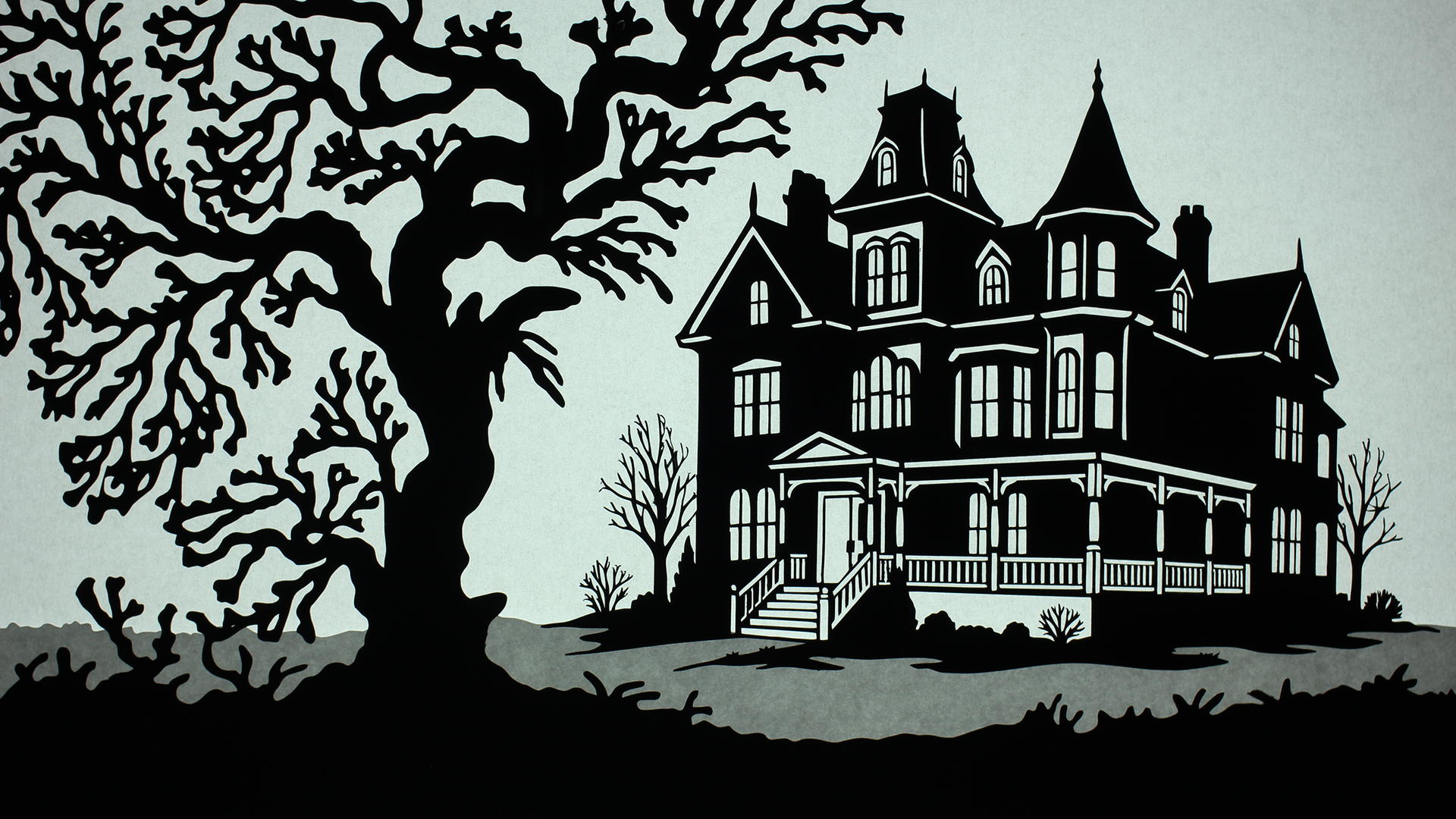
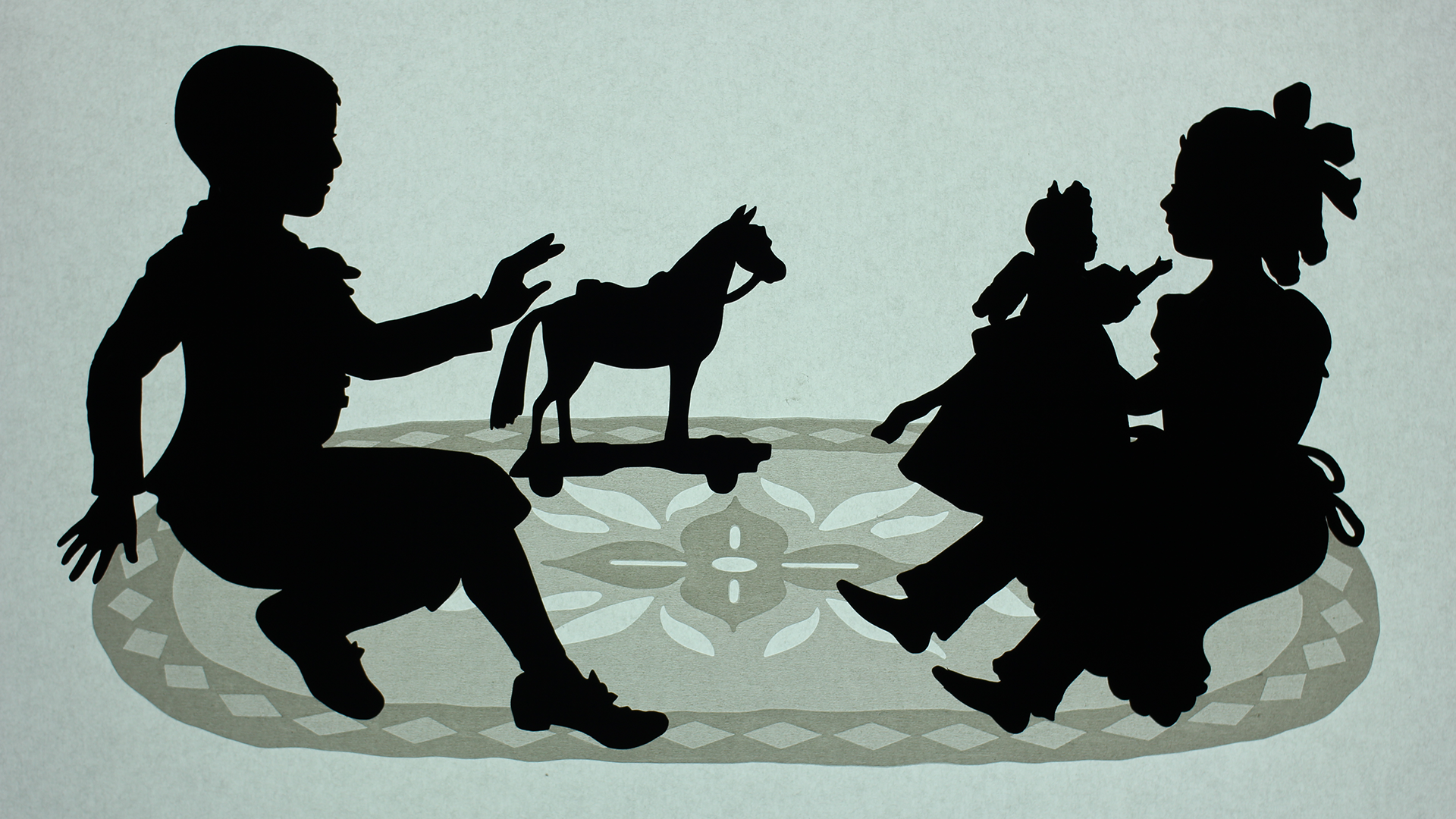
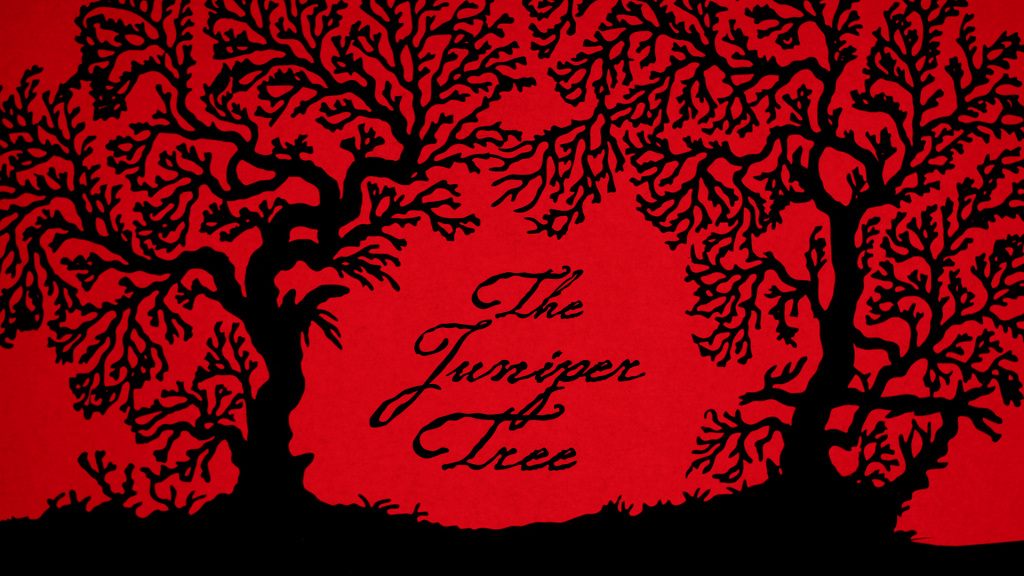
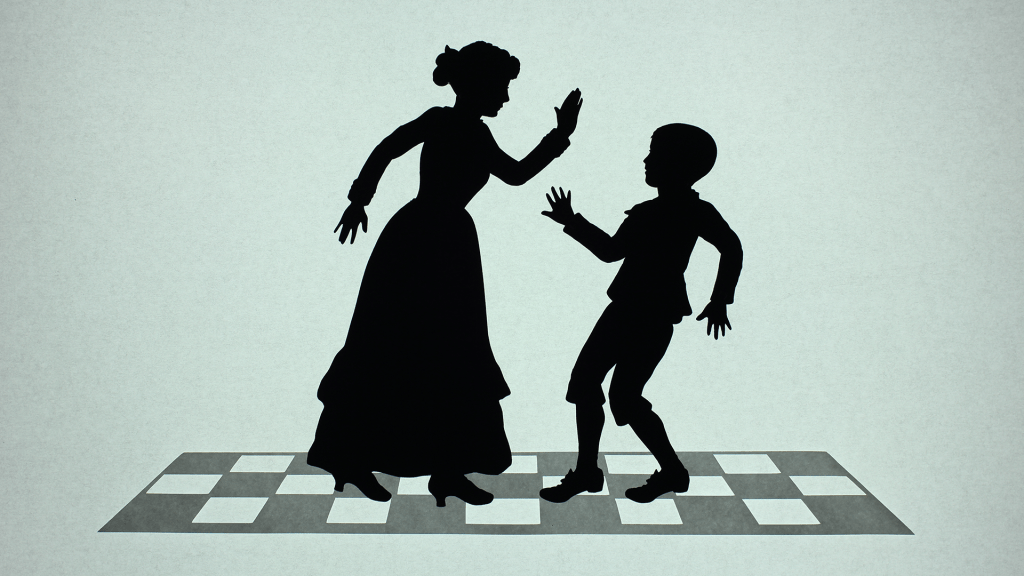
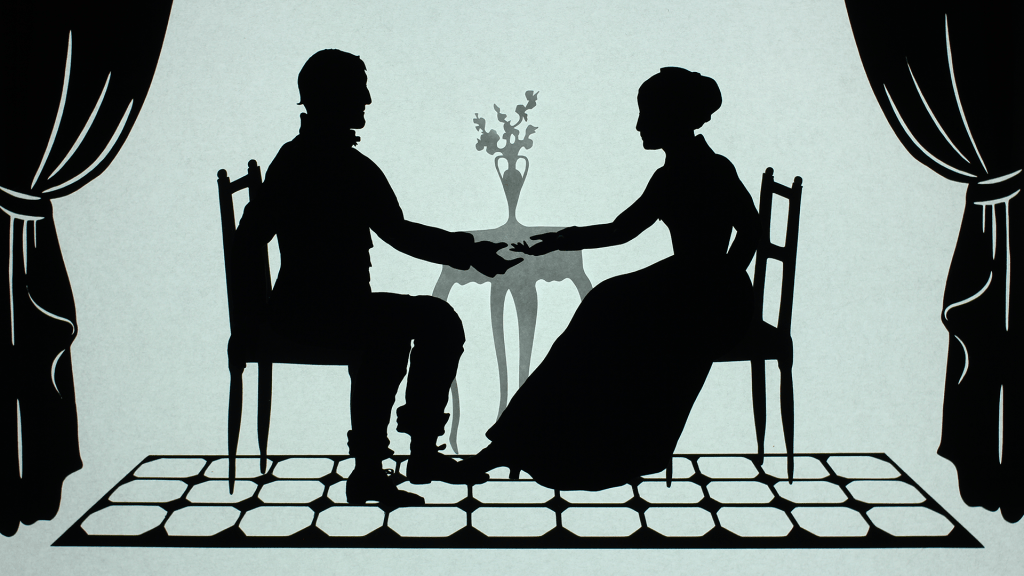
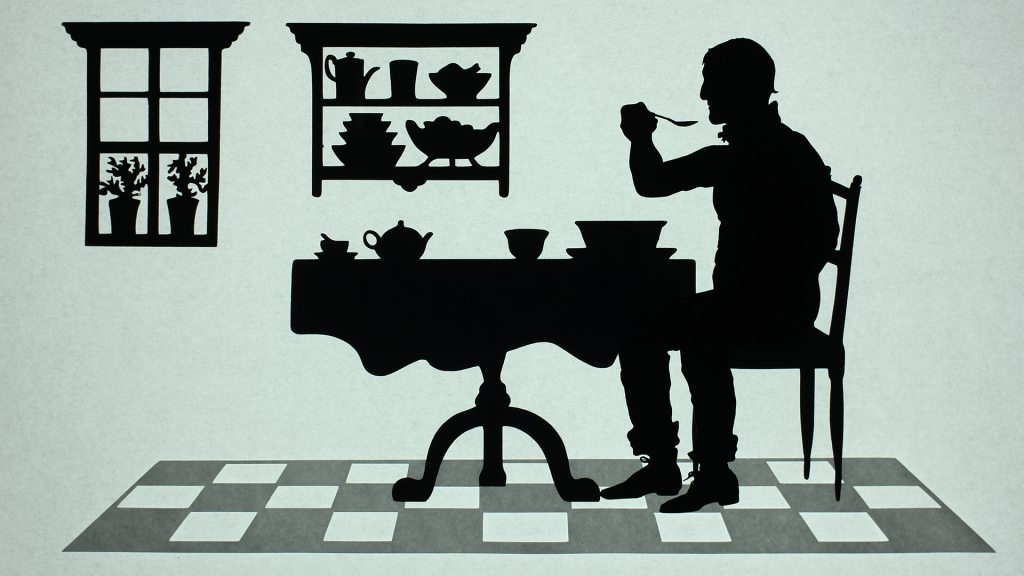
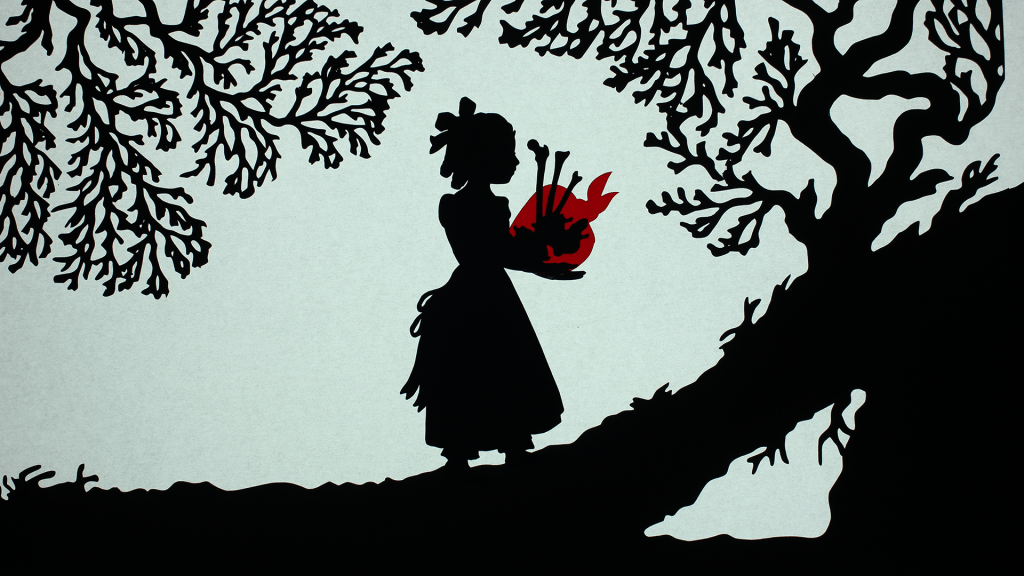
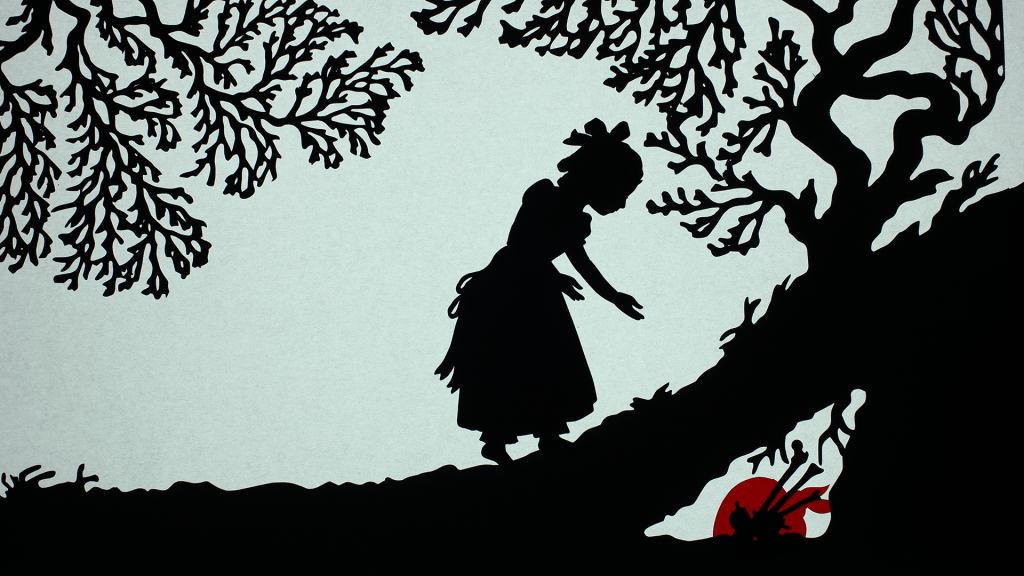
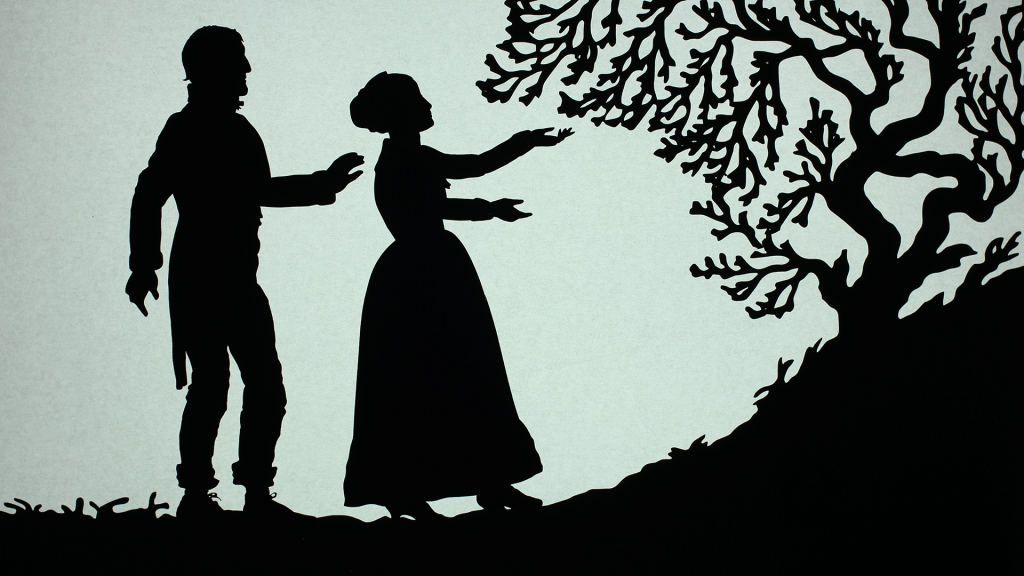
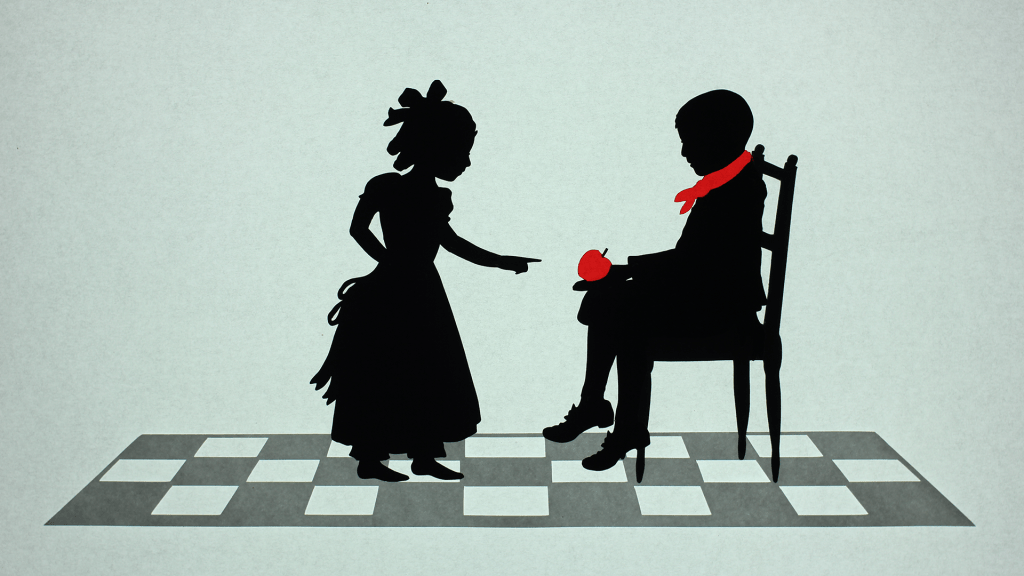
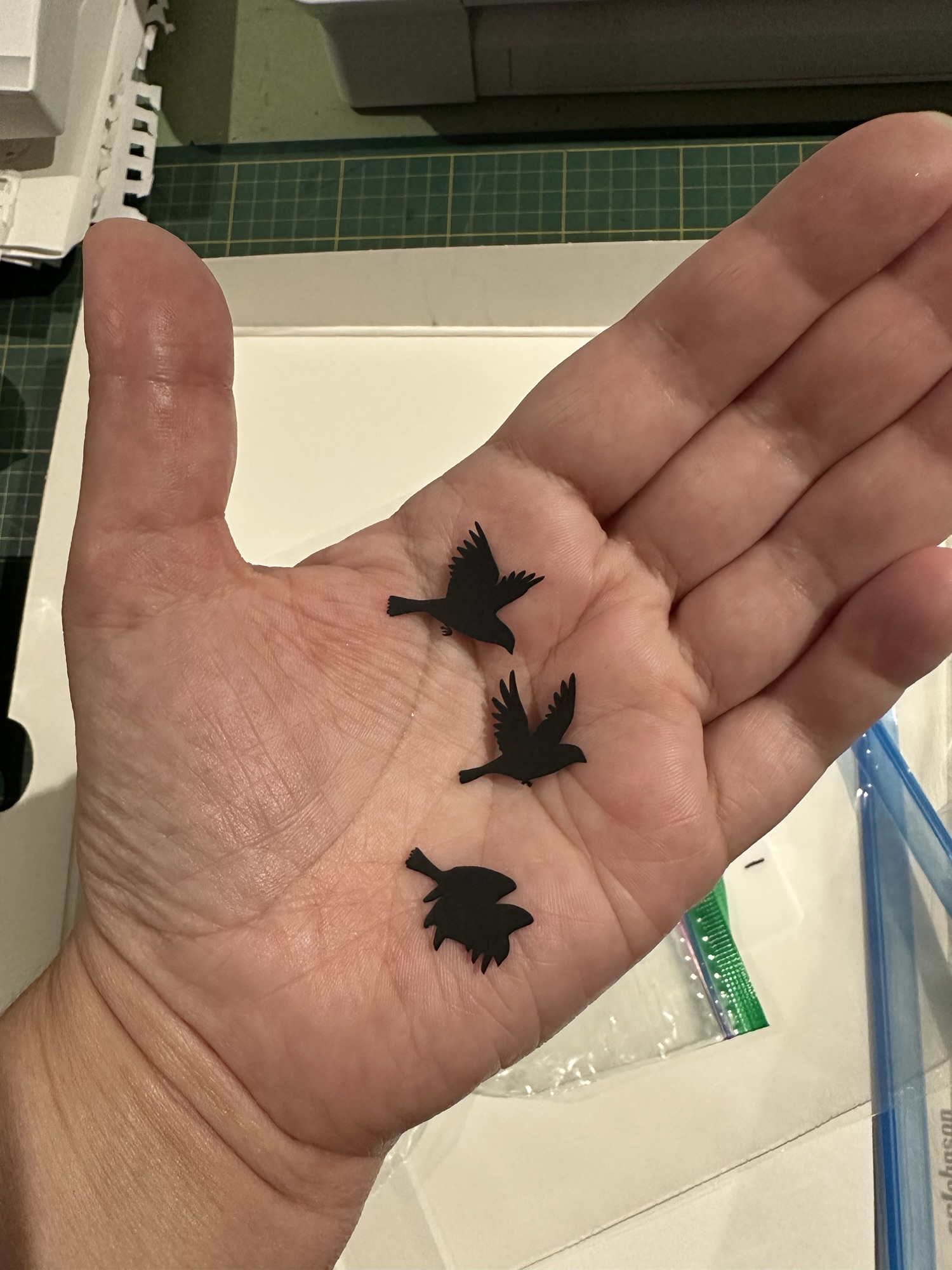
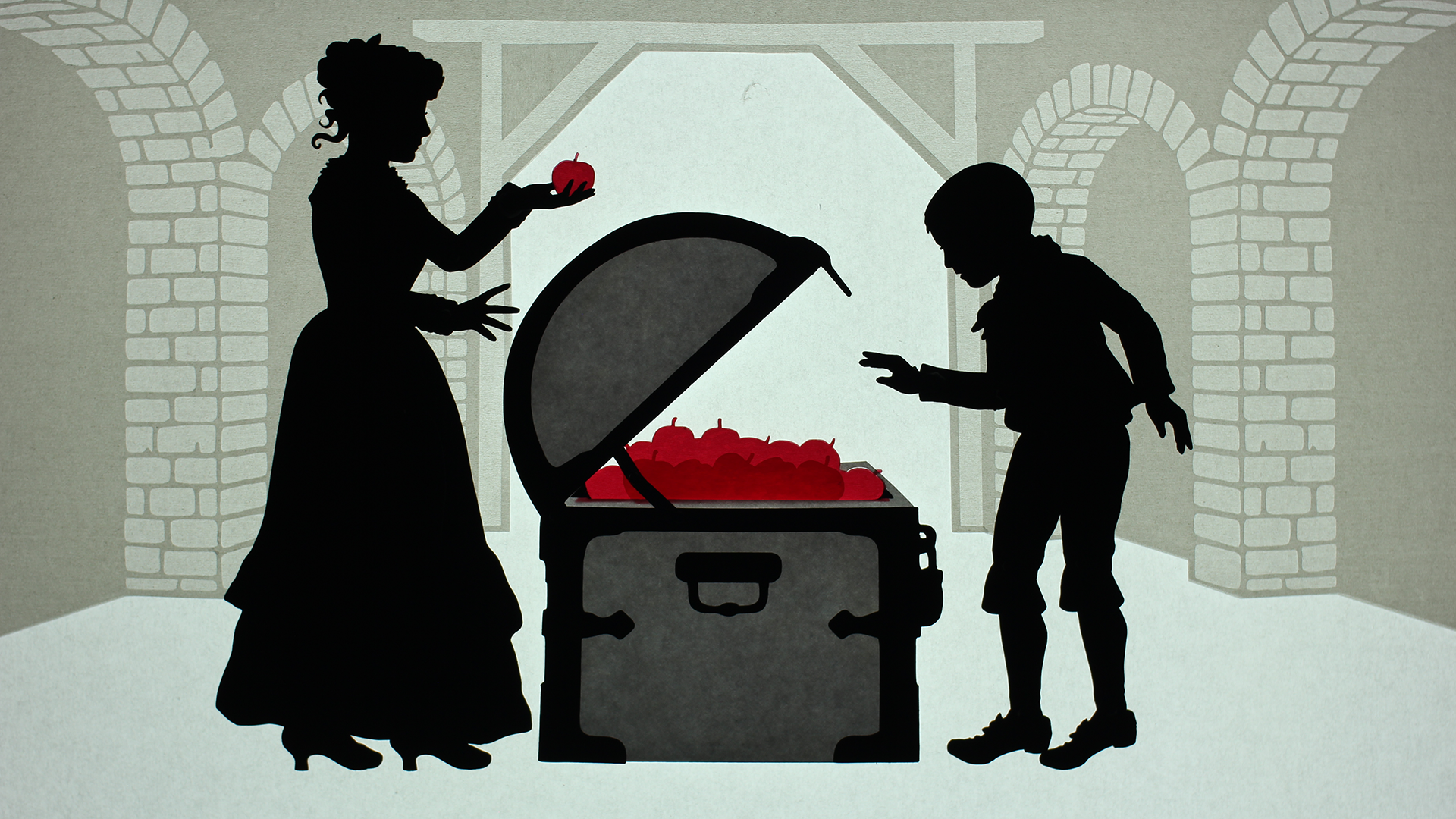
These past few weeks, I’ve been working on a grant application for a new animation project: an adaptation of a very dark and gory fairytale by the Brothers Grimm entitled The Juniper Tree (1812). Features child death, cannibalism, ghost-birds and violent revenge. In short, precisely my sort of thing. The proposed film will be created using paper cuts and articulated paper puppets, all done in a backlit, silhouette style perfect for this early 19th-century dark fairytale. Below is some concept art of the paper cutouts and puppets, shot on my light box.

The red is coloured acetate (actually lighting gels for photography) and the grey is achieved by using regular white, 50 lb. sketching paper. The black silhouettes are 90 lb. black drawing paper. These images are “proof of concept”, and not necessarily final art.
And that’s a wrap.

I’ve surprised myself by completing my short animated film, The Music of the Spheres, ahead of schedule. At just over 7 minutes long, this is my longest and (I think) best animation to date.

Here’s the synopsis:

Three celestial beings contemplate a post-human Earth where newly hybridized lifeforms have evolved out of the debris of the Anthropocene. Combining references to the art of alchemy, Catholic liturgical art, and the iconography of the Tarot, this film blends cosmology with an urgent message of ecology.

And now, on to film festival submissions.

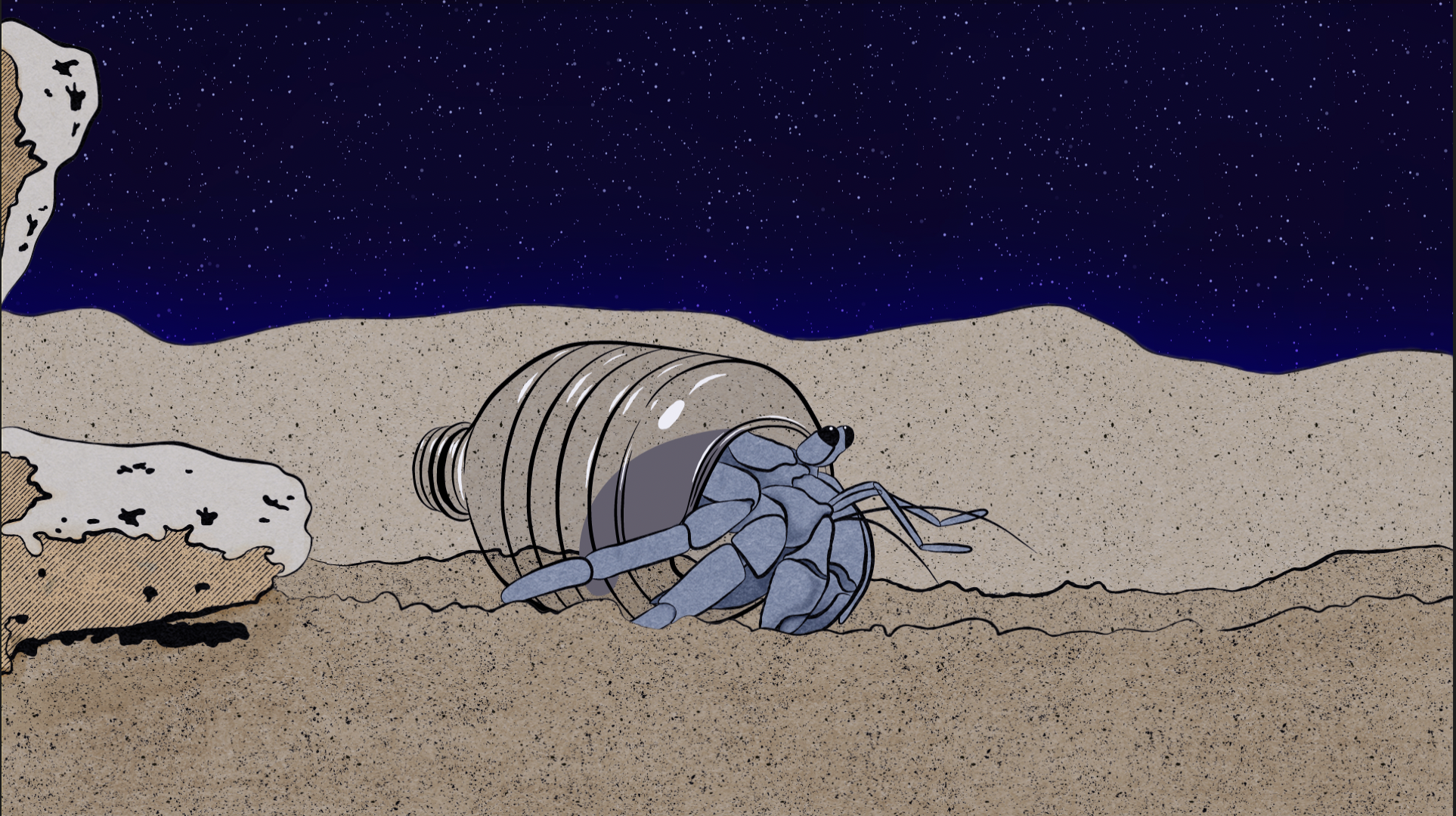
Hermit crabs with plastic shells

Two more scenes to go until my animation project is complete. Here’s a sneak peek at what I’m currently working on.

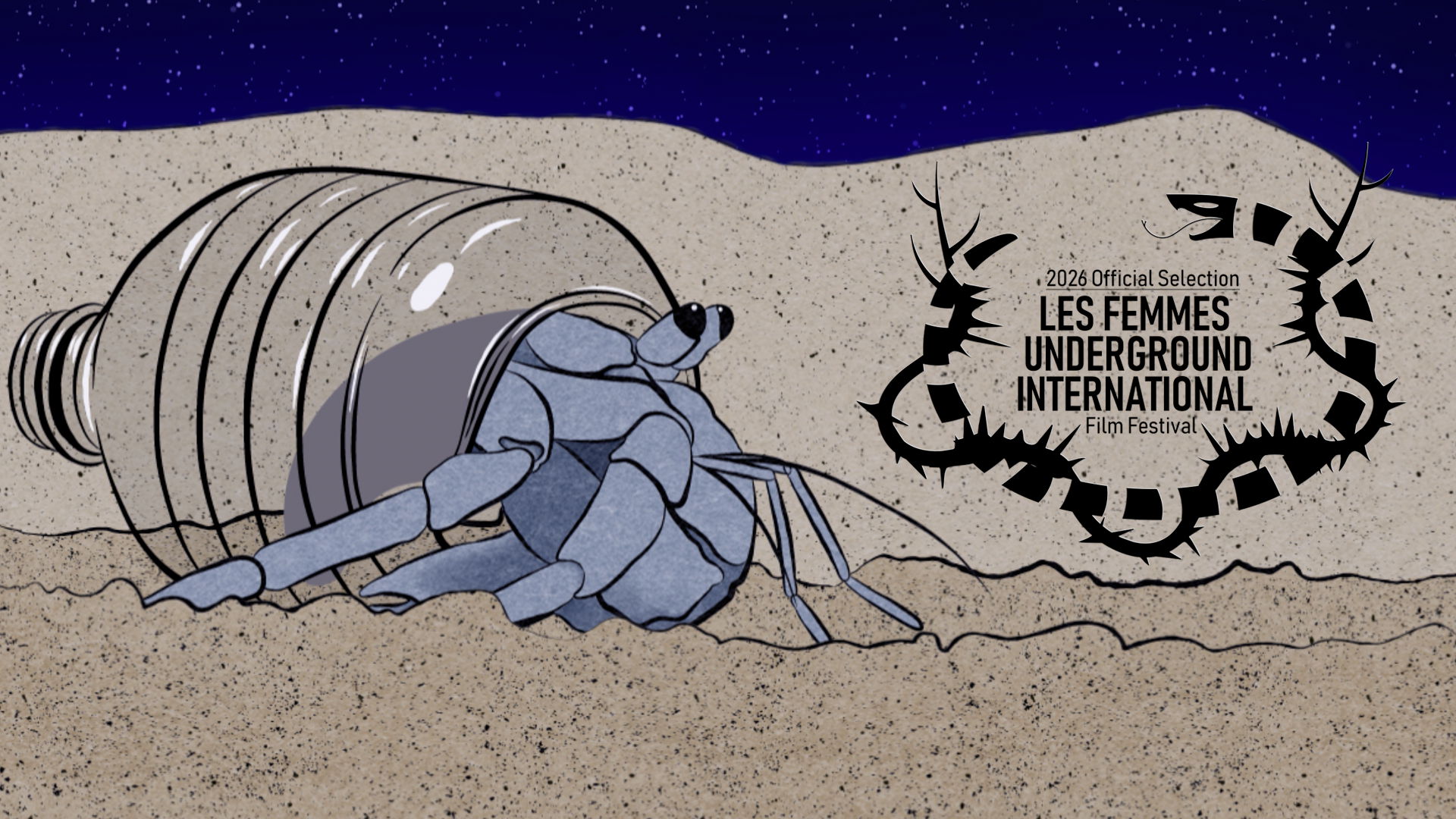
Did you know that hermit crabs are not “true crabs”, since they don’t possess a hard exoskeleton? They need to scavenge cast-off sea snail shells to protect their soft, vulnerable abdomens. Unfortunately, with people removing shells from beaches around the world for souvenirs, hermit crabs are left with little choice but to use plastic garbage as substitutions for shells.

Lobster walk (WIP)

Lobsters walk on the ocean floor, but they can’t walk on land. Their spindly legs can’t support the weight of their heavy exoskeleton. I wanted a scene with a lobster walking on the beach, however, so I devised an insect-like walk that isn’t technically correct for a lobster but does the job. SO MANY LEGS. Not finished yet, but it’s coming along.

Weeping Marys (work-in-progress)

I love liturgical art and, specifically, statues of weeping Madonnas, so it’s not surprising that this image has cropped up on my current project. Also, I just enjoy animating tears. You can be really loose with the drawing and it turns out pretty well.

This is the cleaned up footage, prior to digital paint. Below is one frame, painted.

Work-in-progress, January 2025.

At last, I’ve completed the interior room of the two towers. My plan is to reuse the design for both towers — one for the Moon, and the other for the Sun — but change the colour scheme. The Moon tower is an analogous mix of blues, pinks and purples with the accent colour of silver.

This character is loosely based on the High Priestess archetype from the Tarot.

Sacred Geometry

A small dodecahedron.

A rotating dodecahedron that I just completed for my current animation project. For Plato, the dodecahedron symbolised “Cosmic Harmony”. It is a three-dimensional representation of the symmetry of the pentagon and the “Golden Ratio”, that occurs organically throughout the natural world.

Jan Švankmajer & “The Ninth Heart”

I had the great pleasure of contributing some animation and artwork for the All The Haunts Be Ours Vol. 2 box set from Severin Films. One of my contributions included an animated title sequence for a featurette on the fantasy-horror Czech film The Ninth Heart (original title Deváté srdce, 1979), directed by Juraj Herz. This film boasts an animated title sequence by stop-motion maestro Jan Švankmajer and his wife and frequent collaborator, artist Eva Švankmajerová. Their title sequence used a top-down, 2D stop-motion technique with articulated paper puppets. According to what I could find on the Internet (there’s very little written on this hidden gem), Eva painted all the backgrounds while Jan did the animation. In addition to a credit for “visual effects”, Jan Švankmajer is credited as the “artistic collaborator”, which suggests his involvement in the design of the marionette puppets seen throughout the film. The title sequence and the marionettes are very much in a naïve, folk art style that one would expect from an independent travelling puppeteer (one of the main characters).

My title sequence adopts this folk art style and references both the Švankmajer animated title sequence, the marionettes, and also some of the main characters in the film.

The image below is a screen grab from the Švankmajer title sequence.