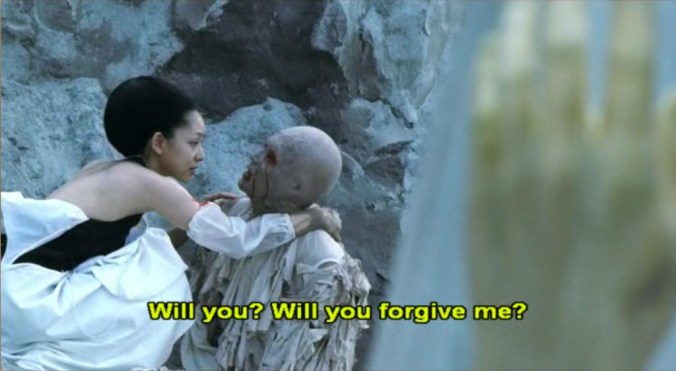
Horror films I said I wouldn’t watch, but did.

Back in September of 2010, I wrote a blog entry entitled The horror films I probably won’t watch, and why in which I listed five films that, solely based on my knowledge of their content, I felt unlikely that I’d opt to view them. The five films were:

  1. Ruggero Deodato’s Cannibal Holocaust (1980).
  2. Salò or the 120 Days of Sodom (1975) by Pier Paolo Pasolini.
  3. The August Underground Trilogy (August Underground 2002, Mordum 2003, Penance 2007) created by the Pittsburgh-based film production/special effects/design company Toetag Pictures.
  4. The mondo-style films Faces of Death (1978), and it’s imitators Faces of Gore and Traces of Death.
  5. Irreversible (2002) directed by Gaspar Noé.

The main issue I had with the listed films were the common element of “cruelty for the sake of cruelty” — or, in other words, that the sadistic nature of their content existed only to titillate in the most exploitative manner possible. Of course, since I had not seen these films, I had only their reputation on which to base my decision.

In the six years since I originally wrote that post, curiosity has — perhaps, predictably –gotten the better of me. Of the five films on that list, I’ve watched two (and almost three) of them. Here are my thoughts on each, in the order in which they first appeared:

Deodato’s Cannibal Holocaust is, without doubt, a nasty film. Every frame of film looks smeared in blood, grime and sweat, probably because it actually was. The animal deaths are brutal and very real, and the actors endured a great deal of hardship while filming in the Amazon. The film is so notorious for the animal deaths, in fact, that I felt little shock when they finally happened as I’d read a great deal about them already. I was not prepared, however, for the casual manner in which violent rape was thrown on the screen. Now, if you’ve watched any number of 70’s Italian exploitation films, you’ll already be aware that rape is depicted with a great deal of frequency. Cannibal Holocaust is no different in that regard, but it’s much more violent here. Then again, this is a brutally violent world that Deodato is creating for us, and he does this quite effectively. The first half of the film, with the rescue team heading into the Amazon to locate the missing filmmakers, is frankly a bit boring. Things improve considerably in the second half, with the executives in New York viewing the footage recovered by the rescue team. This is where the whole “found footage” conceit kicks in, and is without question the greatest contribution Cannibal Holocaust has made to the horror genre. We’d probably not have The Blair Witch Project without the shaky, hand-held camera and POV-style of this earlier film.

The gore is spectacular and reasonably well executed, with the iconic impalement scene standing out as an impressive achievement in practical special effects. Sure, all the blood looks like red paint but, hey, it’s 1979-80. By the end of the film-within-a-film, you’re basically cheering on the natives to take their bloody vengeance on the monstrous Euro-American filmmakers — and boy, do they ever. If you consider yourself more than a casual horror film fan, then you owe it to yourself to watch Cannibal Holocaust at least once. Of the Italian cannibal films, it’s probably the best (though I haven’t seen all of them).

Incidentally, Eli Roth’s 2013 offering The Green Inferno is basically a mash-up of this film with Umberto Lenzi’s Cannibal Ferox (itself a complete retelling of the basic plot in Deodato’s film). Roth’s rehash pales in comparison to the brutality of the earlier films, partly owing to the fact that one simply couldn’t make those films nowadays (laws protecting animal rights in films were passed after the making of Cannibal Holocaust). The only change Roth makes to his film which I felt worked was the repositioning of the native tribe from “peaceful victims pushed to violence” to very purposeful and sadistic predators. The cheerfully privileged college student-activists in The Green Inferno die out of sheer First World naïveté which — aside from a problematic view of non-white “primitives” as the menacing Other — is an interesting re-contextualization of the traditional cannibal film narrative. 

salo-3-1024x677

Salò or the 120 Days of Sodom (1975) by Pier Paolo Pasolini.


I tried to watch Salò or the 120 Days of Sodom, I really did. I only made it about 45-minutes into the film before I switched it off. Sure, the cinematography was fabulous and the acting seemed very competent … but, it was so fucking boring. Judging from the first 45-minutes only, it appeared that the sadistic fascists planned to bore their adolescent victims to death with all their incessant talking, talking, talking. One has to suppose that all the infamous rape, torture and shit-eating occurs much later in the film. Perhaps several cups of coffee are required to view this lengthy piece of arthouse-smut. I may follow-up with a films I said I wouldn’t watch because they were so boring, but I persevered anyway post at a future date.

I haven’t watched any of the August Underground Trilogy yet, and I’m still on the fence about them. I may give-in to my curiosity late one night, when I’m feeling up to the challenge of a film that features a headless, maggoty toddler corpse. These films are not available (nor will ever be available) on streaming media like Netflix. One has to dig in the deeper, darker places of the Internet to unearth these atrocities.
968full-faces-of-death-artwork

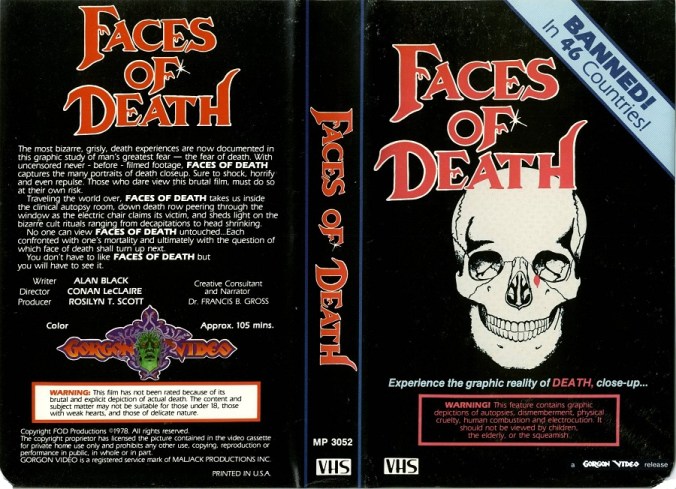
One version of artwork for the “Faces of Death” VHS case.

I have, however, watched the infamous Faces of Death (1978), and found the film completely hilarious. I recall closely studying the VHS case at my local Blockbuster Video when I was a teen in the 80’s, curious about the title but too intimidated to actually rent it. Banned in 46 countries! Depiction of actual death!

Lacking any sense of true narrative, the film is a cobbled-together series of newsreel and documentary footage showing fatal accidents, war photography, human autopsies, and animals being dispatched in slaughterhouses, all loosely connected by the authoritative voiceover of our death-tour guide, the fictitious Dr. Francis B. Gröss. Some of the footage is clearly (and, in some cases, laughably) staged reconstructions of reputedly real events. The segment featuring a group of American tourists supposedly eating monkey brains in some exotic locale is laugh-out-loud ridiculous.

The final film, the Gaspar Noé directed Irreversible (2002), I plan to watch at a future date. It’s such a seminal film within the framework of “New French Extremity” that I feel I should, though I seldom feel like settling-in to witness Monica Bellucci get violently raped for several, protracted minutes. Blech. Still, the time-reversal conceit seems like an interesting one.

Anyway, happy Halloween horror-viewing!
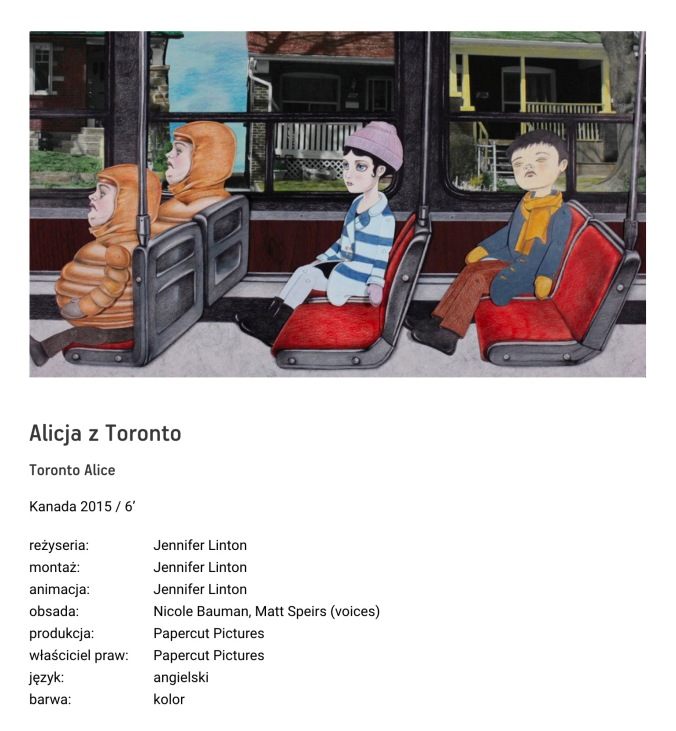
New Horizon International Film Festival, Wrocław, Poland.

New Horizon Polish

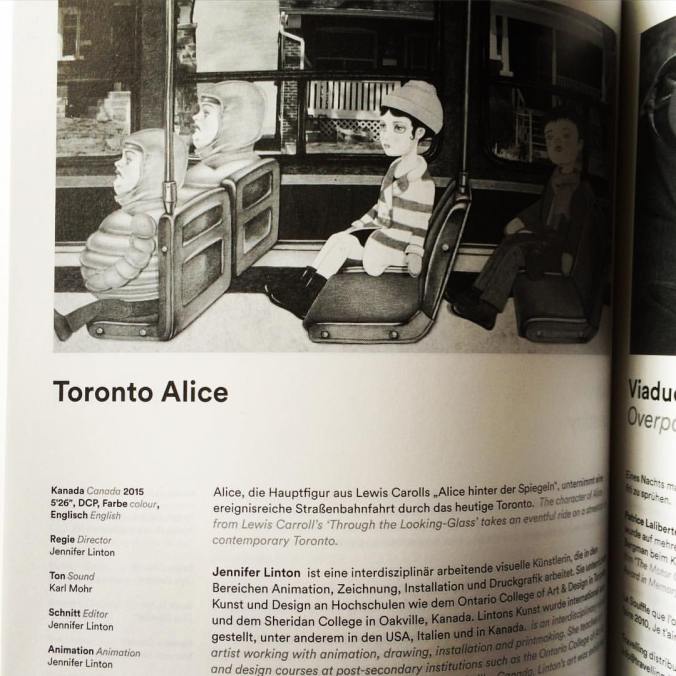
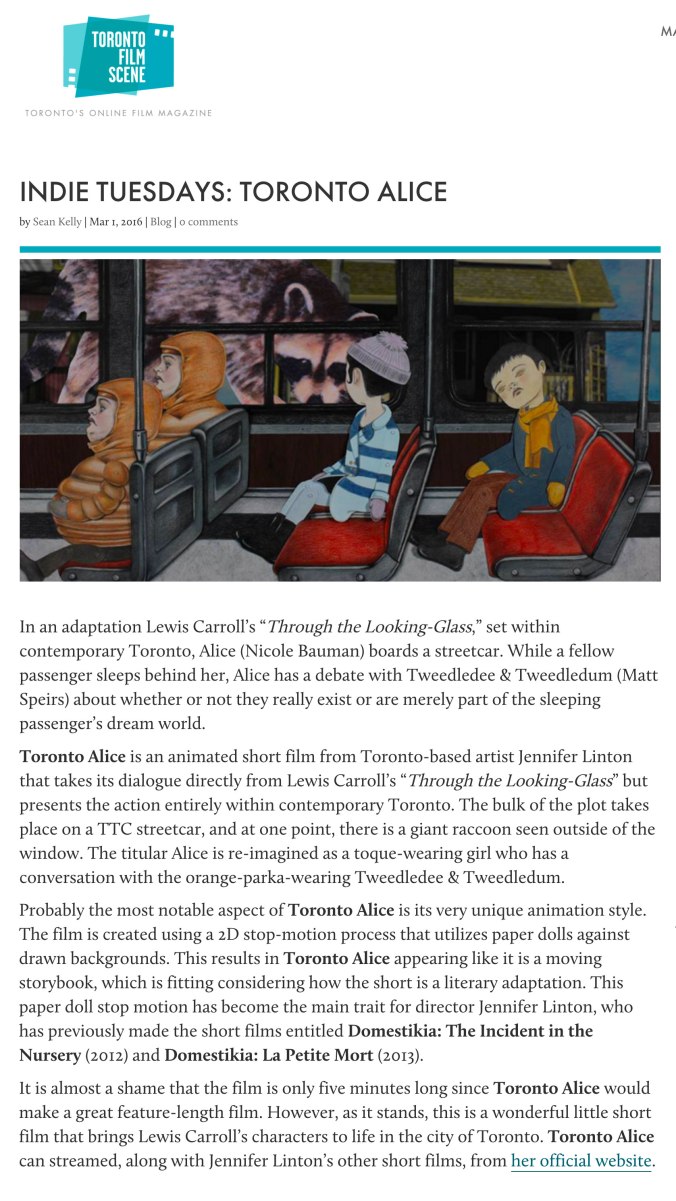
I’m delighted to announce that Toronto Alice will screen on July 31st in the Children’s Films program at New Horizon International Film Festival in Wrocław, Poland. Considering that my use of paper cutouts is largely inspired by the work of Polish animators Jan Lenica and Walerian Borowyck, the inclusion of my film in this Polish film festival feels like a sort of stylistic homecoming.

Wunderkammer: Cabinets of Curiosity.

stacked-cabinet

A wunderkammer, otherwise known as a cabinet of curiosity. This is an animated GIF testing out the opening motion of the doors to the cabinet in my film.


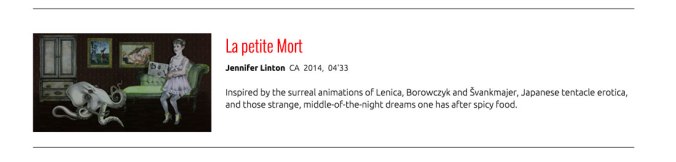
Hello, my darklings. Sorry for the prolonged absence from this blog, as I’ve begun working on my new animation project entitled Wunderkammer. This project sees the return of Madelaine, the mysterious Victorian lady from my previous short films La Petite Mort (2013) and An Unfortunate Incident Involving Her Hat (2012). As always, curious happenings befall Madelaine. In the latter film, Madelaine became the victim of a very bizarre wardrobe malfunction, and in the former, she engaged in a romantic — but ultimately tragic — tryst with an octopus. Similarly, in Wunderkammer her uncanny adventures continue.

For those not familiar with the term, a wunderkammer was a Renaissance-era predecessor of the modern museum collection. Below is a definition copied from the Tate Modern web site:

Wunderkammer or curiosity cabinets were collections of rare, valuable, historically important or unusual objects, which generally were compiled by a single person, normally a scholar or nobleman, for study and/or entertainment. […]Exotic natural objects, art, treasures and diverse items of clothing or tools from distant lands and cultures were all sought for the wunderkammer. Particularly highly prized were unusual and rare items which crossed or blurred the lines between animal, vegetable and mineral. Examples of these were corals and fossils and above all else objects such as narwhal tusks which were thought to be the horns of unicorns and were considered to be magical.

— excerpt from “History of the wunderkammern (cabinet of curiosities).”

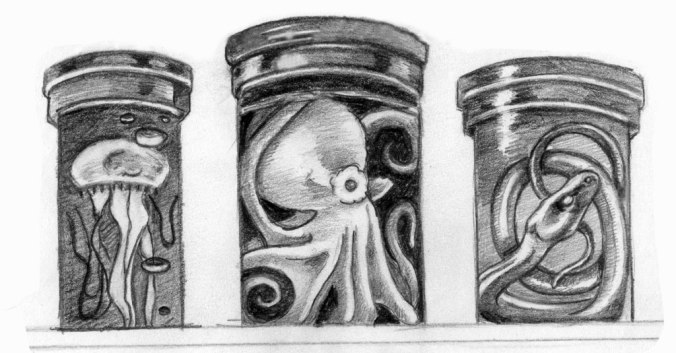
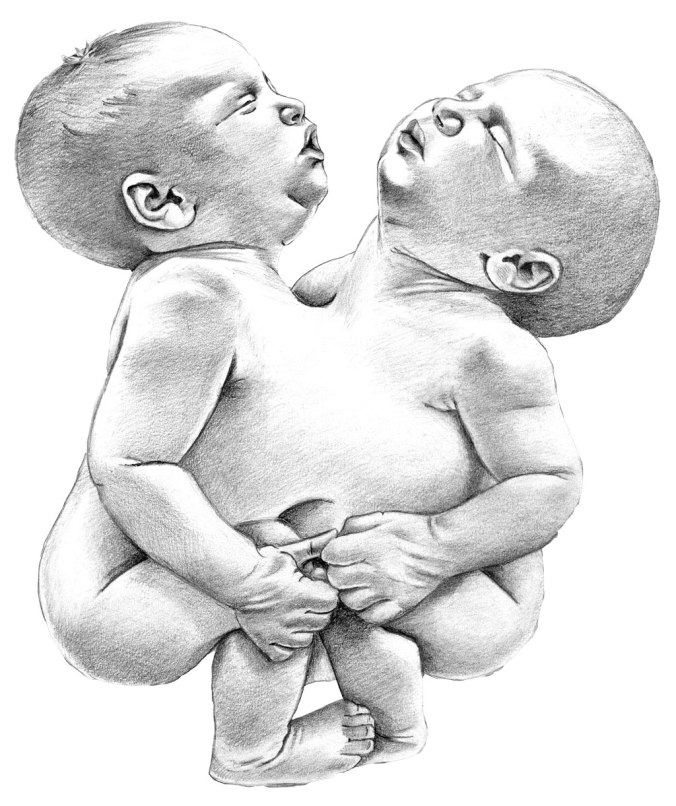
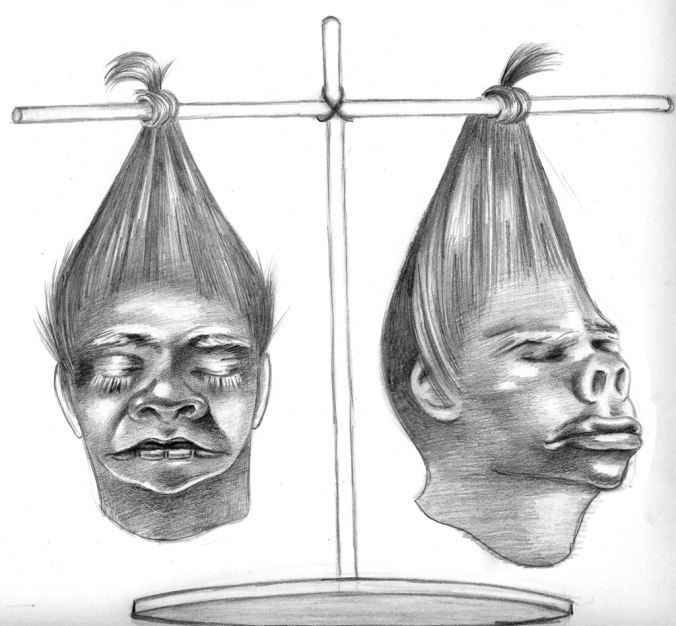
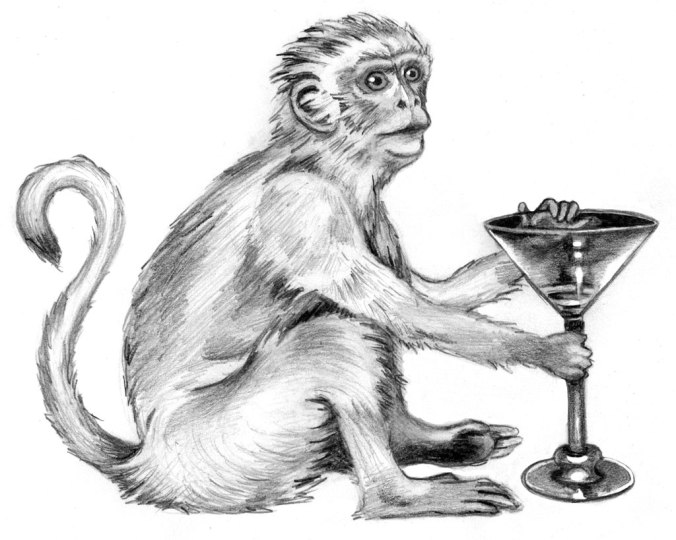
I include here some pencil sketches of the various items and curios found inside the wunderkammer of my film (subject to change as the project evolves, of course).

octopus

Three wet specimen jars containing (left to right) a jellyfish, octopus, and a snake. The octopus is a small nod to my previous film La Petite Mort. 

conjoined-twins

Conjoined twins preserved within a glass specimen container (container not drawn yet).

heads2

Pair of tsantsa, or shrunken human heads. Sure, this might be culturally insensitive, but tsantsa were wildly popular in the 19th century as items of “curiosity” in European cabinets.

monkey

Taxidermy monkey with martini glass. Taxidermy of all kind was popular inside wunderkammer. Not entirely happy with this sketch, and I may revisit at a later date.

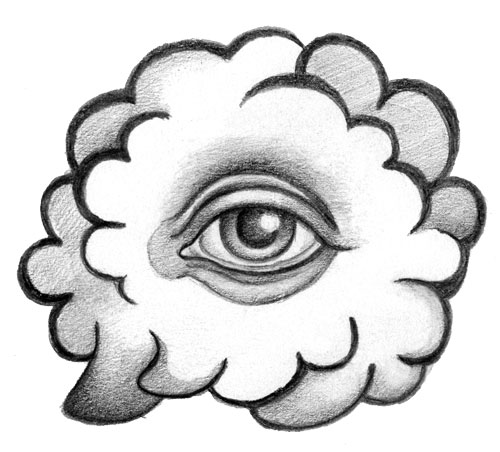
eye-cloud

What it looks like: a cloud with a single eye. This never existed inside any wunderkammer, but it does inside mine.

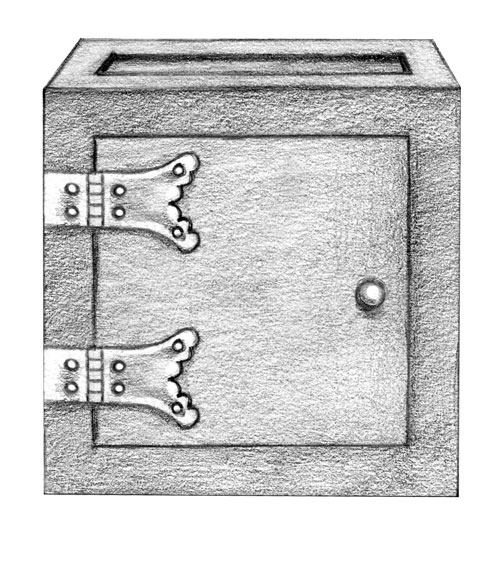
box

The mysterious box. Believe it or not, the contents of this box will prove to be the most strange and curious item inside my wunderkammer. Stay tuned. 

Interview at Oberhausen

Whilst attending the International Short Film Festival Oberhausen in Germany this month (May 2016), I had the pleasure of being interviewed by three young German journalism students. We had a brief conversation about my film in the festival Toronto Alice. They recently sent me a link to the interview, and I used Camtasia to capture it in order to share it with you, my readers. There is no video, only audio.

At one point in the recording, you’ll hear my voice mutter the word “ambiguous” over top of the interview. This was in response to — and a correction of — my previous misuse of the word “ambivalent” during the interview.

Festival updates & random musings.

Hello, my darklings. Hope you’re enjoying the warmer-than-usual weather in February (at least in Toronto). Just wanted to post an update on the various film festivals that are screening my work over the next few weeks.

Firstly, I’m truly honoured to have my short animated film La Petite Mort included in the “Independent (Canadian) Scene” program at Tricky Women 2016 in Vienna. Many heartfelt thanks to Madi Piller, executive director of Toronto Animated Image Society (TAIS), who curated this program. She is a tireless supporter of independent animators.

Screen-Shot-2016-02-21-at-3.27.55-PM


lapetitemort_TRICKY

Then, this tentacled darling of an animated short slithers her way to Lausanne, Switzerland for La Fête du Slip, an international porn festival. Needless to say, the preceding link is very NFSW unless you happen to work in a porn shop, or perhaps VICE Magazine. Oddly enough, I don’t consider this film as porn per se, but as a self-professed “sex-positive feminist”, I’m fine with that categorization, too. Evidently, the porn world has been craving more scenes of sexual exchange between a woman and an octopus. This could be a very niche market.

Screen-Shot-2016-02-21-at-3.46.00-PM

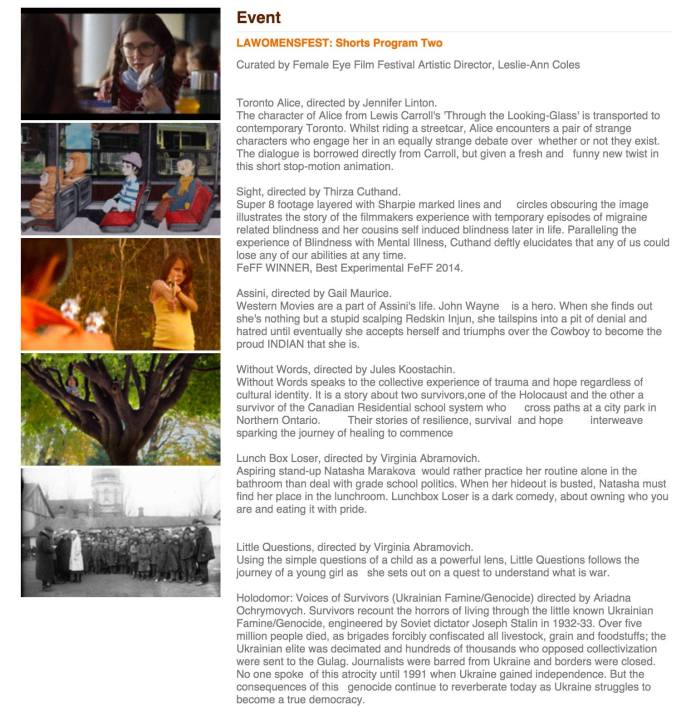
My other cinematic child, Toronto Alice, travels to Los Angeles for the L.A. International Women’s Film Festival in March. Many thanks to Leslie -Ann Coles for curating the Canadian Shorts program that includes this film.

12747228_1665076787092171_753150849818177614_o

I’m also excited to share that I’m currently developing a new script for another of my independent animations. This new project will be closer to La Petite Mort in look and feel, and has the working title of Wunderkammer. Stay tuned.

Deviant Desires: Erotic Grotesque Nonsense, part VII. “Caterpillar”, directed by Kōji Wakamatsu

This blog post is Part VII and the final instalment in my series on Ero Guro NansensuClick here to read the previous posts on this topic.

Caterpillar_12

Caterpillar (2010), directed by Kōji Wakamatsu.

Wakamatsu is best known as the director of a number of pink films (pinku-eiga) in the 1960’s and has been called “the most important director to emerge in the pink film genre.” (He also, coincidentally enough, produced Oshima’s In the Realm of the Senses). His adaptation of Edogawa Rampo’s short story Caterpillar belongs to a more recent trend in Japanese film to question their military past.

‘The Caterpillar’ (first published in 1934), was the only of Rampo’s stories to have been banned by the Japanese authorities. It was censored at the start of the Second Sino-Japanese War (1937) out of fear it would derail the nationalistic movement at the time.

The film opens with actual footage of Japanese soldiers during the Second Sino-Japanese War. In the original story by Rampo, Lt. Sunaga has been brought home from an unnamed war. Director Wakamatsu unambiguously attaches Rampo’s narrative to Japan’s war with China. Given the story’s previous history of censorship for being ‘anti-nationalist”, it is fitting that Wakamatsu uses Caterpillar as the set piece for his critique of Showa era ultranationalism.

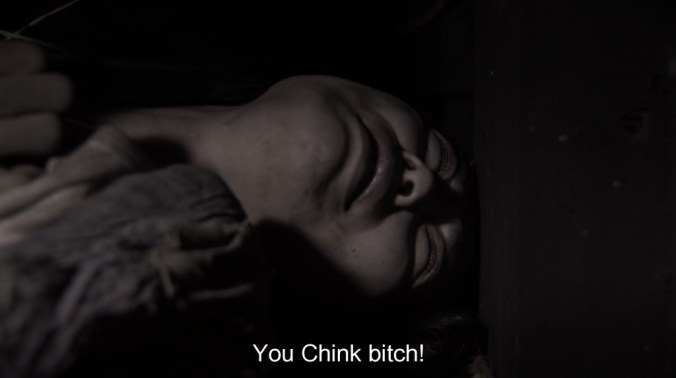
After the war footage is shown during the title credits, we witness Lt. Kurokawa (Wakamatsu changes the names of the main characters) rape and murder a Chinese woman. While the event is not specifically named, this scene calls to mind Japanese war atrocities such as the infamous Nanking Massacre.

Caterpillar_14

In late 1937, over a period of six weeks, Imperial Japanese Army forces brutally murdered hundreds of thousands of people–including both soldiers and civilians–in the Chinese city of Nanking. The horrific events are known as the Nanking Massacre or the Rape of Nanking, as between 20,000 and 80,000 women were sexually assaulted.

This added backstory of Lt. Kurokawa’s past transgressions (a detail not found in the Rampo text) frames Caterpillar partly as a tale of retribution. He has returned home a horribly disfigured quadruple amputee who is deaf and mute. He is, of course, completely dependent on his wife for all his physical needs, and he communicates these through a series of animalistic grunts and the use of his eyes. Given his condition, Kurokawa devolves into something less-than-human and, much like the caterpillar (whose form he now physically resembles), his entire existence focuses solely on food and sex.

caterpillar_16

Lt. Kurokawa is brought home to his family’s village with much pomp and ceremony, being praised as “an inspiration to all servicemen”. His family, however, appear more shocked and horrified than inspired. For the rest of the film, none of the characters dare acknowledge the “elephant in the room”, which is the fact that the celebrated War God is little more than a stump with a head attached. This element of absurdity is the strength behind Rampo’s short story, and director Wakamatsu underscores this with dry, deadpan humour.

Lt. Kurokawa’s wife Tadashi is burdened with the round-the-clock care of her husband, which is she expected to perform without complaint. This is the same husband who used to physically abuse her for failing to provide him with a son. Her only joy in an otherwise difficult existence are the occasional outings she makes with Kurokawa, whom she dresses in his uniform, his medals proudly displayed.

caterpillar

Wakamatsu’s  film looks great, and is somewhat successful in fleshing-out the short story by Rampo. That said, it does feel stretched a bit thin. A 30-minute short might have been better for the Rampo story, rather than a feature-length film. It does, however, remain the most faithful adaptation of Rampo’s The Caterpillar currently set to film.

One interesting element to note about Rampo’s Caterpillar is that it very probably was the progenitor of amputee fetish (known clinically as acrotomophilia) as a favourite motif amongst current ero-guro content. This connection of amputee fetish to Rampo’s short story is made much more overt in Hisayasu Sato’s version of Caterpillar, a short segment he directed for the 2005 horror anthology Rampo Noir. Unlike Wakamatsu’s relatively faithful retelling of the Rampo text, Sato’s film focuses tightly on the highly eroticized, BDSM-flavoured power dynamic that exists between the limbless lieutenant and his wife — an element that is only a subtext in the Rampo story. While this turning-of-the-tables in terms of power dynamics is a key feature in Wakamatsu’s version, Sato’s impressionistic and considerably kinkier version deals with this to the exclusion of the rest of the story. Reminiscent of the film Boxing Helena, the lieutenant’s wife applies her surgical skills to render him her helpless and fully dependant sex slave.

caterpillar-rampo-noir

Hisayasu Sato’s version of Caterpillar, directed for the 2005 horror anthology Rampo Noir.

Conclusion

Ero guro nansensu served as both a diversion and as a social “pressure valve” — absorbing all of the collective fears brought on by economic recessions, the Great Kanto Earthquake, growing militarism and political conflict, and the rapid social and cultural changes taking place within the Japan of the 1920’s and 30’s. These collective fears (and forbidden desires) were then given expression within the safe haven of ero guro’s imaginative play. The Modern Girl supplied ero guro with the intrepid heroine for its dark, erotically-tinged narratives, and the cafes and jazz-clubs provided the setting for these new, Modernist tales of the macabre.