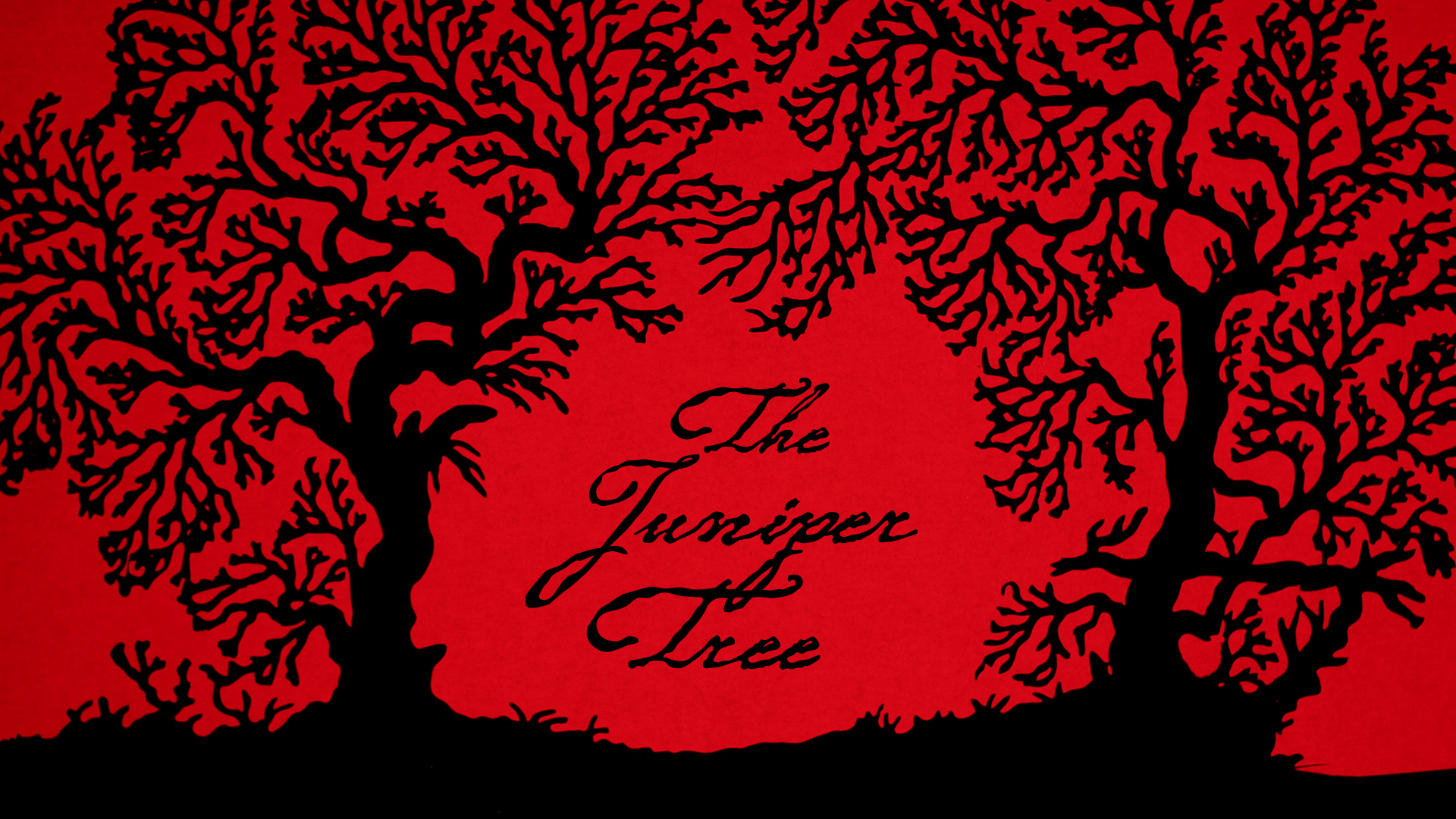
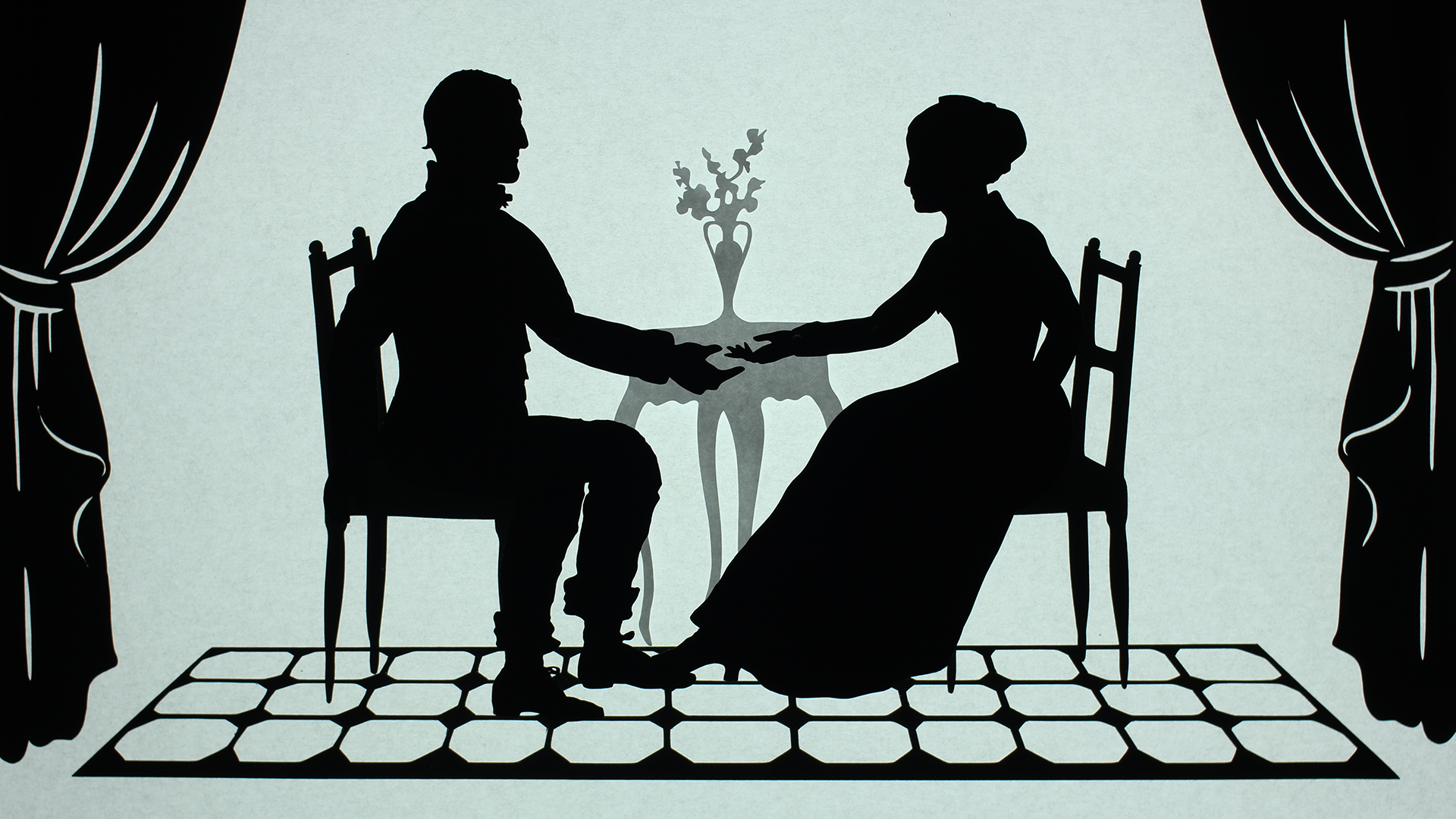
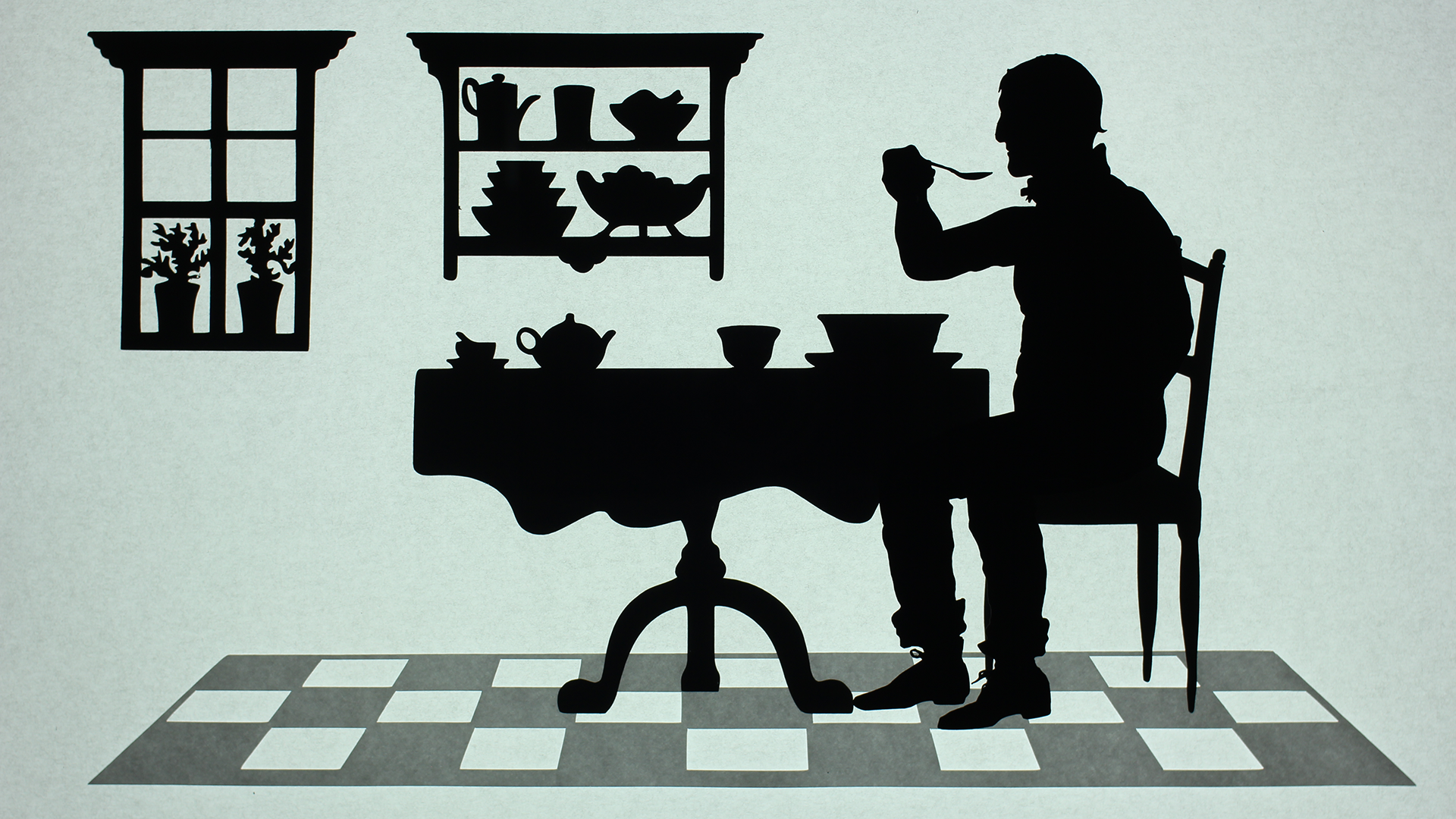
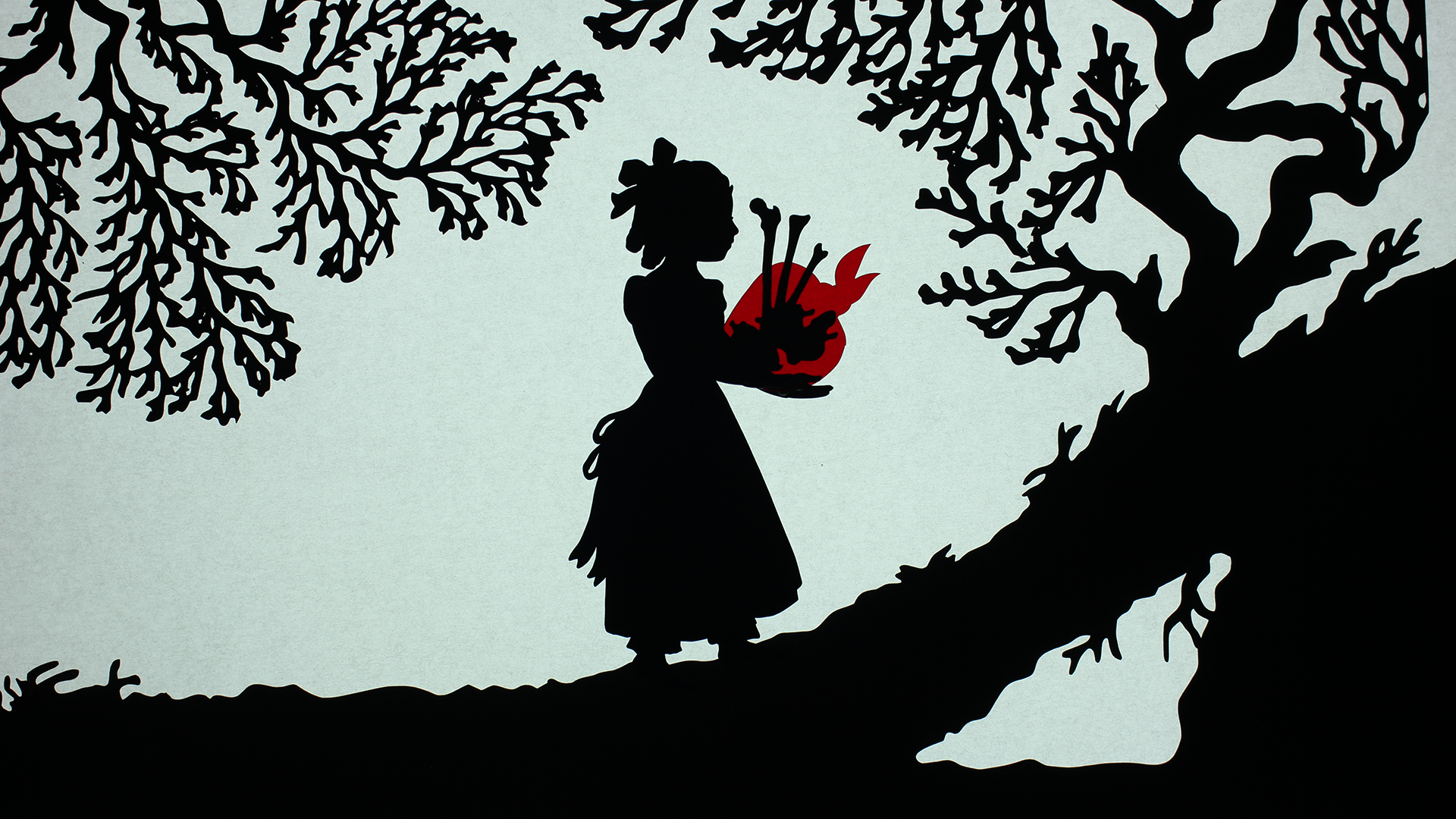
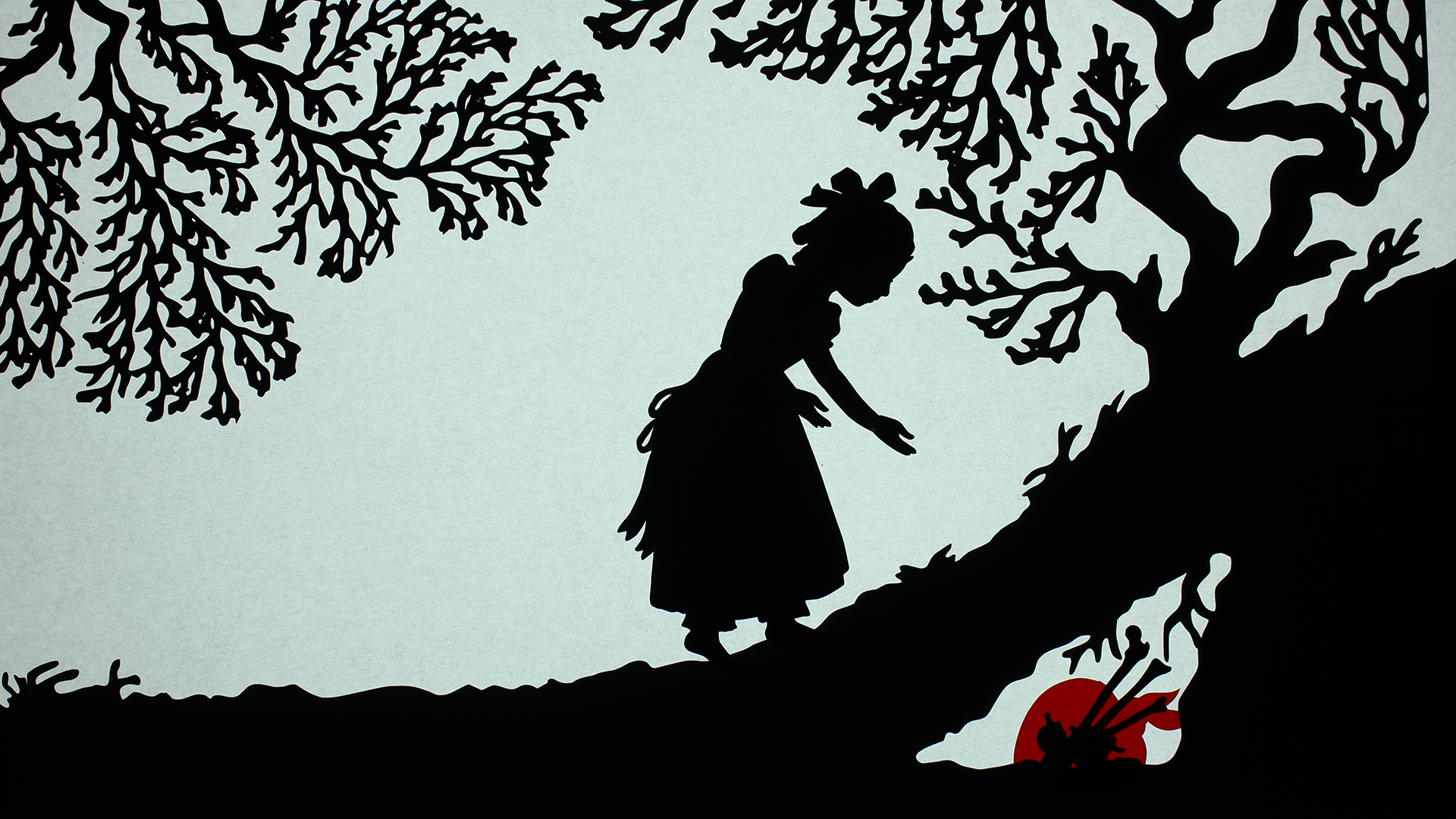
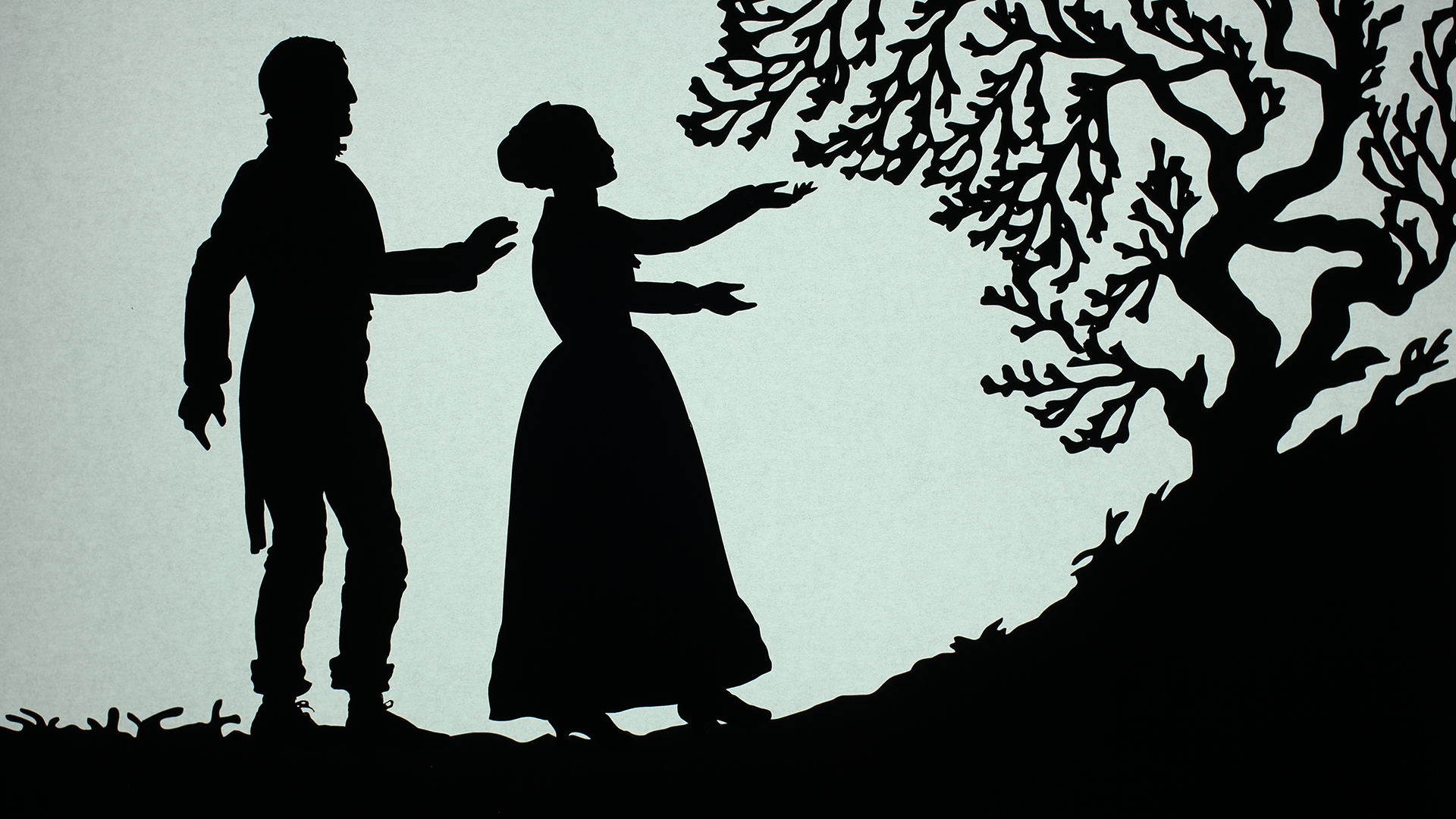
These past few weeks, I’ve been working on a grant application for a new animation project: an adaptation of a very dark and gory fairytale by the Brothers Grimm entitled The Juniper Tree (1812). Features child death, cannibalism, ghost-birds and violent revenge. In short, precisely my sort of thing. The proposed film will be created using paper cuts and articulated paper puppets, all done in a backlit, silhouette style perfect for this early 19th-century dark fairytale. Below is some concept art of the paper cutouts and puppets, shot on my light box.
The red is coloured acetate (actually lighting gels for photography) and the grey is achieved by using regular white, 50 lb. sketching paper. The black silhouettes are 90 lb. black drawing paper.
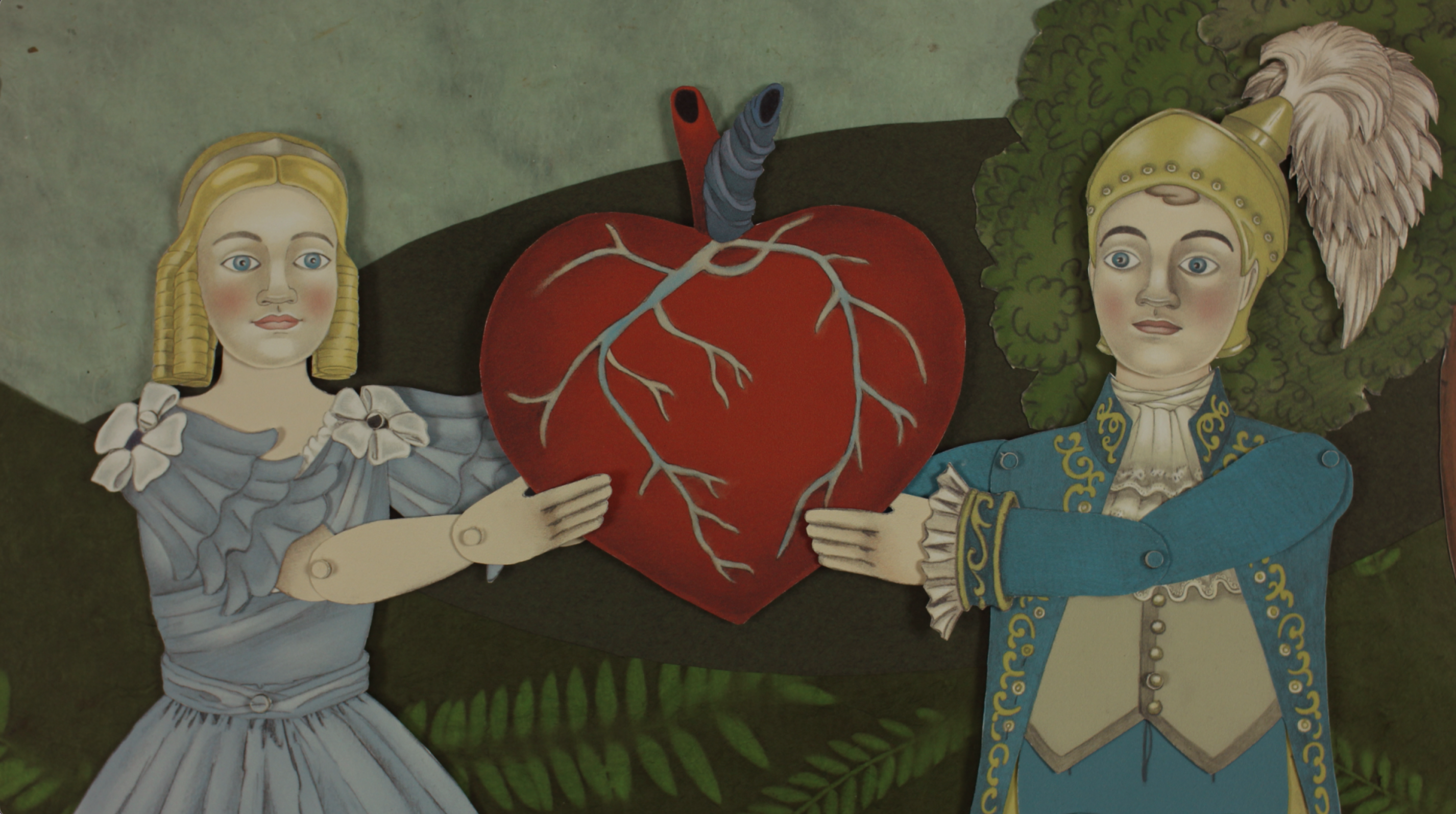
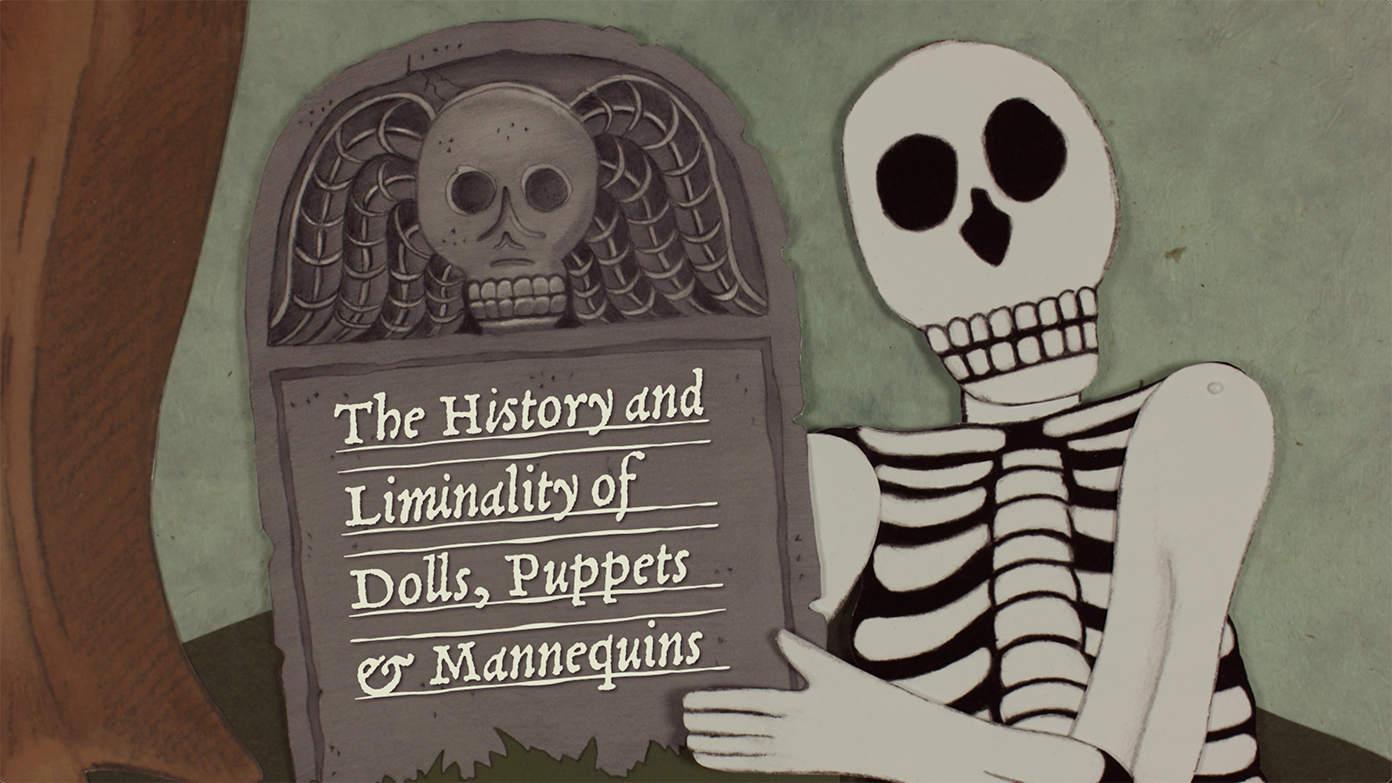
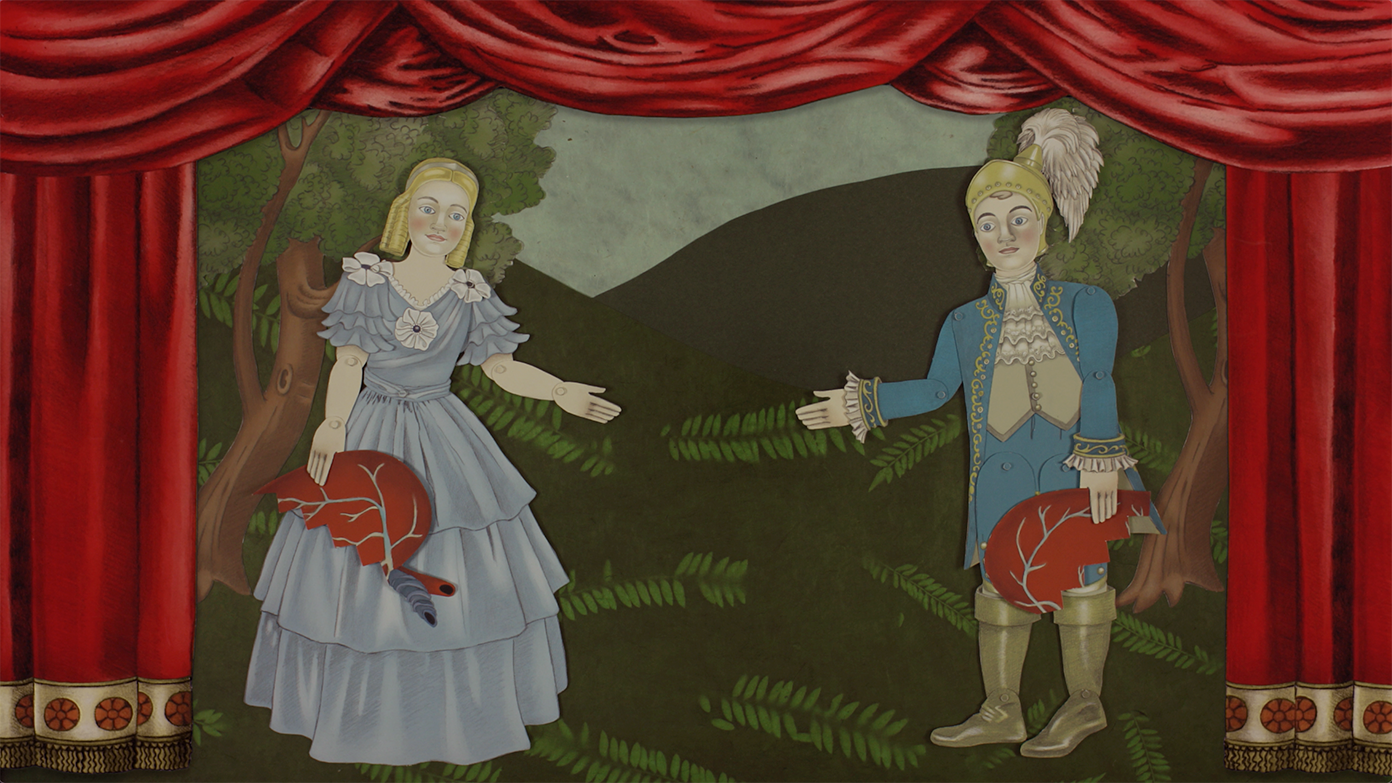
I had the great pleasure of contributing some animation and artwork for the All The Haunts Be Ours Vol. 2 box set from Severin Films. One of my contributions included an animated title sequence for a featurette on the fantasy-horror Czech film The Ninth Heart (original title Deváté srdce, 1979), directed by Juraj Herz. This film boasts an animated title sequence by stop-motion maestro Jan Švankmajer and his wife and frequent collaborator, artist Eva Švankmajerová. Their title sequence used a top-down, 2D stop-motion technique with articulated paper puppets. According to what I could find on the Internet (there’s very little written on this hidden gem), Eva painted all the backgrounds while Jan did the animation. In addition to a credit for “visual effects”, Jan Švankmajer is credited as the “artistic collaborator”, which suggests his involvement in the design of the marionette puppets seen throughout the film. The title sequence and the marionettes are very much in a naïve, folk art style that one would expect from an independent travelling puppeteer (one of the main characters).
My title sequence adopts this folk art style and references both the Švankmajer animated title sequence, the marionettes, and also some of the main characters in the film.
The image below is a screen grab from the Švankmajer title sequence.
Last summer, I had the great pleasure of contributing some animation and artwork for the All The Haunts Be Ours Vol. 2 box set from Severin Films. My contributions include a paper puppet theatre, and an animated title sequence for a featurette on the beautifully restored dark fantasy film The Ninth Heart, directed by Juraj Herz. This Czech film boasts an animated sequence by stop-motion maestro Jan Švankmajer and his wife and frequent collaborator, artist Eva Švankmajerová. Their title sequence used a top-down, 2D stop-motion technique with articulated paper puppets, a technique to which my sequence pays humble homage.
This box set looks INCREDIBLE. Many thanks to Kier-La Janisse for enlisting me in this dream commission.
Test of the title card composited with the star field background.
Now that the holidays have arrived, I’ve time to play around in my studio. I’ve recently begun work on a new animation project entitled The Music of the Spheres. If this title sounds familiar, it’s because it’s a very old concept dating back to ancient Greece and the mathematician Pythagoras. Known also as musica universalis, it’s “a philosophical concept that regards proportions in the movements of celestial bodies – the Sun, Moon, and planets – as a form of music. The theory, originating in ancient Greece, […] was later developed by 16th-century astronomer Johannes Kepler.” (from Wikipedia). Kepler discovered that the planets were exhibiting all of the ratios found in music, including octaves. They were, by their movements, mathematically expressing both major and minor musical scales.
The soundtrack is a gorgeous piece of music created by contemporary British experimental composer Suzie Shrubb entitled a tintinnabulation of cosmic scintillation. This piece is, quite literally, the music of the spheres. Here’s an excerpt from Shrubb’s statement: “The pitches in this piece correspond to those produced by pulsars from the 47 tucanae globular cluster situated in the region of the tucana constellation, approximately 16,000 light years from earth.” Needless to say, I was thrilled when Shrubb was excited about my film proposal and agreed to license her music as it’s simply perfect.
My plan is to shoot paper-based images on my lightbox using Dragonframe (a frame capture software) in the (probably vain) attempt to animate using light. The short clip seen above is a proof-of-concept test with the soundtrack. The title card disc is black card cut using my Silhouette Cameo 4 paper cutting machine, and the areas of colour are pieces of coloured acetate. I had mentioned in the recent past that I planned to return to my “stained glass style” used in my earlier drawings on Mylar, and this title card is one example of this re-engagement with my older work.
The star field was also created with cut paper, shot on my light box. I tried an entirely digital version of the star field in After Effects (which took minutes, rather than hours, to create), but I simply didn’t like the result. If an asset is not a tangible object at some point in the creative process, I lose all interest in it. Not certain if it’s apparent at this scale, but the stars do pulse at a regular, 1 second interval. I also plan to create frame-by-frame animation which will be printed on vellum and shot on the light box.
I’m delighted to announce that my short animated film Wunderkammer will screen at the one-night only Beautiful & Bizarre Taxidermy Showcase happening in Brooklyn on October 29th. I can’t think of a more perfect pairing. Here’s the little blurb the event organizers wrote about my film:
What’s in the box? Madelaine’s cabinet of curiosities contained a collection of wonders to both delight and horrify. One day, a mysterious item in her cabinet captures her attention. A darkly-tinged fantasy that explores the erotic-grotesque. Intrigued? Find out more when we show Jennifer Linton’s short film, aptly titled, “Wunderkammer”! An official selection honoured at dozens of films festivals internationally, we are thrilled this independent animation, with richly textured paper cutouts and startling stop-motion, will welcome guests to our showcase! Tickets at https://bit.ly/2MwXwdm
In addition to teaching and making art and animated films, I like to make and sell articulated paper puppets for my Etsy shop. Think I just enjoy the straightforward, playful simplicity of puppets and paper dolls.
I recently made this short stop-motion video “commercial” to promote my shop — but, honestly, I just wanted to get some of these puppets under camera to see what I could do with them. Their range of motion is limited (most of the heads don’t move), but I was up for the challenge.
The music is just some royalty free loop I downloaded from Soundsnap.
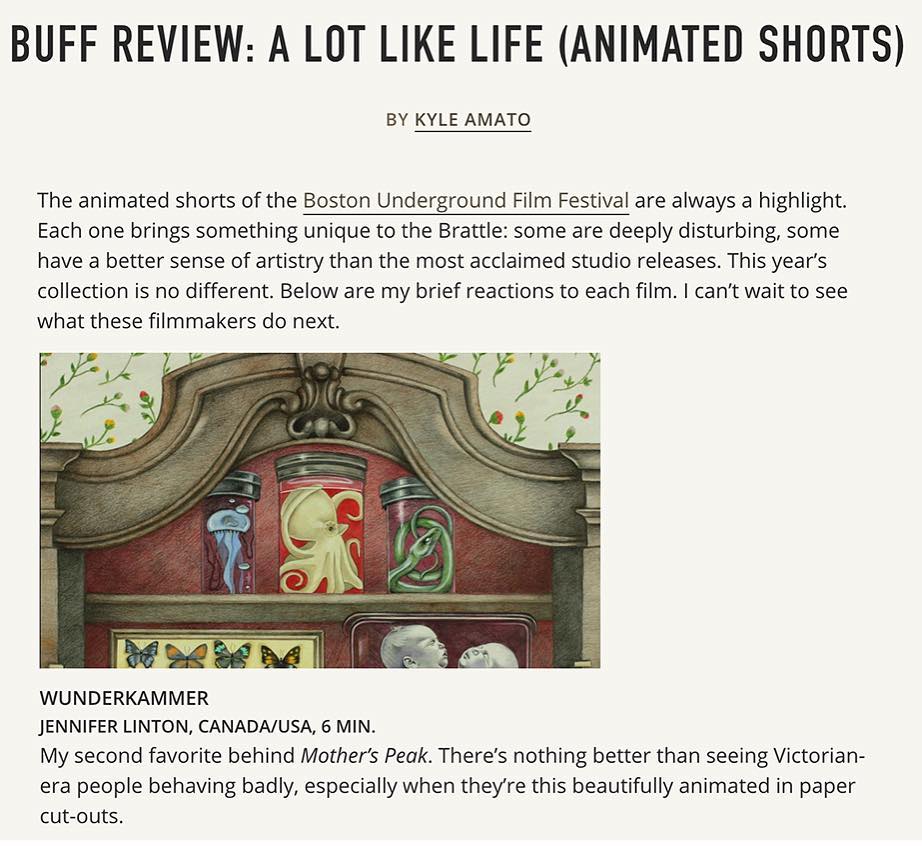
Hi there, gentle readers. March has proven a busy month for my short animated film Wunderkammer. It has screened (or will screen, at the time of writing) at three film festivals: the Boston Underground Film Festival, the Midwest Weirdfest (great name!), and the Las Palmas International Film Festival in the Canary Islands, Spain.
Sadly, my teaching commitments + costs of travel have prevented me from attending these festivals, but below are some screen captures from the festival web sites plus a nice little mention in a blog review from BUFF. Gotta love those naughty Victorians.
A couple of months ago, I was interviewed in my studio by my friend and colleague, Lionel Bebbington. We shot a couple of hours of footage, during which I discussed my inspirations, craft and process. Here’s the completed, 12-minute video. Enjoy!
My latest animated effort Wunderkammer is now listed on IMDb (the Internet Movie Database). Would you like to view it and write a review on IMDb? Leave a comment below and I’ll email you a private Vimeo screener.




 Lady Lazarus