Female Eye Film Festival, Toronto.

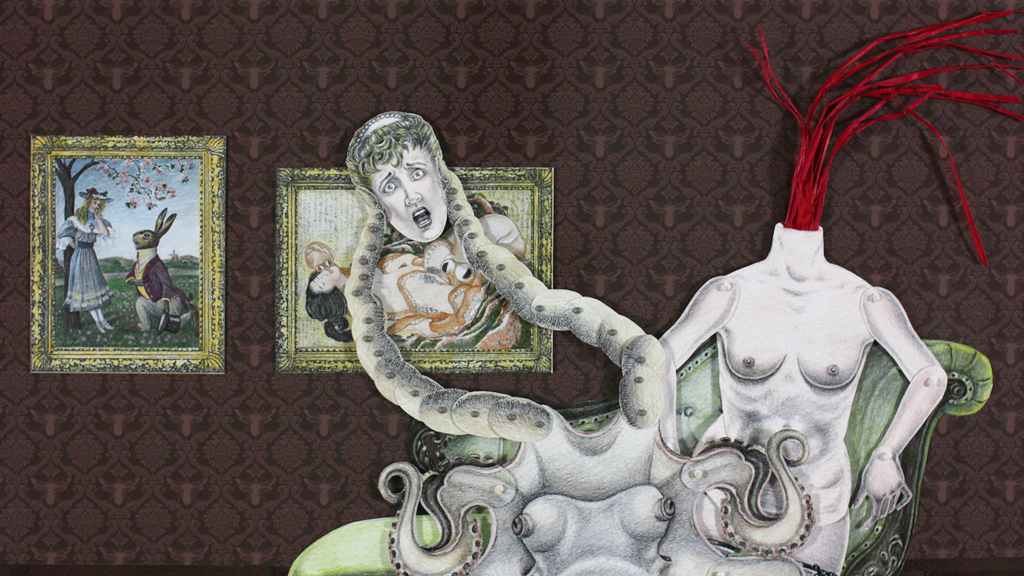
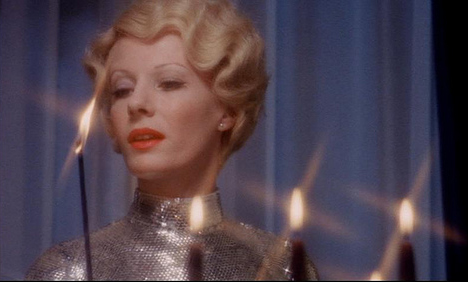
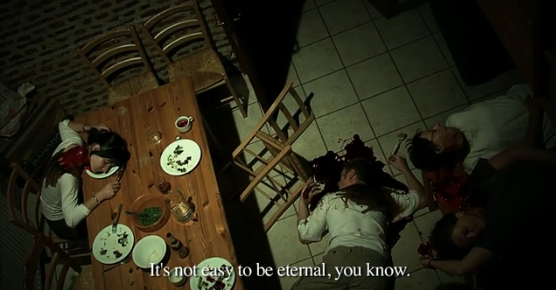
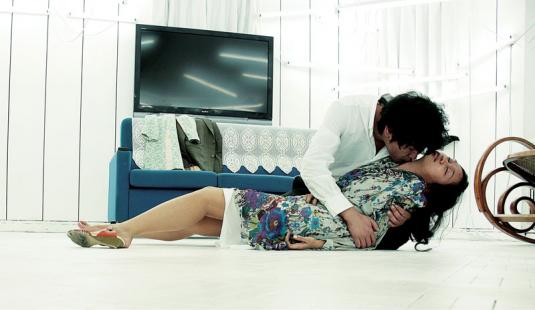
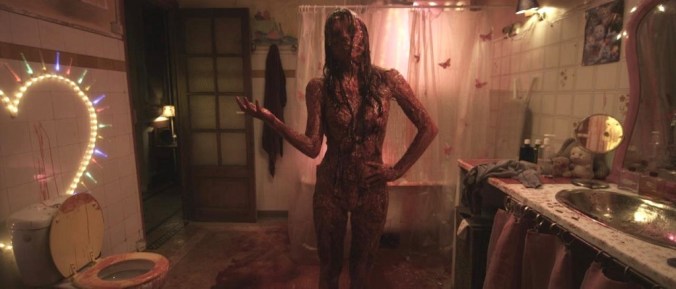
Video still from "Domestikia, Chapter 3: La Petite Mort", 2013. Directed by Jennifer Linton.

Video still from “Domestikia, Chapter 3: La Petite Mort”, 2013. Directed by Jennifer Linton.

The voice actors have already recorded, and the creative work is well underway for Toronto Alice. Thanks again for all your support!

I’m delighted to announce that my previous animated short film Domestikia, Chapter 3: La Petite Mort will be screening in the Late Night Horror: Canadian Feature program at the Female Eye Film Festival in Toronto. Screening will be on Saturday, June 21st, 11 pm – 1 am. Q & A with directors to follow the program. Canadian horror directed by women — yes!

If you’re in the Toronto area, come check it out. The festival has a great line-up this year! http://www.femaleeyefilmfestival.com/#!sat-june-21st/c1vaa

Lady Lazarus’s Halloween Party Movie Night, 2013 Edition.

It’s a cold, misty, grey and rainy Saturday afternoon — the perfect climate in which to begin compiling my annual Halloween horror-movie list to whet your ghoulish, pre-Halloween appetites. Last year, when it came time to write my list, I shared with you the outstanding horror films I’d seen in 2012. I decided to continue with that tradition this year, with a list of horror films that you might want to keep an eye out for — read on to get the bad Lucio Fulci-themed joke, and apologies in advance — and track down online or on DVD. As with last year’s list, some of these films are new, and some were just new to me in 2013.
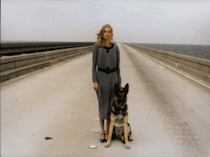
Lucio Fulci's "The Beyond" (1981).

The blind girl and her canine companion from Lucio Fulci’s “The Beyond” (1981).

1. This past year I caught up with two classics from Italian horror maestro, Lucio Fulci. The sheer audacity of his signature goopy, oozing, swarming-with-maggots gore and trademark eye-gougings rightfully earned him the title of ‘Godfather of Gore’ in late 70’s – 80’s horror cinema. While I can’t recommend any of his films on the basis of story or dialogue, what they do offer are arresting visuals, an undeniably effective atmosphere of dread, and a try-anything attitude towards experimentation in B-movie filmmaking. How else can you explain the batshit-crazy scene that occurs in Zombi 2 where an underwater zombie battles a shark? Although that zombie vs. shark scene is truly heaps of campy-horror fun, the film that I’d most enthusiastically recommend by Fulci is his nightmarish masterpiece The Beyond (1981). For this film, Fulci pulls out all the stops and gives us a crumbling Southern-Gothic hotel, black magic, zombies, a portal to Hell, face-eating tarantulas and not one but three graphic scenes of eyeballs being pulled, poked and eaten out of their sockets. The story meanders passed the brink of comprehension, but the images are worth seeing it through to the end. And speaking of the end, The Beyond boasts one of the most bleak and truly haunting finales to a horror film that I’ve seen in quite a while.

Elijah Wood plays a surprisingly sympathetic serial killer in "Maniac" (2012).

Elijah Wood plays a surprisingly sympathetic serial killer in “Maniac” (2012).

2. The recent remake of the 1980’s slasher-horror Maniac by French director Franck Khalfoun was a superlative rethink of the serial killer cult classic. Then again, with Alexandre Aja heading up the screenwriting team, one should hardly be surprised at this clever re-contextualization of the tired old slasher genre. It was Aja, after all, who gave us the gender-bending slasher-thriller Haute Tension back in 2003. When the remake of Maniac was announced, many wondered (as I did) how the relatively diminutive Elijah Wood could step into the role of serial killer Frank Zito that had been originally portrayed by the large, hulking Joe Spinell. Admittedly, he was convincingly creepy as the cannibalistic Kevin in Robert Rodriguez’s Sin City, but then all Wood needed to do for that role was stare vacantly behind eyeglasses and grin. The character of Frank needs to be equal parts nerdy, pathetic and truly terrifying. Wood pulls this off, in part due to the POV-style of the film. The audience experiences the film through Frank’s eyes, and Wood is only occasionally glimpsed in mirrors and other reflective surfaces. As the grimy, crime-infested New York City of the original film no longer exists, Khalfoun shot in the sleazier neighbourhoods still existent in Los Angeles to recreate an environment that threatens violence. The kills are bloody enough to satisfy most gorehounds, though the CGI does lack the visceral quality of Tom Savini’s famed physical SFX — such as the infamous scene in the 1980 original where Savini himself has his head blown off by a close range shotgun. That said, this remake is definitely worth a look.

Jorge Michel Grau's cannibal film "We Are What We Are." (2010).

Jorge Michel Grau’s cannibal film “We Are What We Are.” (2010).

3. Recently on Hulu, I noticed there’d been an English-language remake of the Mexican cannibal film We Are What We Are (Original Spanish title Somos lo que hay, 2010. Directed by Jorge Michel Grau). While I’ve not seen this remake, the original Mexican film was a surprise discovery for me this past year (the film was only released in North America on VOD). It tells the curious story of a family of cannibals who are compelled — for reasons that are left to one’s own imagination — to ritualistically murder and devour victims kidnapped off the streets of Mexico City. For a cannibal film, We Are What We Are is profoundly understated in it’s gore…at least, until the latter half of the film. For the most part, it’s a tense family drama, and relies much more on character development and atmosphere than one would expect from a film in this genre. Recommended for the horror fan who likes a dash of the unexpected.
"X is for XXL" from the horror anthology "The ABC's of Death." (2012)

“X is for XXL” from the horror anthology “The ABC’s of Death.” (2012)

4. Five minutes, five thousand dollars, and one randomly-selected letter of the alphabet. That was the premise behind the massive horror anthology The ABC’s of Death (2012).  It contains 26 different shorts, each by different directors spanning fifteen countries. Like most anthologies, it’s a real mixed bag of offerings. Even though watching all 26 shorts felt like a bit of a slog, at least one could have fun trying to guess what each letter represented, as this information is never revealed until the end of each segment. Stand-outs for me include “D is for Dogfight”, the darkly funny claymation “T is for Toilets”, and the very meta “Q is for Quack.” “L is for Libido” by Indonesian director Timo Tjahjanto is sick and twisted, and Noboru Iguchi’s “F is for Fart” is just plain loopy. The best of the bunch, by a wide margin, is Xavier Gens “X is for XXL”.
Katharine Isabelle stars as the titular "American Mary", though it's never revealed as to why she's identified as "American."

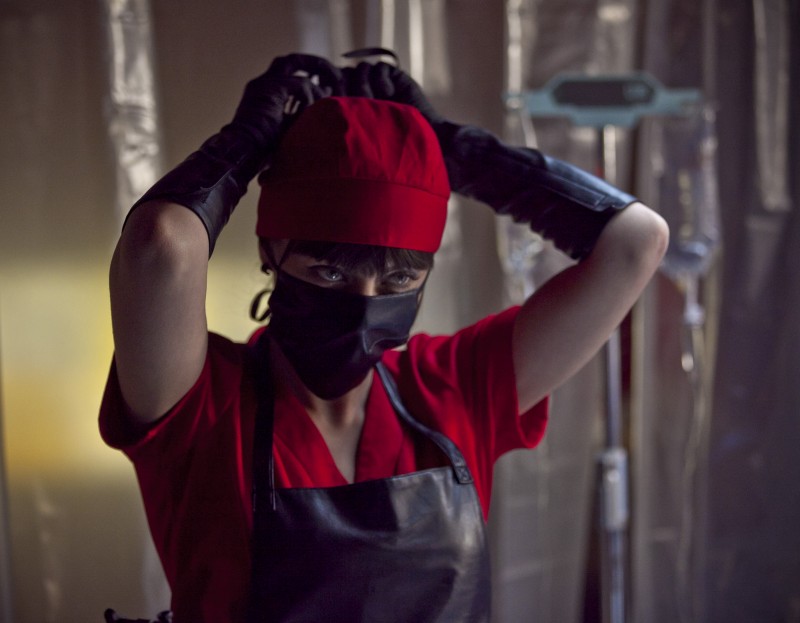
Katharine Isabelle stars as “American Mary”, though it’s never revealed as to why she’s identified as American.

5. The Canadian directorial-duo of Jen and Sylvia Soska, a.k.a. the “Twisted Twins”, have been steadily gaining notoriety in the genre film world these past few years.  They first gained attention with the low-budget exploitation film Dead Hooker in a Trunk (2009), and returned in 2013 with the gloss and production values of a bigger budget with American Mary (2013). Starring Katharine Isabelle — best known to horror fans as Ginger from the Ginger Snaps franchise — this film is essentially a rape-revenge mashed up with medical-horror. The titular Mary is a medical school drop-out who finds herself working as an underground surgeon in the world of (very extreme) body modification. The visual style of American Mary is very much fetish intermingled with body horror, though the body modification community is not exploited nor treated unkindly.

REPOST. Karen Black like me: When dolls attack.

It’s summer, and I’m currently busy working away on my animation project. I decided to share one of my earlier posts from 2010. Enjoy!

Let’s face it, dolls are creepy. Horror fiction has always acknowledged this fact, and some of the earliest films in this genre have prominently featured the doll as an object of terror. One can relate this genre’s fascination with dolls to the psychological theory of the Uncanny as expressed by Ernst Jentsch in his 1906 essay, On the Psychology of the Uncanny:

Jentsch defines the Uncanny as: “doubts whether an apparently animate being is really alive; or conversely, whether a lifeless object might be, in fact, animate”[1]

Sigmund Freud later expanded on Jentsch’s concept in his 1919 essay “The Uncanny”, but this posting isn’t about psychoanalytic theory. It’s about some of my favourite horror films that feature dolls.

Of course, the Child’s Play series of films from the 1980’s immediately spring to mind, with their signature black humour, bad puns and sadistic doll-villain Chucky. To be honest, I’ve never been a big fan of that particular horror franchise.

I do, however, fondly recall a 1975 made-for-TV horror anthology Trilogy of Terror. The third story of this anthology, entitled “Amelia,” stars Karen Black — that darling of 1970s horror flicks — and involves a demonic Zuni fetish doll. And it’s one seriously pissed-off doll, too. Watch the clip below, because it’s likely to be the funniest thing you’ll see all year.

The next clip I want to include is a bit of a cheat. I’ve never actually seen this film, though I’ve viewed this trailer a number of times — and the trailer majorly creeps me out. Will definitely have the track down 1978’s Magic, a “terrifying love story” that starred Anthony Hopkins and Ann Margaret. Hopkins really must’ve been hitting the bottle hard when he took this role.

And lastly, an obscure little gem from Mexico called The Curse of the Doll People (1960). Midgets can be scary, too.

Horror Films 101: “When love goes terribly wrong” moments in horror cinema.

Scene from the Thai film "Shutter" (2004).

Scene from the Thai film “Shutter” (2004).

1. Asian ghosts always have an agenda. Typically, it’s one motivated by a desire for revenge, or a need for justice. In the Thai supernatural-thriller Shutter (2004, directed by Banjong Pisanthanakun and Parkpoom Wongpoom), the heroine Jane mistakenly believes that the female ghost who torments both she and her boyfriend Tun is seeking revenge for the hit-and-run accident in which the mysterious woman was killed. There’s much more to the story, however, as a dark secret connecting Tun to the dead woman is ultimately revealed. The true horror of this film may be the fact that, even though Tun’s deeply troubling past has been shown, Jane seems to be supportive of him at the finale — so much for justice and gender equality in Thailand. I thoroughly enjoyed this Thai ghost story and, even though an English-language remake was released in 2008, I feel no need to watch it. I can read subtitles just fine, thanks.

Unrequited love gone wrong in "Haute Tension" (2003).

Unrequited love gone wrong in “Haute Tension” (2003).

2. Haute Tension (2003). If a woman wielding a bloody chainsaw towers above you, shouting “Do you love me?!” over the ear-splitting whirl of the blade, I would just quickly say “YES!”. If you don’t happen to share her amorous feelings, you can explain so later at a safe distance. Preferably over the phone, from another continent.

May admires her Frankenstein-like creation.

May admires her Frankenstein-like creation.

3. The desperate ache of loneliness never seemed so palpable as it does in Lucky McKee’s May (2002). When our titular heroine, a socially-awkward misfit whose best friend is a (very creepy) doll, fails to find her true love, she takes matters into her own hands and fashions herself one. Angela Bettis, a long-time acting staple in McKee’s films, turns in a surprisingly sympathetic portrayal of a character who’s essentially a psychotic serial killer. A criminally neglected film.

Keir Dullea, all turtlenecks and shaggy 1970's hair, as Peter in "Black Christmas" (1974).

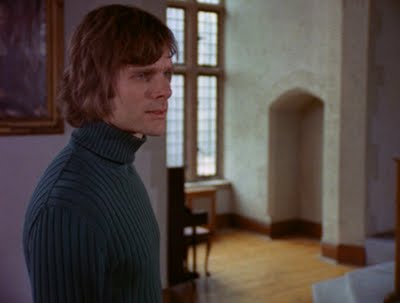
Keir Dullea, all turtlenecks and shaggy 1970’s hair, as Peter in “Black Christmas” (1974).

4. You know a relationship’s going south when you begin to suspect your lover of being a serial killer. Such was the case between Jess and her turtleneck-wearing boyfriend Peter in Black Christmas (1974). When Jess reveals to Peter her unwanted pregnancy and plans to have an abortion, his reaction is not only negative, but downright crazy in its intensity. But did this news, plus his failed piano recital — artists, they’re so sensitive —  push Peter to the brink of insanity?

Lady Lazarus’s Halloween Party Movie Night, 2012 Edition.

Hello, my darklings! The leaves are down, the sweaters are on, and it’s that time of the year that Lady Lazarus carefully crafts a list of horror films to whet your pre-Halloween appetites. Traditionally, I’ve had a theme for each Halloween list, such as “Best Horror Films of the 2000s” or “Favourite Horror-Comedies“, but this year I thought I’d open up and share with you, plain and simple, the horror films I’ve been watching of late. Some are new, and some are just new to me. Perhaps there’ll be a discovery or two for your own ghoulish viewing pleasure.

Isabelle Adjani proclaims “[He] is very tired. He made love to me all night” in Andrzej Zulawski’s challenging film  Possession (1981)

1. I first learned of Andrzej Zulawski’s cult classic Possession (1981) through the writings of Canada’s First Lady of Horror Kier-La Janisse, who’s an enthusiastic champion of this film. Equal parts arthouse, domestic drama, and gory supernatural-horror, this film defies any attempt at easy categorization. Ostensibly an unflinching gaze at a marriage in turmoil, the film ultimately — and quite surprisingly — veers into the realm of abjection, absurdity and visceral horror. Isabelle Adjani plays her character’s descent into madness to the hilt, earning her the Best Actress award at the Cannes Festival for Possession in 1981. Sam Neill turns in a strong — if affected and somewhat stylized — performance as her estranged husband. I don’t want to give away any of the plot points, as the film works best the less you know about it. If you like your horror with a big dash of the unexpected, then you’ll probably enjoy this one. If you just want to see some naked coeds get sliced, steer clear.

Investigating a strange noise, Samantha ventures upstairs with a kitchen knife in Ti West’s “The House of the Devil” (2009).

2. I had heard many good things about Ti West’s The House of the Devil (2009) and, fortunately, those things turned out to be true. This is an accomplished psychological-horror in the vein of Polanski’s Rosemary’s Baby, where the terror builds on a slow-boil. What’s that, you say? You’ve been invited to babysit for creepy strangers in an isolated, in-the-middle-of-nowhere house? Why, sure. You need the money, and what could possibly go wrong? Let’s suspend that disbelief and just roll with it, ’cause it’s a fun, suspenseful ride. Kudos go to the art direction and costume design, as The House of the Devil boasts the most authentic recreation of that 1980s-look that I’ve personally viewed on film. Nice little cameo by that darling of ’80s horror, Dee Wallace (The Hills Have Eyes and The Howling).

3. Oh, Joss Whedon. You don’t always hit it out of the park, but when you do…wow! Admittedly, taking the piss out of the slasher-horror is a little like shooting fish in a barrel and, yes, this is well-trodden ground that the Scream franchise visited sixteen years ago. All the same, Cabin in the Woods (2012) seems fresh and original, and is heaps of fun with a clever twist or two. Again, I don’t want to spoil the surprise, so I’ll simply end with —  zombie redneck torture family.*

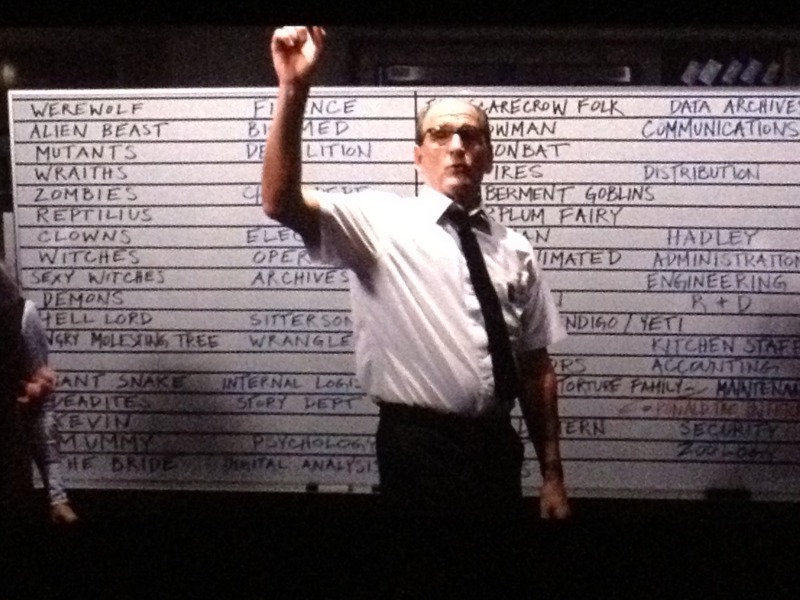
Placing the bets in “Cabin in the Woods” (2012).

*SPOILER ALERT. Wanna know what all the various beasties and baddies were in Cabin in the Woods? Click here.

4. The horror genre has traditionally loved the anthology format. This love affair possesses a kind of logic. If one particular scenario doesn’t frighten you, then perhaps the next one will do the trick — after all, fear can be very subjective. One of the major pitfalls of anthologies is that they’re often hit-or-miss in terms of ratio of success. Such is the case with the 2012 ‘found-footage’ anthology V/H/S which, although it’s initial premise seemed promising, suffered from it’s weaker components. The first 35-minutes of hand-held shaky-cam is nauseating to the point of being almost unwatchable, though this does improve with the subsequent stories. The best offerings in this anthology were the fourth story of a couple communicating via FaceTime, and the final segment — created by a team of directors out of L.A. who call themselves Radio Silence — which follows a group of guys trying to find a Halloween party.

The rationale for the found-footage actually makes sense in one of the stronger offerings in V/H/S (2012).

Happy Halloween, everyone!

Horror Films 101: 5 vampire films you may not have seen.

The beautiful Delphine Seyrig stars as the bloodthirsty Countess Báthory in Harry Kümel's "Daughters of Darkness" (1971).

1. The stylish Daughters of Darkness (1971) from Belgian director Harry Kümel continues to be one of my favourite indulgences when it comes to eurotrash vampire films. I’ve already dedicated an entire blog post on Kümel’s film, but a recently discovered quote from “dissident feminist” Camille Paglia has reminded me of my great admiration for this lesbian-vampire classic:

“A classy genre of vampire film follows a style I call psychological high Gothic. […] A good example is Daughters of Darkness, starring Delphine Seyrig as an elegant lesbian vampire. High gothic is abstract and ceremonious. Evil has become world-weary, hierarchical glamour. There is no bestiality. The theme is eroticized western power, the burden of history.”

— Camille Paglia, Sexual Personae: Art and Decadence from Nefertiti to Emily Dickinson. Yale University Press, 1990, p. 268.

Vincent Lannoo's mockumentary "Vampires" (2011).

2. Yet another Belgian vampire film, although the ‘found-footage’ hand-held camera-style of Vincent Lannoo’s Vampires (2011) could scarcely be more of a departure from Kümel’s meticulously crafted film. Touted in the media as “Spinal Tap meets the Munsters”, Lannoo’s mockumentary delves into the culture of contemporary Belgian vampires, all with a wonderfully deadpan, blacker-than-night sense of humour. After several unsuccessful attempts to document the vampire community — as the film crews kept, um, getting eaten — the crew that purportedly filmed Vampires manage to locate an amenable vampire family that allow them to document their daily routines. Even though the found-footage schtick has grown very, very tired in the horror genre, I found myself enjoying the detailed accounts of vampire customs and culture.

Director Larry Fessenden plays Sam, a world-weary bartender in "Habit" (1999).

3. The low-budget indie film Habit (1999) was written, produced, directed, and edited by genre fave Larry Fessenden. This is a grungy and unglamorous revisionist-vampire film that uses vampirism as a metaphor for addiction. Fessenden plays Sam, a world-weary bartender who struggles with alcoholism and the recent death of his estranged father. When Sam meets the mysterious Anna at a friend’s party, things eventually go from bad to worse. While this film offers little in terms of fanged neck-biting, it has an effectively moody atmosphere and some fairly erotic sex scenes.

4. Cronos (1993), written & directed by Guillermo del Toro, was the cinematic debut of the Mexican filmmaker better known for his later film Pan’s Labyrinth. A fairly unique treatment of the vampire mythology in which an ancient and mysterious mechanical device is used to transmit the virus of vampirism. An old antique dealer unwittingly discovers the scarab-shaped device in his shop and becomes infected. Fans of del Toro’s work will recognize his characteristic black humour and fondness for grotesquery.

The priest Sang-hyun saves his dying love interest Tae-ju by rendering her a vampire in "Thirst" (2009).

5. Another clever twist on the vampire legend is Chan-wook Park’s Thirst (2009). Sang-hyun is a devout Catholic priest who, for all intents and purposes, opts to martyr himself by subjecting his body to some radical medical experiments. When these medical experiments result in vampirism, the priest wrestles not only with a heightened desire for carnality, but also a thirst for human blood.

REPOST: Nothing says “Merry Christmas” like a creepy Canadian slasher flick.

A repost of last year’s blog entry on Bob Clark’s Black Christmas, with an added paragraph and one or two spoilers.

An often overlooked classic, the 1974 Canadian film Black Christmas now enjoys a cult status amongst horror fans and critical acknowledgment as being the progenitor of  the “slasher” genre that dominated horror cinema in the late ’70s and throughout the 1980s. Directed by Bob Clark — best known for his raunchy teen sex comedy Porky’s (1982) — the film boasts an enviably list of talented Canadian actors: Margot Kidder, Keir Dullea, John Saxon and comedienne Andrea Martin. The film stars Olivia Hussey, a British actress who’s most frequently recognized for her role as “Juliet” in Franco Zeffirelli’s 1968 film adaptation of Shakespeare’s Romeo & Juliet. In Black Christmas, Hussey leaves the Elizabethan poetry behind and gets her “scream queen” on.

Getting all wrapped up for the holidays in Bob Clark's 1974 cult slasher film "Black Christmas." Apologies in advance for the bad pun.

Getting all wrapped up for the holidays in Bob Clark's 1974 cult slasher film "Black Christmas."

It’s important to note that Black Christmas predates the better known slasher films like John Carpenter’s Halloween (1978) and Sean S. Cunningham’s Friday the 13th (1980), and they owe a great debt to Clark’s film. The quote below from Wikipedia concisely captures this film’s cult status:

The film gained a fairly decent cult following over the years of its release, and has been praised by fans of the slasher film genre internationally. The Black Christmas fan site has considerably increased the film’s popularity over the years. The film ranked #87 on Bravo’s 100 Scariest Movie Moments for Lynne Griffin’s infamous plastic sheeting scene. During an interview regarding the film, Olivia Hussey met Steve Martin at an industry event and he brought up the fact that she starred in one of his favorite movies of all time. Hussey thought he might have referred to her work in Romeo & Juliet, but was surprised to hear from Martin that it was Black Christmas, which he claimed to have seen 25 times.

What Black Christmas possessed — and what later films in the slasher genre often lacked — was the element of suspense. Rather than rely on the crude shock tactics of gore, Clark torques up the tension by placing the insane homicidal intruder inside the sorority house right at the opening of the film — and then keeps him there, undiscovered by the house’s other occupants. Only the audience is aware that the killer, and a couple of his victims, are stowed away in the attic. The fact that the events in the film happen over Christmas provides the killer (and Clark) the opportunity to surreptitiously dispatch a number of sorority sisters on an ordinarily bustling — but now slowly emptying — college campus as it shuts down over the holidays.

Below is a wonderfully creepy clip, featuring an uncomfortably prolonged obscene phone call from the psycho-killer. There is a prodigious use of the word “c*nt” in the following sequence, so consider yourself warned. Oh, and Merry Christmas.

Quoth the Raven, ‘Nevermore.’

Open here I flung the shutter, when, with many a flirt and flutter,
In there stepped a stately Raven of the saintly days of yore.
Not the least obeisance made he; not a minute stopped or stayed he,
But, with mien of lord or lady, perched above my chamber door–
Perched upon a bust of Pallas just above my chamber door–
Perched, and sat, and nothing more.

Then the ebony bird beguiling my sad fancy into smiling,
By the grave and stern decorum of the countenance it wore,
“Though thy crest be shorn and shaven, thou,” I said, “art sure no craven,
Ghastly grim and ancient Raven wandering from the Nightly shore–
Tell me what thy lordly name is on the Night’s Plutonian shore!”
Quoth the Raven, “Nevermore.”
— an excerpt from the narrative poem “The Raven” by Edgar Allan Poe. First published in 1845.

In North America and most of Europe, the raven is a bird that symbolizes ill-omen and doom. Due to its jet-black plumage, eerie call and carrion-eating tendencies, the raven and its smaller cousin, the crow*, have haunted the imaginations of mankind from time immemorial. American Gothic writer Edgar Allan Poe famously employed the bird as a harbinger of doom in his poem “The Raven,” an excerpt of which is offered above. The poem tells of a talking raven’s mysterious visit to a distraught lover, tracing the man’s slow descent into madness. The narrator — whom, it’s been suggested, represents Poe himself — mourns the loss of his dead love Lenore. The raven flies into the room through an open window and perches itself (permanently, as it turns out) upon a sculptural bust of Athena that rests above the door. It then proceeds to torment the narrator to the brink of madness simply by repeating the poetic refrain “nevermore” at the end of each stanza. For his part, the narrator engages in a curiously self-defeating game of “20 questions” with the raven, peppering the bird with questions to which — he’s fully aware — it can only answer “nevermore.” In true Gothic tradition, Poe’s “The Raven” is epic, highly theatrical, and steeped in a melancholia characteristic of that literary genre.

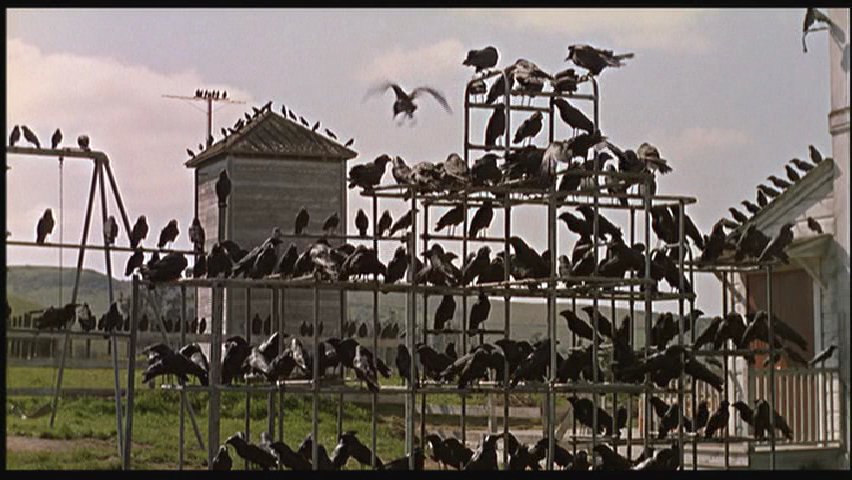
The crows begin to assemble on the play equipment behind the local school in Hitchcock's "The Birds" (1963).

The crow, the raven’s smaller yet equally foreboding cousin, gets its moment in the spotlight in British film director Alfred Hitchcock’s 1963 film “The Birds”. A profoundly intelligent and resourceful bird, a flock of crows is called a murder because “…the group will sometimes kill a dying cow.” Hitchcock capitalized on the silhouette of the menacing crows — not to mention their violent reputation — in his classic horror film in which birds inexplicably attack humans. Oh sure, the idea of violent attack from a single budgerigar seems ludicrous. However, as one character in the film points out, birds significantly outnumber humans on this planet, and if they did group together to get rid of us…

Mrs. Bundy: Birds have been on this planet, Miss Daniels, since Archaeopteryx, a hundred and forty million years ago. Doesn’t it seem odd that they’d wait all that time to start a…a war against humanity.

Salesman: Your captain should have shot at them… Gulls are scavengers anyway. Most birds are. Get yourselves guns and wipe them off the face of the earth.

Mrs. Bundy: That would hardly be possible… Because there are eight thousand, six hundred and fifty species of birds in the world today, Mr. Carter. It is estimated that five billion, seven hundred and fifty million birds live in the United States alone. The five continents of the world…

Salesman: Kill ’em all. Get rid of them. Messy animals.

Mrs. Bundy: …probably contain more than a hundred billion birds.

Drunk: It’s the end of the world.

Sebastian Sholes: Those gulls must have been after the fish.

Mrs. Bundy: Of course.

Boy: Are the birds gonna eat us, Mommy?

Mrs. Bundy[explaining that birds of different species never flock together] The very concept is unimaginable. Why, if that happened, we wouldn’t have a chance! How could we possibly hope to fight them?

Like the drunk guy said, “It’s the end of the world.”

*What’s the difference between a raven and a crow? Read more here to find out.

Lady Lazarus’s 2011 Halloween Party Movie Night: ‘Pushing Boundaries.’

This is the follow-up post to Lady Lazarus’s 2011 Halloween Party Movie Night: ‘Ghoulish Delights.’

Pushing Boundaries.

Something you don’t want coming at you in the dark (and with that hammer) in REC and REC2.

1. The Spanish horror films [REC] (2007) and [REC]2 (2009) have proven to be a potent one-two punch in recent horror cinema. The second film is less of a sequel as a continuation of the first, with the action literally picking up where the first film ended. This is a very good thing, indeed, as the final third of [REC] set-up an unanticipated and fairly novel plot twist involving the Vatican, some dubious medical experiments, and a solitary priest living in the penthouse of the sealed-off, ‘zombie’-infested Madrid apartment building. It is this unique mashup of zombie-meets-supernatural thriller that makes the [REC] films standout from the recent overabundance of shaky-camera, faux found-footage style horror films. From what I’ve read, the shot-for-shot English language remake Quarantine (which I have not seen) altered the heavy Catholicism of the original Spanish film, replacing all those Virgin Marys with more generic, non-denominational Christian iconography. While the Catholicism would not have the same resonance for the multicultural, multi-faith English-speaking world as it would for the Latin, an easier and more obvious correlation exists between the flesh-eating ‘zombies’ and the characteristically morbid, blood-drenched imagery of Spanish Catholicism than it does for the more ‘sanitized’ versions of Christianity. The only disappointment I had with these films was the ending of [REC]2 which, as soon as a certain character reappears on the scene, is pretty much spelled out.

Catherine Begin as the diabolical Mademoiselle in “Martyrs” (2008).

2. I had purposely avoided Pascal Laugier’s Martyrs (2008) after reading the synopsis and questioning whether a plot that hinged upon the brutal and systematic abuse, torture and murder of young women was something I wanted to witness. After relenting and watching the film, I must admit that it pleasantly surprised me. Now, make no mistake — this is a troubling, violent, and gory film that boldly underscores the word extreme in the phrase ‘New French Extremity’, a category of recent French films in which Martyrs is often included. Much like the [REC] films above, Laugier’s Martyrs veers off in an unexpected and fascinating direction towards the end of the film, revealing a secret society of privileged individuals determined to discover — at any cost — the existence of an afterlife. The enigmatic ending will have you scratching your head for years to come.

3. Any film that re-imagines and updates the ‘slasher’ genre immediately gets my attention, as did Alexandre Aja’s superlative Haute Tension (2003). While some horror fans argue that the ‘big reveal’ in the film didn’t work, I give Aja credit for playing with the conventions of gender in the rigidly formulaic slasher genre. In one of my earlier posts, entitled Deviance, gender and the ‘aberrant female’ in horror, I wrote extensively on this film.

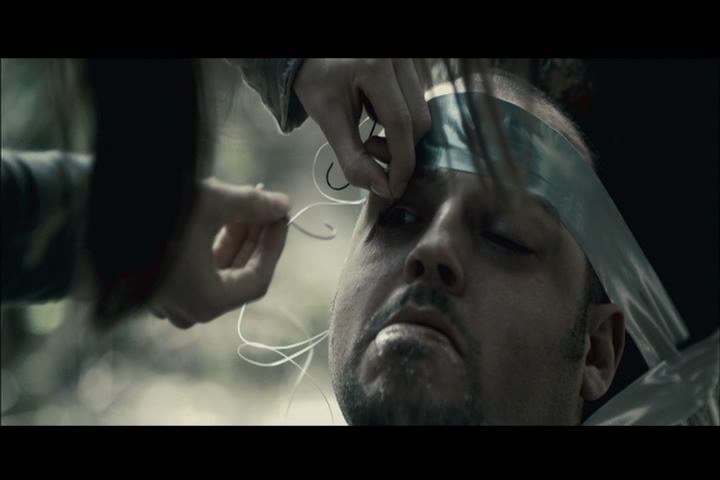
Nothing quite says “revenge” like a fish hook in the eyelid. Jennifer Hills is more of a badass in the 2010 remake of “I Spit On Your Grave.”

4. Like the dated sexual politics of the slasher film, the rape-revenge film is an exploitation subgenre also in need of an update. Much has changed in gender roles and equality since Meir Zarchi made his controversial 1978 cult film I Spit On Your Grave. The 2010 remake, which credits Zarchi as one of its producers, attempts to address some of the shortfalls of the original — at least, shortfalls in the eyes of this contemporary horror fan. In my earlier post Rape-Revenge Girl, I criticized Zarchi’s film for the rather unsatisfying revenge sequences. “The quotient of rape-to-revenge in Zarchi’s film is too much rape, not enough revenge,” I wrote, and “…the deaths of Jennifer’s rapists were not violent and/or gory enough for my — admittedly, gruesome — taste.” As if in direct response to my criticism, the 2010 remake offers up grisly and sickly-twisted revenge killings reminiscent of the stuff you’d find in “torture porn” films like Saw and Hostel. Admittedly, the whole transformation of Jennifer Hills from cheerful girl-next-door, to rape victim, to psychopathic and sadistic killer doesn’t work in any realm other than extreme, cathartic fantasy. Then again, if you’re opting to watch a film entitled I Spit On Your Grave, then you probably know what you’re in store for and will suspend your disbelief long enough to see the blood spill.

Lady Lazarus’s 2011 Halloween Party Movie Night: ‘Ghoulish Delights.’

Feel that crisp October chill in the air? That chill ushers in my favourite of the festive occasions: you guessed it, Halloween. If the spooky spirit of the season inspires you to celebrate all things horrific — or, like me, you celebrate such things on a regular basis — then below are some suggestions for Halloween-themed film viewing. I’ve grouped my suggestions into two distinct categories, and these I will separate across two blog posts. This first post offers up a small group of films I’ve labeled Ghoulish Delights. These are mainly campy, horror-comedy films best suited for Halloween party gatherings. Oh sure, there’s buckets of blood and disturbing scenes, but they’re all served-up with a big, mischievous wink. A follow-up post will address the second group, Pushing Boundaries, that will focus on horror films with considerable bite. These are films that either challenge or re-imagine standard narratives within the genre, or films that simply push the boundaries of taste and acceptability in contemporary horror.

Ghoulish Delights

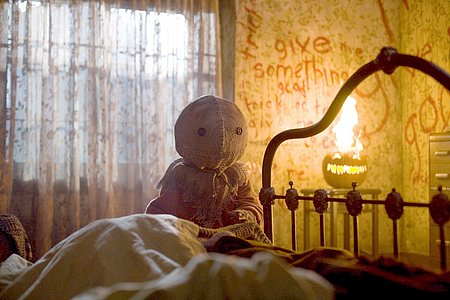
Michael Dougherty's sack cloth-headed horror mascot Sam (after 'Samhain', of course) from his little-known horror anthology "Trick r Treat" (2007).

1. A public release date fiasco on the part of Warner Bros. — that unfortunately resolved itself in Trick ‘r Treat (2007) being released direct-to-DVD two years after it initially screened at film festivals — essentially buried Michael Dougherty’s Halloween-themed horror anthology from the general public. However, thanks the internet and a dedicated horror-film blogger community, Trick ‘r Treat has gotten the love it so rightly deserves:

Despite only a handful of public screenings, the film has been reviewed extensively by online journalists and bloggers, especially in the genre/horror communities, and reviews are nearly unanimously positive. Dread Central gave it 5 out of 5 stars and stated “Trick ‘r Treat ranks alongside John Carpenter’s Halloween as traditional October viewing and I can’t imagine a single horror fan that won’t fall head over heels in love with it.”[3] The film earned 10 out of 10 from Ryan Rotten of ShockTilYouDrop.com.[4] It also earned an 8 out of 10 from Bloody Disgusting,[5] who later ranked the film ninth in their list of the ‘Top 20 Horror Films of the Decade’, with the article saying, “[It’s] so good that its lack of a theatrical release borders on the criminal.”[6] IGN attended a screening of the film and concluded, “This well-crafted Halloween horror tribute is a scary blast.”, rating it 8 out of 10 overall.[7] Based on 17 reviews collected by Rotten Tomatoes, the film has an overall “Fresh” approval rating from critics of 85%, with an average score of 7.7/10; the site’s critical consensus states “An deftly crafted tribute to Halloween legends, Trick ‘r’ Treat hits all the genre marks with gusto and old fashioned suspense.” — from Wikipedia.

Dougherty’s Trick ‘r Treat possesses the same irreverent black humour of horror-anthology franchises such as Creepshow and Tales From The Crypt, which gives the film a quality of both nostalgia and homage. Five interwoven tales of the macabre introduce us to the creepy Principal (played to the hilt by the gloriously creepy Dylan Baker), a self-conscious 22-year-old virgin portrayed by a pre-True Blood Anna Paquin, and a school bus packed with the vengeful ghosts of children in Halloween costumes. The one common element throughout all five stories is the presence of Sam, the mysterious and silent trick-or-treater who seems to embody the very spirit of Halloween.

2. I do love me some Bruce Campbell. This veteran actor of the B-horror genre — best known as Ash from Sam Raimi’s Evil Dead films — was perfectly cast as an old Elvis Presley in Don Coscarelli’s Bubba Ho-tep (2002). When a re-animated ancient Egyptian mummy suddenly appears in the nursing home in which Elvis lives, drastic action must be taken to destroy the creature and free the consumed souls of the nursing home’s elderly occupants. Serious fun.

He's back from the grave and ready to party in "Return of the Living Dead" (1985).

3. Have you ever wondered where that whole “zombies eating human brains” thing comes from? Nope, not from George A. Romero. The brain-eating zombie originated entirely from Dan O’Bannon’s Return of the Living Dead (1985).* In the words of one of the film’s reanimated dead, zombies seek out and devour human brains because “…it hurts to be dead…I can feel myself rotting” and “brains kill the pain”, however temporarily. So, there you have it. O’Bannon’s Return of the Living Dead is both a playful satire of, and a respectful homage to, earlier zombie films like those of Romero. Cheesy ’80s vintage camp in all the right places, this film boasts reasonably convincing zombies and the ‘scream queen’ actress Linnea Quigley, who spends almost her entire screen time completely naked save for a pair of blue stockings. Must’ve been a cold shoot for Ms. Quigley.

…and a couple of the usual suspects

4. Edgar Wright’s Shaun of the Dead (2004) is another — much, much better — satire/homage to the zombie horror genre. It’s such an exemplary horror-comedy that it’s pretty much a given, and I need not discuss it further here.

5. I mentioned Sam Raimi’s Drag Me To Hell (2009) in last year’s Halloween list, but the strength of this film cannot be overstated. A hilarious horror-comedy with some legitimate scares thrown in — an extraordinarily difficult balance to achieve and quite the accomplishment for Raimi, who adeptly showed us that he still knows how to do it.

*There was a single, zombie-eating-brains scene in Lucio Fulci’s City of the Living Dead (1980) but, to the best of my knowledge, this is the first film that truly places brain on the menu for the undead.