Deviance, gender and the ‘aberrant female’ in horror, part I.

The Final Girl and The Slut.

Unrequited lesbian love gone terribly, terribly wrong in Alexandre Aja’s “Haute Tension” (2003).

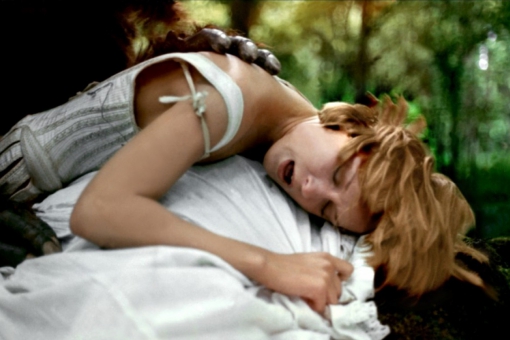
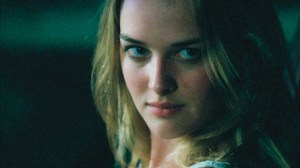
Recently, I settled down to watch Alexandre Aja’s Haute Tension (2003), a masterpiece of ‘New French Extremity‘ which had eluded me until now. Like many films of its pedigree, Haute Tension features sadistic sexuality, extreme violence, and generous amounts of gore. Without spoiling the end — as the real strength of this film lies near the end — there was also a clever plot twist that plays with gender and the roles typically associated with female characters in the genre. Women are still traditionally cast as victims in horror, and most particularly in the ‘slasher’ or serial-killer subgenre, so it is considered subversive when they are portrayed as the perpetrators of violence. In fact, it is so outside of the ‘norm’ that an additional reason is frequently given for the violent woman’s aberrant behaviour. In the 1978 ‘exploitation’ film I Spit On Your Grave, the motivation behind the female lead’s murderous rampage is revenge for her brutal gang rape. The homicidal intruder in À l’intérieur (2007) has been driven insane by her obsessive desire for a child. In Haute Tension, unrequited lesbian love factors into the killer’s actions. These various reasons — trauma, mental instability, and homosexuality — firmly place the behaviour of these women outside of ‘normal’ and in the realm of the deviant.

The depiction of deviance, women & gender in horror cinema is a big, big topic indeed — one that warrants more than one blog post. Let’s start by looking at two of the most common tropes in the horror genre:

Sigourney Weaver as Ripley in the Ridley Scott sci-fi/horror classic “Alien” (1979).

1. The ‘Final Girl’ or ‘The Virgin.’ She’s that pretty, but not too sexy, girl-next-door who just might have a boyfriend, but he’s never gotten passed First Base. In the formulaic ‘slasher’ film — a subgenre of horror that dominated the late 70’s and the decade of the 1980’s — she’s the only girl left standing at the finale. The slasher film is a modern-day cautionary tale, and the Final Girl is spared the violent deaths visited upon her sexier classmates by reason of her virtue. She is frequently characterized as tom-boyish, even androgynous. Ripley (Sigourney Weaver) from the Alien series is a prime example of the masculinized Final Girl. Recent horror cinema has reconfigured and, at times, even subverted the Final Girl: an argument can be made that Marie in Aja’s Haute Tension is a subversion of this trope (her very short boyish hair, her extreme athleticism, apparent heroism, and her sexual orientation).

Margot Kidder plays Barb, the drinking, smoking, sexually active Slut in Bob Clark’s “Black Christmas” (1974).

2. The Slut. She’s the counterpoint to the Final Girl, the girl in the film who engages in all sorts of nasty vice and most likely has a nasty attitude to match. According to the morality play/slasher film, she’s destined to meet a grisly end, probably twitching at the end of a pitchfork. A big, rigid pitchfork. The chain-smoking Barb (Margot Kidder) from Bob Clark’s genre-defining Black Christmas (1974) fits this role perfectly. While her lifestyle has her marked for an untimely death, she’s also the sororiety sister with the most moxy. (You can read more about Black Christmas in my earlier post on the film.)

Next post –>

The “10 Best Animated Films of All Time”, according to Terry Gilliam.

The following text has been copied from an interview with Terry Gilliam (source: http://www.guardian.co.uk/film/2001/apr/27/culture.features1) in which the animator, filmmaker and former member of Monty Python reveals his creative inspirations.

The Mascot (Wladyslaw Starewicz, France 1934)

It was at the Sitges film festival that I first saw an exhibition of work by the pioneering Russian animator Wladyslaw Starewicz, and the puppets were so enrapturing that when I got home I ordered up all the tapes I could find of his work. His work is absolutely breathtaking, surreal, inventive and extraordinary, encompassing everything that Jan Svankmajer, Walerian Borowczyk and the Quay Brothers would do subsequently. This is his last film, after The Tale of the Fox from 1930; it is all right there in this cosmic animation soup. It is important, before you journey through all these mind-bending worlds, to remember that it was all done years ago, by someone most of us have forgotten about now. This is where it all began.

Pinocchio (Hamilton Luske and Ben Sharpsteen, US, 1940)

For me, as an American growing up in Minnesota, Walt Disney was animation. But the joy of Disney’s films always came from watching the baddies. Pinocchio is visually the richest of his features and it is also the darkest. The Bad Boys’ World is a truly immortal nightmare, full of eerie images of kids turning into donkeys and all manner of strangeness. Then there is that stuff with cages, and I notice now that every film I have made features a scene with somebody in a cage – a trait I attribute to watching Pinocchio. Great songs in that film too; Disney was essentially a musical film-maker. Plus there is something intriguing about a character who desperately wants to be a real person, but who we all think is actually more interesting as a piece of wood.

Red Hot Riding Hood (Tex Avery, US, 1943)

The magic of Tex Avery’s animation is the sheer extremity of it all. The classic Avery image is of someone’s mouth falling open down to their feet, wham, their eyes whooping out and their tongue unrolling for about half a mile: that is the most wonderfully liberating spectacle. Avery would just stretch the human body and face however he liked, and the result was unbelievably funny. There is no hesitation in his work, no sense that you can go too far. I think that nowadays they should put on Tex Avery festivals as an antidote to political correctness. There is also a childlike sense of immortality and indestructibility in his work; people get squashed, mashed, bashed, bent out of shape, whatever, and they bounce back. In essence, it is like the myth of eternal life.

Out of the Inkwell (Dave Fleischer, US, 1938)

I first saw this when I was a teenager and, in retrospect, it was a career leap for me. This was when I first discovered surrealism. You have a scenario in which you see an animator creating something which suddenly develops a life outside of the cartoon. The character starts communicating with the animator, and then it is Frankenstein all over again, the creation of a monster over which you have no control. Until I saw Out of the Inkwell, I had always thought of animation as existing on one plane, but here were the Fleischer brothers taking you right through the looking glass and into the picture. Of course, when I saw it I loved it – not because I wanted to be the animator whose ink comes to life, but because I wanted to be the animation, the clown wreaking havoc upon the world.

Death Breath (Stan van der Beek, US, 1964)

After college, I lived in New York with some people who would watch experimental avant-garde films. We embraced them because they annoyed everybody else, even though they were mostly awful. One night we were enduring some of this stuff when on to the screen came a cut-up image of Richard Nixon trying to talk with his foot in his mouth. It was the simplest animation pun imaginable. Years later, when I had come to England and we were working on a TV programme that was meant to make people laugh, there was a problem with dramatising one of the ideas. So I got a picture of Jimmy Young, cut it in half, moved his mouth around a bit and everybody laughed. That subsequently became a trademark, for which I think van der Beek should take credit.

Les Jeux des Anges (Walerian Borowczyk, France, 1964)

Walerian Borowczyk was a twisted man whose films were infused with a unique cruelty and weirdness. He started out making extraordinary animations, graduated to directing classics such as Goto, Island of Love and La bête, and then ended up directing Emmanuelle 5, which I think is a perversely fitting end. Les Jeux des Anges was my first experience of animation that was utterly impressionistic. It didn’t show me anything specific, just sound and movement from which you create a world of your own.

Dimensions of Dialogue (Jan Svankmajer, Czechoslovakia, 1982)

Jan Svankmajer’s stop-motion work uses familiar, unremarkable objects in a way which is deeply disturbing. The first film of his that I saw was Alice, and I was extremely unsettled by the image of an animated rabbit which had real fur and real eyes. His films always leave me with mixed feelings, but they all have moments that really get to me; moments that evoke the nightmarish spectre of seeing commonplace things coming unexpectedly to life.

Street of Crocodiles (The Quay Brothers, UK, 1986)

There is something peculiar about falling for Jan Svankmajer and then discovering the Quay brothers – Americans who came to Europe and somehow wound up working in a style that felt like Polish animation. As an American, I always wanted to be seduced into this strange decadent, rotting idea of Europe, and the Quays have created that world in a manner which hypnotises me, but which I don’t fully understand. Maybe I like them because they ended up going further east than I did.

Knick Knack (John Lasseter, US, 1989)

John Lasseter’s work was the first digital animation that had genuine life in the characters. To be able to mix that level of characterisation with the smooth, crisp, clean quality of computer animation, to give it a real sense of three-dimensional existence, of touchiness and tactility, was like discovering a whole new texture of animation. The quality has endured from Lasseter’s short films such as Knickknack through to Toy Story 1 and 2, both of which are touching, funny, intelligent and brilliant.

South Park: Bigger, Longer and Uncut (Trey Parker, US, 1999)

Parker and Stone are the only guys who were ever inspired by me, who took the crudeness of my animation to even lower depths. Their stuff is so shoddy that it is miraculous that it works at all. I assured them that while it may be great for TV, there was no way to sustain it for 90 minutes. And, of course, their movie worked just brilliantly.

Nightmarish visions at 24 frames per second.

The startling fantasy world of Jan Lenica’s “Labyrinth” (1963) owes a stylistic debt to the earlier Surrealist colleges of Max Ernst.

Like the majority of moviegoers, I’m often bedazzled by the computer-generated worlds created by Pixar and Dreamworks. While it would be difficult to dispute the technical virtuosity of these animation mega-giants, I must admit to having a soft spot for the low-fi underdog that is stop-motion animation. Perhaps because it involves a fully manual approach that relies more heavily on materials than pixels, I feel a greater affinity for it. One of the most basic and “low-fi” of stop-motion techniques is the paper cutout which, as the name suggests, involves drawings or prints on paper that are cut out and manipulated to simulate movement. The high degree of artifice and theatricality associated with the paper cutout makes this technique particularly well suited to animations which are fantastic, dreamlike and surreal. Its relative simplicity enabled many visual artists not typically known as animators to use this technique to create time-based work. Polish filmmaker Walerian Borowczyk, who had received a very classical training in painting at the Academy of Fine Arts in Kraków, used paper cutouts to great effect in his animated short films Les Astronautes (1959) and Les jeux des anges (1964). Borowczyk capitalized on the anti-realism of the cutout to produce his surreal and frequently nightmarish worlds.

Borowczyk’s compatriot and sometimes collaborator Jan Lenica used paper cutouts for his masterful Labyrinth (1963), an animation that, through its incorporation of 19th-century illustrations, closely recalls the eerie beauty and surrealism of a Max Ernst college novel. Eastern European animators such as Borowczyk, Lenica, and the Czech stop-motion master Jan Švankmajer, were highly influential on the work of contemporary animators/filmmakers Tim Burton and Terry Gilliam.

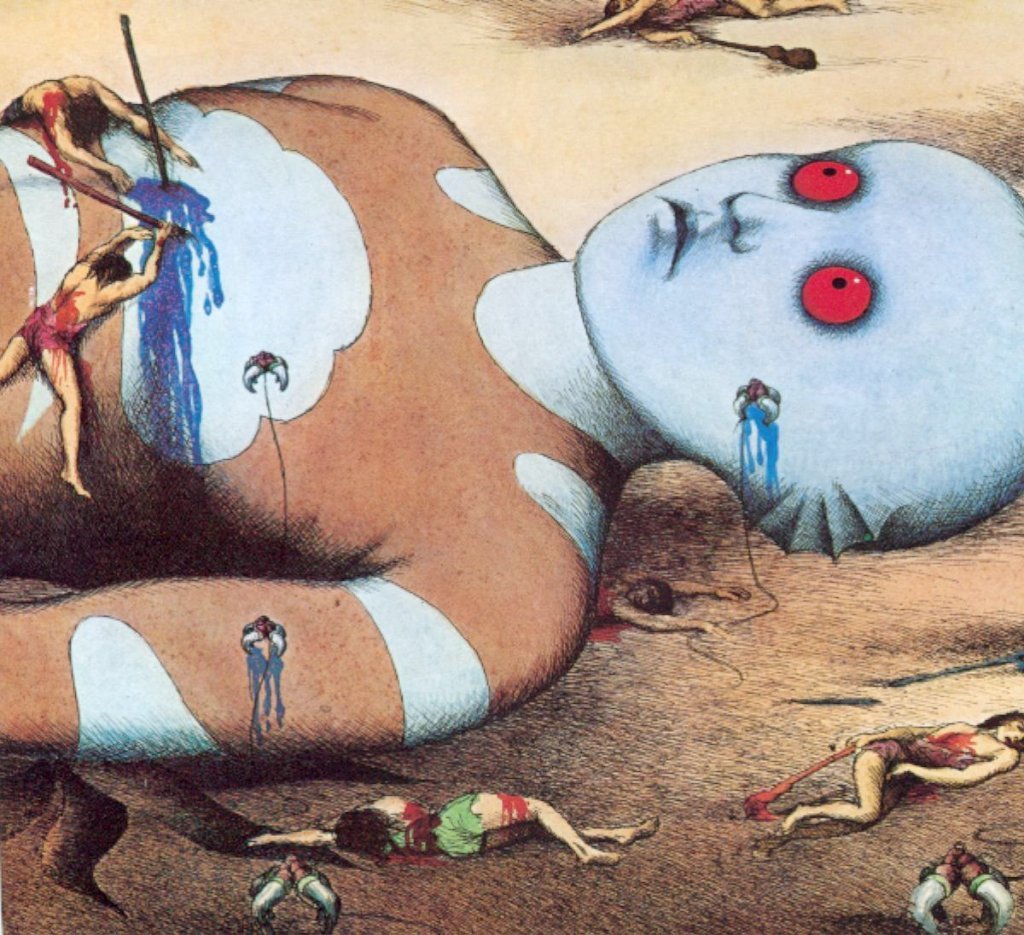
The Oms take down a giant Draag in Laloux’s surreal animated feature “Fantastic Planet” (1973). A joint production between France and the former Czechoslovakia, it’s Cold War politics are neatly embedded in the science fiction tale.

One of my earliest exposures to the technique of paper cutout animation was the feature-length science fiction film La Planète Sauvage, (“Fantastic Planet”, 1973), a collaboration between the French director René Laloux, writer/artist Roland Topor and a team of Czech animators at Jiří Trnka Studio. The sophistication of the paper cutout technique is astounding, and the visual style unique and thoroughly memorable. There’s quite a good synopsis of this film, accompanied by several screen shots, at the Twitchfilm blog which I would recommend. The author of this blog ends her/his post with a paragraph about the “adult” content of this film. It is, most assuredly, aimed at an adult audience, and I particularly enjoyed this author’s summary of the many and varied deaths the Oms faced in Laloux’s La Planète Sauvage:

In case you didn’t suspect it yet: this is not exactly a children’s film. Eureka (or rather the BBFC) rates this DVD “PG” but the film was clearly made with adults in mind. Some Draags wear very revealing outfits while the humans are naked, half-naked or wearing rags. Mating rituals of both humans and Draags are shown, but far more disturbing is the seemingly unending variety in which the tiny humans keep getting eaten, squashed, shredded, poisoned, radiated and stomped on by both Draags and the local flora and fauna. — Twitchfilm blog

Walerian Borowczyk’s “La bête” (‘The Beast’)

Horror at the discovery of the slaughtered lamb and bear-like Beast in the surrealistic dream sequence.

I wanted to revisit a film I’d mentioned in the previous post on Walerian Borowczyk. This blog entry introduced the work of Polish filmmaker Borowczyk and offered a brief analysis of his softcore films created in the mid-1970s. His most notorious and controversial film La bête (‘The Beast’, 1975) was released shortly after Contes immoraux (‘Immoral Tales’, 1974) and was, in fact, an expansion of a sequence originally shot for the earlier anthology. This sequence consisted of a rather cheeky retelling of the Beauty & The Beast fairytale as only Borowczyk’s ribald imagination could envision. An aristocratic woman in a powdered wig is roused from her harpsichord by the sudden disappearance of a lamb outside the window of her country manor. She ventures into the nearby forest in search of the lamb, only to discover its carcass being gnawed on by an enormous, bear-like creature. Presumably fearing for her life, the woman screams and runs through the forest in a frenzied manner that quite effectively removes all of her clothing save for her corset and stockings. In close pursuit, the Beast appears visibly aroused by the semi-nude woman, as evidenced by the absurdly large phallus it sports. The woman is eventually captured by the creature, who performs oral sex on her whilst she hangs from a tree branch in a futile attempt at escape. Her wild protestations soon vanish and she surrenders to the erotic attentions of the Beast in one of cinema’s most bizarre, and hilarious, sex scenes.

Sweet, sweet loving between Beauty and her Beast. Walt Disney, this ain’t.

If the text on the DVD package is accurate, La bête was banned for the past 25 years in the UK on the grounds of its depictions of bestiality. If true, this would strongly suggest that the British censors possessed neither imagination nor a sense of humour. The sex depicted in this sequence lacks any sense of realism and is clearly meant as a darkly comedic farce of the romantic relationship typically found in the traditional Beauty & the Beast fairytale. Borowczyk’s penchant for the grotesque also shapes the scene. A man in a bear suit touting an enormous prosthetic penis is grotesque, ridiculous and not-so-vaguely perverted, but it’s certainly not bestiality.

Now that La bête is available on DVD, my advice to the British censors is to slip a copy into the player, decant the wine, plant themselves on the couch and enjoy this sexy and thoroughly absurd film. Heck, I’m willing to bet that they were doing this in secret, all along.

“Your mother ate my dog!”: Lady Lazarus’s favourite ‘Mommies of Horror’.

“Definition of  Freudian slip: when you say one thing, but meant your mother.” –an old joke, as immortalized in Urban Dictionary.

Ever since the days of Sigmund Freud, mothers have endured the brunt of blame for the neuroses of their offspring. The psychologically-complex relationship between mother and child served as the dramatic foil against which the existential angst of Shakespeare’s melancholic Hamlet played out, not to mention innumerable tales of dysfunctional families in horror fiction. There are countless examples of horror movie villains, like Jason Voorhees from the Friday the 13th series, who have a rather intense and, um, complicated relationship with their mother. In these films, the character of the mother is the creator — both literally and metaphorically — of the monster. Even though Mother’s Day is still several months away, let’s pay homage to the most memorable mothers in cinematic horror.

Margaret White (Piper Laurie) presses her traumatized daughter against her "dirty pillows" in De Palma's "Carrie."

1. The abusive Margaret White (Piper Laurie) from Brian De Palma’s Carrie (1976) torments her teenage daughter with her ferocious piety. Unfortunately for Mrs. White, her daughter happens to possess telekinetic powers and a strong desire to attend her high school prom. When the latter proves disastrous, and Carrie finds herself soaked in pigs blood, things go from bad to worse. Convinced that she is “possessed by Satan,” Margaret stabs her daughter in the back before being summarily dispatched by a shower of kitchen knives flung at her by Carrie’s telekinesis. The knives pin Mrs. White against the kitchen door frame in the highly appropriate cruciform stance, offering horror fans one of the most memorable and satisfying death scenes in the genre.

Vera "Mum" Cosgrove gets bitten by the nasty Sumatran Rat-Monkey in Peter Jackson's "Dead/Alive".

2. Long before he ventured into the realm of Orcs and Hobbits, New Zealand director Peter Jackson was much beloved in the horror genre for his “splatter” films. His infamous 1992 horror-comedy Braindead (released in North America as Dead Alive) still holds the title for being one of the bloodiest, goriest zombies films to date. Even highly adept and accomplished splatter-gore directors like Takashi Miike don’t quite attain Jackson’s zany, hilarious, and way over-the-top levels of gore. As if in counterbalance to the excessive gore, Jackson’s Braindead offers an equally excessive character in Vera Cosgrove. She epitomizes the thoroughly controlling, ball-busting mother who simply cannot allow potential happiness to enter the life of her beleaguered son. Once “Mum” is bitten by the Sumatran Rat-Monkey and infected with the virus that transforms her into a zombie, Jackson revels in the sadistic pleasure of having various parts of her matronly body impaled, injected, dismembered, consumed, and otherwise compromised. Packed with many memorable quotes, including “I kick ass for God!” and, one of my favourites, “Your mother ate my dog!”, Braindead is a gloriously gory, campy romp. Just don’t watch it soon after eating.

Nola (Samantha Eggers) gives her newborn a clean -- with her tongue -- in Cronenberg's "The Brood."

3. Procreation doesn’t get more bestial than in David Cronenberg’s 1979 Canadian horror classic The Brood. Samantha Eggars (best known for her role as TV-mom to Sarah Michelle Gellar in Buffy the Vampire Slayer) plays Nola Carveth, a mentally-ill patient who opts for an experimental, and highly controversial, psychotherapy treatment. This unorthodox  “psychoplasmics” treatment causes the patient’s mental illness to manifest physically on their bodies — in the case of Nola, she parthenogenetically births strange, mutated children. This film has all the themes that typify a Cronenberg film: abjection, body horror, bizarre sexuality, and an anxiety/horror over female biology and reproduction. A degree of sympathy exists for Nola, as she’s evidently the victim of childhood abuse perpetrated by her cruel and self-centred mother, although this sympathy soon diminishes once it is revealed that Nola is, herself, abusing her daughter Candice. The ‘birthing’ scene, where Nola licks her offspring clean in the manner of a mother cat, is classic Cronenberg.

Classical mythology revisited: the shrewd ecofeminism of Shary Boyle.

The last (I promise) of the grad school essays I shall inflict upon you. In this one, my task was to compare my work with that of another contemporary visual artist. I chose Shary Boyle. The astute among you will recognize a passage or two from my Master’s thesis in this essay. Hey, it’s not plagarism when you cannibalize your own writing.
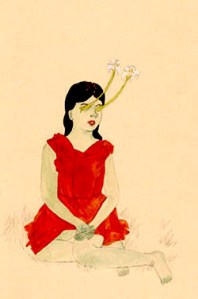
Fig. 1. Shary Boyle, "Untitled", pencil and gouache on paper, size unknown, 2003.

Throughout history, visual artists have fleshed out mythological subjects and generated images based on traditional, time-honoured stories. Myths supply an accessible and universal narrative to which the artist can attach a personal story. Renowned scholar and mythologist Joseph Campbell describes one of the goals of myth as “…effecting a reconciliation of the individual consciousness with the universal will.” Similarly, in his essay “The Expressive Fallacy” Hal Foster cites Nietzsche’s discussion of an artist’s use of myth to express an interior world: “The whole notion of an ‘inner experience’ enters our consciousness only after it has found a language that the individual understands – i.e., a translation of a situation into a familiar situation…” The “language” to which Nietzsche refers can be interpreted as “mythology” which provides a universal narrative to which all cultures, no matter how disparate, have access. The “inner experience” may be read as the personal, psychological or emotional world that the artist seeks to materialize through the use of myth. In short, myths connect us to each other by anchoring the idiosyncrasy of the individual to a universally shared point of reference.

In my own art practice, I frequently make use of myths and archetypes as cultural ready-mades into which I insert my own personal history and meanings. Myths are reinterpreted in my work from a feminist perspective that considers gender representation in these mythological narratives. Another contemporary Canadian artist who employs a similar creative, feminist tactic is Shary Boyle. A commonality in our work is the use of female mythological subjects that evoke the traditional, allegorical link between women and nature. Rather than simply offer a critique of the feminized concept of nature, however, both Boyle and myself use motifs derived from nature in a subversive manner that transform our female subjects in strange, fantastic ways. The transformations and mutations that our mythological heroines experience provide the visible, external evidence of their inner psychological and emotional world.

In her work prior to 2008, Boyle’s use of fairytales and mythological subjects tended to be global rather than specific. Her phantasmagoric imagery suggested the realm of dreams and myths without representing a particular legend or cultural tradition. Her two pencil and gouache drawings that we shall examine, both dating from 2003 and simply called Untitled, are evidence of her generalized incorporation of myth. Both drawings involve remarkable incidents in which a single female figure, isolated on the white void of the paper, quietly experiences a magical transformation. In Untitled (fig. 1) we are confronted with a woman in a bright red dress sitting contentedly in the grass, hands resting peacefully in her lap. The drawing is linear and economical; the grass on which the woman sits is minimally drawn. Two long, yellow plant stalks topped with white blossoms grow outwards from the eye sockets of the woman, a strange phenomenon that has not managed to disturb her serenity. The very fact that the woman appears unconcerned by this fantastic event seems to suggest that this transformation is metaphoric as the flowers are a manifestation of an interior psychological state. Equally, the woman may have simply acquiesced to the inevitability of this strange transformation. The subject of Boyle’s second drawing Untitled (fig. 2), a prepubescent girl whose rigid stance and sideways glance suggests that she’s somewhat more alarmed by the tangled bush growing out from her mouth, nevertheless seems to accept the strangeness of this event as normative.

Fig. 2. Shary Boyle, "Untitled", pencil and gouache on paper, 30.5 cm x 30.5 cm, 2003.

In her essay entitled “Ornamental Impulse”, art writer Josée Drouin-Brisebois comments on Boyle’s surreal transformations as a manifestation of the emotional and psychological worlds of her subjects. “Boyle’s [figures]”, says Drouin-Brisebois, “express the inner life of the emotions materially.” Drouin-Brisebois cites the review of art critic Robin Laurence for Boyle’s paintings Companions (2004), wherein Laurence states: “Boyle’s portraits suggest that what looks outwardly freakish in others is the metaphorical equivalent of inward aspects of all our characteristics and circumstances.” Thus, the plant life that blooms from the bodily orifices of these female subjects is emblematic of their interior states, though what precisely those states would be remain vague and mysterious.

The mythology to which Boyle attaches her idiosyncratic narratives serves to anchor the work in tradition and provide the viewer with visual clues as to how one might interpret her dream-like imagery. For instance, the otherworldly flora of these drawings reference allegorical and mythological associations of women to nature. Rather than challenge the traditional dichotomy of women and nature, Boyle embraces it in a subversive manner. According to Drouin-Brisebois, Boyle’s women “become…nature in unsettling ways – verdancy out of control or a parasite that takes over the body…” Boyle acknowledges the allegorical tradition while at the same time engaging a sinister playfulness that alters it.
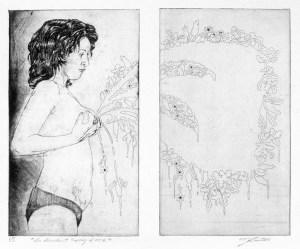
Fig. 3. Jennifer Linton, "An Abundant Supply of Milk", drypoint and etching, 38 cm x 30 cm, 2006.

Similar to Boyle, otherworldly flora plays a prominent role in my 2006 intaglio print entitled An Abundant Supply of Milk (fig. 3). Whereas Boyle rarely identifies her female subjects as aspects of herself, my work makes frequent use of self-portraiture and is characterized by an autobiographical content. This particular self-portrait shows myself standing in profile, naked save for a pair of underwear. With my hands I squeeze my breasts and produce an exaggeratedly large spray of breast milk. This cloud-like spray of breast milk, in turn, blossoms into a soggy mass of flowers. Like the drawings of Boyle discussed earlier, this print recognizes the mythic association between women and nature, and in particular the concept of a nurturing “mother nature”, while at the same time subverting it. The nourishing food that is breast milk has transformed into a bizarre floral mass that, rather than natural, appears inexorably alien. Created in the months that followed becoming a first-time mother, this image addressed my response to the strange transformations enacted upon my body as a result of pregnancy and childbirth. The milk-flowers that spring forth from my breasts represent an externalization of the estrangement I felt from my own body.

A second, earlier self-portrait speaks not to a feeling of estrangement but to the human impulse towards creation, both in art as well as in procreation. The coloured pencil drawing entitled Genesis (fig.4) illustrates the growth of a leafy, magenta and orange plant stalk out of my opened mouth. This fanciful stalk terminates in a perfectly round, ripe pomegranate fruit. Similar to the heroines of Boyle’s drawings, my visage appears untroubled by the unconventional growth of this fruit as if this were the result of a natural, internal process. In contrast to Boyle’s 2003 Untitled drawings, however, the magical vegetation of Genesis recalls a very specific mythological story while at the same time evoking the women-nature dichotomy. The appearance of the pomegranate in this drawing is highly significant as it is a direct quotation from an earlier body of work in which I assumed the role of Persephone, a tragic heroine from Greco-Roman mythology. This role-playing allowed for the insertion of personalized content within the larger context of a universal narrative. Or, as Nietzsche expressed, the myth of Persephone provided “…a translation of a situation into a familiar situation.” We will return to this discussion of Persephone after an introduction to Boyle’s latest works, one of which, coincidentally, deals directly with this same myth.

Fig. 4. Jennifer Linton, "Genesis", coloured pencil on Mylar, 38 cm x 28 cm, 2004.

As previously stated, Boyle’s work is frequently characterized by a global adoption of mythology, her imagery an amalgam of different mythic traditions synthesized with her own idiosyncratic symbolism. The recent unveiling of Boyle’s latest porcelain sculptures at the 2008 grand reopening of the Art Gallery of Ontario, however, provides an exciting and atypical exception to this aspect of her work. Boyle was commissioned by the AGO to create work that responded to the gallery’s permanent collection. She selected two 18th-century Italian bronze statuettes by Giovanni Battista Foggini with which to engage in a conversation across history. The subjects of Foggini’s sculptures are two commonly depicted Greco-Roman myths: Perseus slaying Medusa and The Rape of Proserpine. Boyle’s porcelains offer feminist reinterpretations of these myths while simultaneously maintaining her characteristic surreal imagery that hints at the internal, psychological world of her subjects.

Boyle’s response to Foggini’s The Rape of Proserpine re-imagines the Greco-Roman myth upon which it is based and addresses the violent and sexually problematic subject matter of the original Baroque bronze. Her delicate porcelain sculpture entitled The Rejection of Pluto (fig. 5) casts the titular deity as a hideously yawning monster and not the sinewy, handsome abductor of Foggini’s statuette. In her 2008 interview with art critic Sarah Milroy featured in The Globe and Mail, Boyle discussed the responsibility she felt as a feminist artist in rendering an alternate version of this classical myth: “I guess I just felt that this subject matter had to be engaged. I had been asked inside the museum, and I felt a kind of responsibility to interrupt some of those narratives, to propose some other kinds of stories.”

Proserpine is the Roman goddess of springtime, wife of Pluto and mythological equivalent of the Greek goddess Persephone. Her story is one of great emotional power: an innocent maiden abducted by the lustful god of the Underworld and forced to become his bride. In the Globe and Mail interview, Boyle related the version of this Greco-Roman myth that inspired her reinterpretation:

“…Pluto, the Lord of the Underworld, fell in love with Proserpine, the beautiful daughter of the harvest goddess. Lust incarnate, he emerges from Hades through a pond in the glade of the water nymph Cyane, wreaking havoc on this sacred sylvan spot and seizing Proserpine by force, making her his bride in Hell. Cyane, who protects the natural realms, weeps tears over this loss, so much so that her tears replenish the landscape Pluto has devastated.”
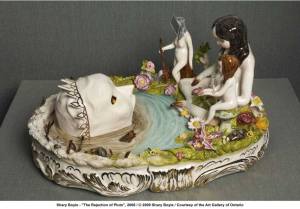
Fig. 5. Shary Boyle, "The Rejection of Pluto", mixed media porcelain sculpture, 2008.

The scene of Boyle’s The Rejection of Pluto is the idyllic glade of the water nymph Cyane, decorated with exotic flowers, seashells and fairytale toadstools. The monstrous head of Pluto emerges from the water, his cavernous mouth yawning open as if to swallow his intended victim. Bright red-orange light, suggestive of the flames of Hell, flickers inside the mouth and eyes of the hollow, chasmal head. The water that immediately surrounds Pluto’s head appears brown and putrid and the vegetation bleached white, all vitality having been drained out by its proximity to the god of the Underworld. The female characters of this story – the girl-child Proserpine, her mother Demeter, and the nymph Cyane – are all gathered in a group at the opposite end of the glade. The amphibious water nymph Cyane glowers fiercely at Pluto, defending Proserpine whom Boyle has cast as a small child wounded by mirrored shards. According to Boyle, these three female figures “represent emotional, mental and physical resistance under siege.”

The crucial role that nature plays in The Rejection of Pluto can be likened to that of Boyle’s 2003 Untitled drawings, although the correlation between women and nature in the sculpture have been further strengthened. The landscape of The Rejection of Pluto reflects the violation suffered by Proserpine through its transformation from lush verdancy to polluted wasteland. This transformation of the landscape symbolizes Proserpine’s psychological and emotional turmoil in much the same manner as the mirrored shards that have pierced her flesh represent her physical violation. Boyle’s shrewd interpretation of the Proserpine/Persephone myth emphasizes the allegorical link between women and nature in her analysis of the mistreatment of both women and nature in the world.

The tragic heroine Persephone has also been depicted as a prepubescent girl in my 2000 mixed-media drawing entitled The Bitter Seed. In this drawing, I combine an image of myself as a child with the myth of Persephone as a means to address the difficult territory of childhood sexual abuse. By adopting the role of the mythological heroine, I translate and universalize my personal experience. Through the use of this metaphor, I strive to make an emotional state palatable and thus more easily approachable by the viewer.

The Bitter Seed takes its name from the pomegranate seed that Persephone was forced to eat, thus sealing her fate as the goddess whose annual death and rebirth would usher in the changing seasons:

“Persephone was the daughter of Zeus and Demeter, the goddess of agriculture. Hades, the lord of the Underworld, surprised Persephone one day while she was picking flowers and carried her off to be his bride. Demeter, the distraught mother, threatens to destroy all mortal men by causing an endless drought unless her daughter is returned. Zeus, who is the king of the gods at Olympus, commands Hermes to fetch Persephone from the realm of Hades. The wise Hades chooses to obey the command of Zeus; however, before Persephone is returned, he tricks her into eating a seed from a pomegranate. This deception is later revealed when Demeter asks her daughter “…have you eaten any food while you were below? If you have not, even though you have been in the company of loathsome Hades, you will live with me and your father…but if you have…you will return again beneath the depths of the earth and live there a third of the year; the other two-thirds of the time you will spend with me…”

To the ancient Greeks, the myth of Demeter and Persephone served to explain the death and regeneration of plant life each year. The metaphoric link between women and nature is quite overt: Persephone personifies the cycle of the seasons through her annual sacrifice.

In The Bitter Seed, my childhood self stands thickly outlined in black against a brightly coloured background reminiscent of a stained-glass window. One of my hands holds aloft a pomegranate, above which hangs the phrase “dirty girl.” I stare quizzically at both the fruit and the phrase, my child mind unable to fully grasp their meaning. Like the pomegranate in the Persephone myth, the fruit I hold represents violation and entrapment. Similar to the girl-child Proserpine in Boyle’s sculpture, who displays her wounded arms for the consideration of the viewer, my child-self in The Bitter Seed holds the pomegranate up as a symbolic manifestation of inner “wounds”.

Fig. 6. Jennifer Linton, "St. Ursula and the Gorgon’s Head", coloured pencil and drawing ink on Mylar, 62 cm x 80 cm, 2002.

The victimization of the girl-child Persephone in The Bitter Seed is later redressed in my 2002 drawing St. Ursula and the Gorgon’s Head (fig. 6) in which I assumed the role of the Catholic Saint Ursula, the patron saint of schoolgirls. In a manner similar to The Bitter Seed, this drawing blended autobiographical elements with mythological role-playing in order to universalize personal experience. The heroine of St. Ursula and the Gorgon’s Head assimilates two divergent mythological traditions: the hagiography of the Catholic saint with the Greco-Roman myth of the Gorgon Medusa. More avenging angel than saint, St. Ursula is shown adorned with angel wings and holding aloft a sword and the severed head of Medusa. The mouth of the snake-haired Medusa gapes open in a silent scream while a magical bloom of red flowers bleed from the wound of the severed neck. In the background, graphic and highly stylized red flowers also appear to bleed. Much like the strange, sinister flowers of Boyle’s 2003 Untitled drawings, these violent blossoms subvert the traditional woman-nature dichotomy and the association of women with a passive and nurturing feminine principle.

Women are frequently cast as the prize at the end of the hero’s quest but are seldom depicted as the active, adventurous hero themselves in mythology. This gender-biased tradition was best summarized by Joseph Campbell in his 1982 interview with Rozanne Zucchet from his collected writings entitled “The Hero’s Journey”:

“I was teaching these courses on mythology and at the end of my last year there this woman comes in and sits down and says, ‘Well, Mr. Campbell, you’ve been talking about the hero. But what about the woman?’ I said, ‘The woman’s the mother of the hero; she’s the goal of the hero’s achieving; she’s the protectress of the hero; she is this, she is that. What more do you want?’ She said, ‘I want to be the hero!’ So I was glad that I was retiring that year and not going to teach any more [audience laughter].”

While Campbell’s anecdote evidently amused his audience, it also underscores the gender discrimination inherent in mythological models. The sword-wielding heroine of St. Ursula and the Gorgon’s Head constitutes my feminist response to Campbell and this gender-biased tradition. My heroine adopts the stance traditionally occupied by the male hero Perseus who, as the Greek myth tells us, beheaded the female monster Medusa. Additionally, the gender of Medusa in my drawing has been switched from female to male as the image of the severed gorgon’s head my heroine holds is, in fact, a direct visual quotation of a painting by Caravaggio where Medusa is uncharacteristically portrayed as male.

Fig. 7. Shary Boyle. "To Colonize the Moon", mixed media porcelain sculpture, size unknown, 2008.

The representation of gender also plays a crucial role in Boyle’s second porcelain sculpture commissioned by the Art Gallery of Ontario. Entitled To Colonize the Moon (fig. 7), this sculpture encapsulates her response to Foggini’s bronze statuette Perseus Slaying Medusa as well as to the traditional Greco-Roman myth that she “has interpreted in light of both her environmentalist and feminist ideas.” Boyle’s reinterpretation of the myth views Medusa as a “very misunderstood monster” who suffers a number of indignities and violations resulting from the capricious cruelty of the Olympian gods. The severed head of Medusa lies atop a funeral pyre comprised of dead bats and bees, the expression on her lifeless face one of sad resignation to her tragic fate. In stark contrast to the heroic romanticism of Foggini’s Perseus, Boyle’s version of the Greek hero is a lily-skinned, rosy-cheeked effeminate boy who sits in quiet repose while he wipes the blood from his sword. This traditionally triumphal moment has been undercut by the calmness of the scene and soft, unheroic body of Boyle’s Perseus. The violence of the story is not celebrated, but merely represented in an anticlimactic manner. The death of the monster Medusa and the death of Nature – embodied by the dead bats and bees – are seen as being synonymous. There is a mournful aspect to this sculpture, as Boyle challenges the viewer to consider the violence enacted both upon women as well as upon the natural world.

Contemporary feminist artists such as Shary Boyle and myself are mining the past, revisiting the universal narratives of mythology and, as Boyle succinctly stated, “propos[ing] some other kinds of stories.” Inspired by the second wave feminists, who coined the phrase the personal is political, we disrupt the problematic, gender-biased narratives of traditional myths by inserting our own personal, idiosyncratic content into the larger framework of these universal stories. This personalized content adopts the symbolic vocabulary of myth and, through creative tactics such as role-playing, re-imagines these stories from contemporary feminist perspectives. Mythological motifs traditionally associated with women – namely the allegorical link made between women and nature – is wielded as a deconstructive weapon that knowingly acknowledges this association while at the same time playfully subverting it. The female subjects that populate our work ache, bleed, bloom and otherwise manifest their interior worlds in a number of strange and wondrously magical ways.

Walerian Borowczyk’s “Contes immoraux”: The bloodthirsty Countess meets European softcore cinema.

A bevy of naked beauties in Walerian Borowczyk's "Contes immoraux" (1974).

Walerian Borowczyk (1923-2006) was a Polish filmmaker who was, in the early years of his career, the creator of astounding stop-motion animations. Nightmarish and surreal in nature, animated short films such as Renaissance (1963) and Jeux des anges (1964) brought Borowczyk critical acclaim in the rarefied world of avant-garde filmmaking. Commercial success, however, eluded him until his venture into live-action cinema with his infamous art-house-meets-softcore films of the 1970’s. A consummate provocateur, Borowczyk challenged his audience with Contes immoraux (‘Immoral Tales’, 1974) and La bête (‘The Beast’, 1975) — films which some critics derided as “contentless pornography” due to their wholesale preoccupation with nudity and sexuality. While the charge of “pornography” is not entirely unwarranted, I would maintain that Borowczyk’s meticulously-detailed set design, careful art direction and signature surreal style elevate films such as Contes immoraux from mere “sexploitation” to softcore cinema with considerable artistic merit.

Now, don’t get me wrong — from a straightforward “is this movie good or not?” perspective, Borowczyk’s Contes immoraux is not an especially good film. What dialogue there is — and there’s mercifully little — is completely inane. The action is glacially slow, due in part to a camera that lingers incessantly over the bushy nether regions of naked girls. It is ironic, then, that as a purely softcore film Contes immoraux also falters. By the standards of contemporary pornography, Borowczyk’s film is rather too tame to satisfy current erotic appetites. It’s all breasts, bums and bush, and precious little sex. Thus, we are left with a paradoxical film that is neither artful enough for the art-house, nor raunchy enough to function as pornography.

Film still from "Contes immoraux". Paloma Picasso stars as Erzsébet Báthory, the notorious 15th-century Hungarian countess who allegedly bathed in the blood of young women as a means to preserve her youthful appearance.

What the films of Borowczyk do possess, however, are stunning visuals that perfectly synthesize elements of the erotic with the grotesque. Given his early animations, which were bizarre and nightmarish, it is not at all surprising that Borowczyk would continue his exploration of the grotesque in later work like Contes immoraux and La bête. A primary example of this is the Erzsébet Báthory segment of Contes immoraux, the third and most accomplished segment of his four-part erotic anthology. Set in 1610, this segment stars Paloma Picasso (the daughter of Pablo) in the role of Countess Elizabeth Báthory, the notorious 15th-century Hungarian noblewoman legendary for her cruelty and sadism. Amongst her many reputed atrocities were the infamous ‘bloodbaths’, in which the Countess would soak in her victim’s blood in order to retain her youth and beauty. Borowczyk downplays the savagery of the Báthory legend, and instead offers up a positively demure Countess. The segment opens with the round-up of the nearby village girls by the Countess’s henchmen. The next several minutes are dedicated to extended scenes of the girls bathing and generally frolicking in the shower stalls of the Báthory castle. There’s virtually no dialogue, focusing all of our attention on the sumptuous colour palette and beautifully-composed camera shots. After the frivolity of the showers, the naked girls are lead en masse into a large bedchamber. Elizabeth Báthory reappears, wearing a gossamer white dressing-gown, adorned with lace and pearls. The crowd of girls approach the Countess and stroke her pearl-encrusted gown admiringly. Rapidly, however, the scene transforms from sultry to savage, as the girls begin to violently tear at the dress, ripping it to shreds. They fight amongst each other over the pearls that fall, and the once sexy scene of nubile young girls turns into a bloody, animal rampage.

The 'bloodbath' of the Countess.

The scene quickly cuts to a close-up of the bloodbath of the Countess. The white limbs of Paloma Picasso fill the screen as she luxuriates in her bath, twisting back and forth in the frothy red. The heightened aestheticism, with the rich, vibrant red blood against white skin, cleverly undercuts the grotesque/horror aspects of the ‘bloodbath’ and the mass-murder that occurred (off-screen) in the previous scene.

The films of Walerian Borowczyk are not widely available, but cinephiles and film geeks can likely find these in the better “alternative” video stores or at midnight screenings in rep cinemas.

Horror Films 101: Overlooked and Obscure Gems of Horror Cinema.

1. Director Bob Clark’s debut feature was the campy and extraordinarily low-budget zombie film Children Shouldn’t Play With Dead Things (1972). A theatre group is brought to a graveyard located on a remote island by its flamboyant and eccentric director Alan. With the aid of a magical grimoire, Alan performs a necromantic ritual as some sort of elaborate sick joke, presumably at the expense of both his frightened comrades, as well as the deceased buried on the island. His violation of the dead is further compounded when, disappointed by the seeming failure of his ritual, he opts to desecrate a grave — exhuming a corpse named Orville with whom he amuses himself. Needless to say, when the dead finally do rise from their graves, they’re out for bloody vengeance. A strange and darkly comedic film, Children Shouldn’t Play With Dead Things has a slow build that rewards its audience with a satisfyingly creepy ending.

2. The post-Vietnam/Watergate/Charlie Mansion paranoia of 1970’s America played out in that decade’s horror films. Beginning with seminal genre films like Roman Polanski’s Rosemary’s Baby (1968), terror was primarily psychological in nature. Claustrophobia, paranoia and mental illness are themes central to 1977’s The Sentinel, a horror film populated by Satanists and other strange, eerie characters. A beautiful but mentally fragile NYC fashion model moves into a furnished Brooklyn brownstone, unaware that the reason for the remarkably cheap rent is the “portal to Hell” that exists in her building. While an impressive list of American actors — including John Carradine, Burgess Meredith, José Ferrer, Christopher Walken, Jeff Goldblum, Beverly D’Angelo, Ava Gardner and Tom Berenger — appear throughout, its the creepy, nightmarish atmosphere which elevate this film from your typical ’70s Satanic-horror fodder. The film is controversial for its inclusion of physically deformed people to portray the ‘souls of the damned’, a choice by director Michael Winner which does seem exploitative even as it is effectively off-putting.

The creepy cast of 1977’s “The Sentinel.”

3. Hong Kong director Fruit Chan serves up a dubious feast in Dumplings (2004). Originally released in a reduced, 37-minute long form on the pan-Asian horror omnibus “Three… Extremes” DVD, Chan’s film has been reissued in its original, 91-minute length with additional subplot and alternate ending. In Dumplings, the aging actress Mrs. Li seeks out the dumplings of “Auntie Mei” that allegedly contain a secret ingredient which offers eternal youth. The nature of this “ingredient” is revealed early in the narrative, a fact which makes the desperate vanity of Mrs. Li all the more grisly. Darkly comedic in parts, Chan offers a tongue-in-cheek commentary on Chinese culinary culture and the socio-economic class divide still present in modern-day Hong Kong-Kowloon.

Mrs. Li (Miriam Yeung) consumes the titular “Dumplings” in Fruit Chan’s gruesome film.

Enhanced by Zemanta

Some girls are more lethal than others: that deadly ‘vagina dentata’ grin.

The wonderful closing shot of an empowered Dawn from Mitchell Lichtenstein's "Teeth." Incidentally, Mitchell is the son of famed American pop artist Roy Lichtenstein.

The vagina dentata is the myth of a woman that possesses a castrating ‘toothed vagina‘. This myth exists across many different cultures and seems to address a global anxiety amongst men over the ‘otherness’ of women’s bodies and sexuality. In the Freudian psychoanalytic model, the vagina dentata is emblematic of castration anxiety amongst very young boys who, upon their awareness of the biological difference between male and female genitalia, develop an unconscious and irrational fear that their own penis will be ‘removed.’ Of course, Freud’s theories have fallen out of favour in therapeutic practice over the past decades, owing to the fact that his views of both women and homosexuality are antiquated and obviously problematic. And yet, the myth of the vagina dentata continues to be pervasive in contemporary culture, albeit in a much more symbolic manner.

Mitchell Lichtenstein’s 2007 horror-comedy film Teeth employs the vagina dentata myth as a mischievously playful plot device. The main character Dawn unknowingly possesses a ‘toothed vagina.’ The reason for her biological abnormality is never explicitly given, although several panning camera shots of a power plant looming in the distance behind Dawn’s house — not to mention the cancer that plagues her sick mother —  suggest a mutation due to environmental pollutants. An unfortunate succession of events, including date rape and sexual abuse by a gynaecologist, transform the teenage Dawn from a virginal spokesperson for Christian abstinence to a sexual vigilante who wields her vagina dentata as a weapon of revenge. Although the premise feels a bit weak to carry a feature-length film, there’s still gory-fun to be had as the number of severed body parts predictably rise. Men will find this film squirm-inducing, for obvious reasons. Cross your legs and enjoy.

Kate Kretz. "Vagina Dentata Purse", 2002, hand sewn, hand dyed velvet, wire, thread, shaped shells, purse frame, 10 x 14 x 7".

Enhanced by Zemanta

2010 in review according to the WordPress stats monkeys.

The stats helper monkeys at WordPress.com mulled over how this blog did in 2010, and here’s a high level summary of its overall blog health:

Healthy blog!

The Blog-Health-o-Meter™ reads Fresher than ever.

Crunchy numbers

Featured image

A Boeing 747-400 passenger jet can hold 416 passengers. This blog was viewed about 5,600 times in 2010. That’s about 13 full 747s.


In 2010, there were 27 new posts, growing the total archive of this blog to 31 posts. There were 79 pictures uploaded, taking up a total of 17mb. That’s about 2 pictures per week.

The busiest day of the year was December 14th with 104 views. The most popular post that day was Calamari Love: the curious tradition of Japanese ‘tentacle erotica.’.

Where did they come from?

The top referring sites in 2010 were facebook.com, jdlinton.50webs.com, en.wordpress.com, lunettesrouges.blog.lemonde.fr, and search.aol.com.

Some visitors came searching, mostly for cannibal holocaust, loretta lux, struwwelpeter, max ernst, and ginger snaps.

Attractions in 2010

These are the posts and pages that got the most views in 2010.

1

Calamari Love: the curious tradition of Japanese ‘tentacle erotica.’ December 2010
5 comments and 2 Likes on WordPress.com

2

Lady Lazarus’s Halloween List: Top 10 Best Horror Films of the 2000s. October 2010
2 comments

3

Surrealism, alter-egos and private mythologies; conclusion. September 2010

4

Gallery August 2010

5

Making art out of dead things, part II: The dioramas of Frederick Ruysch July 2010
1 comment